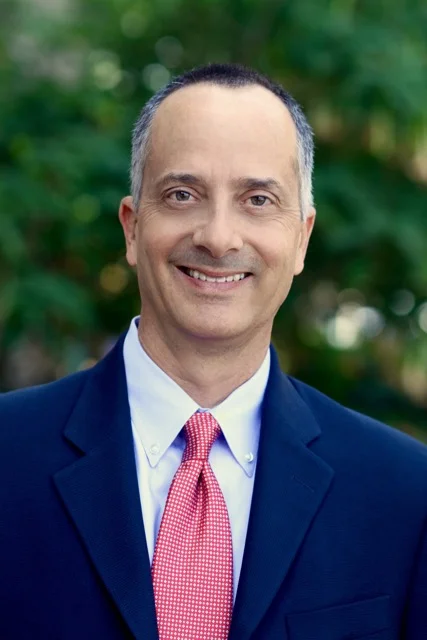
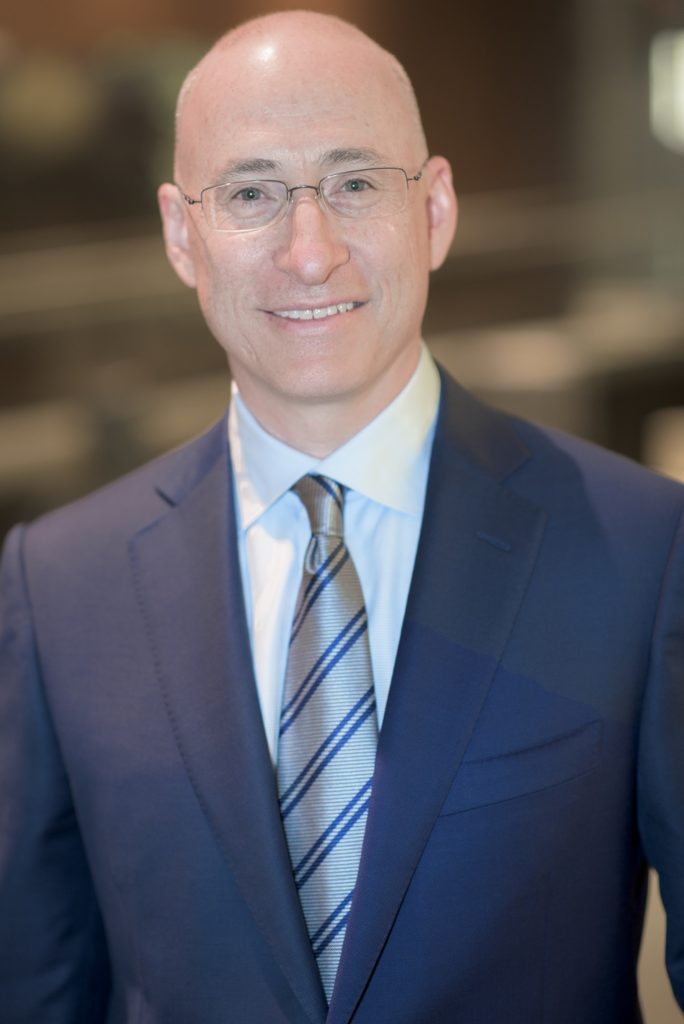
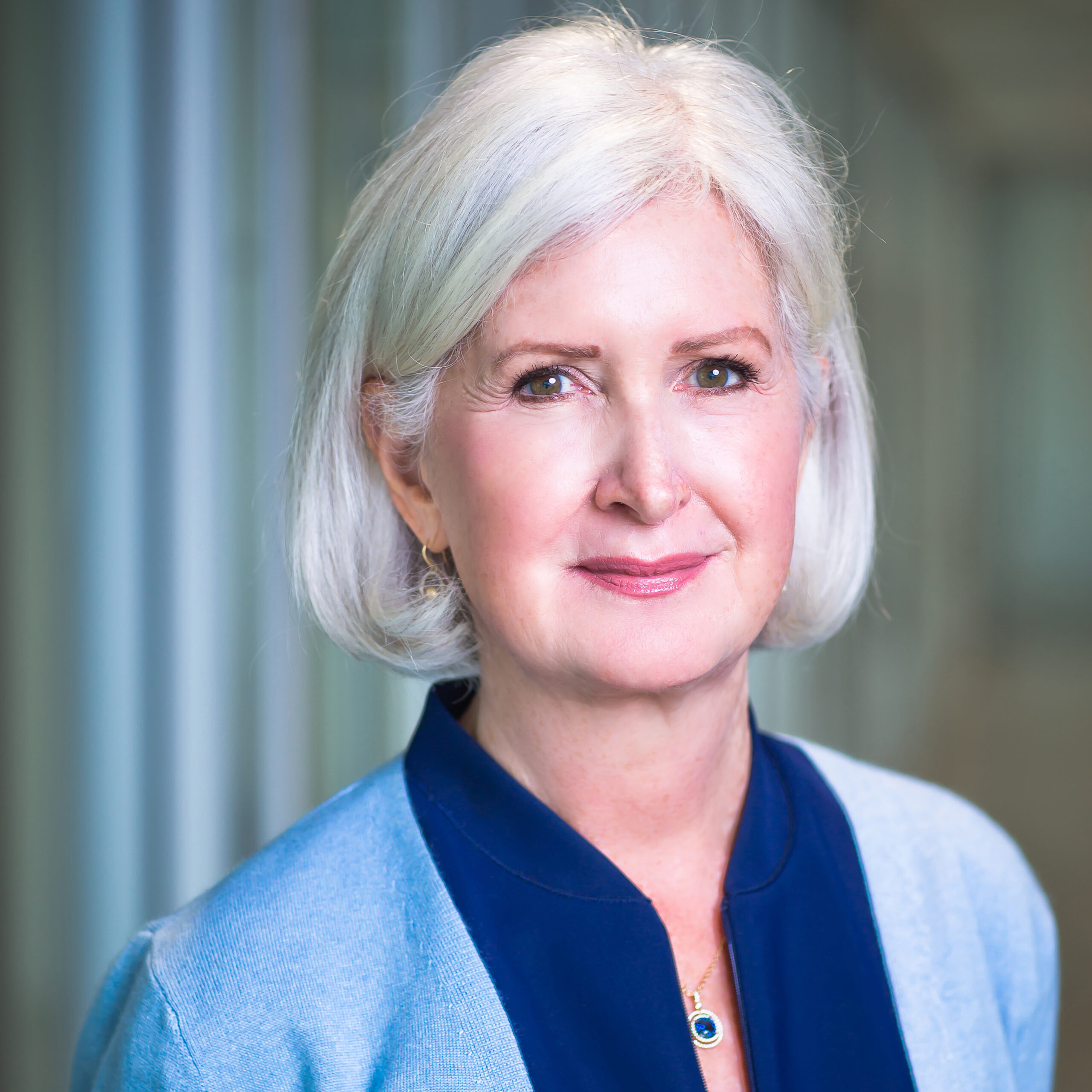
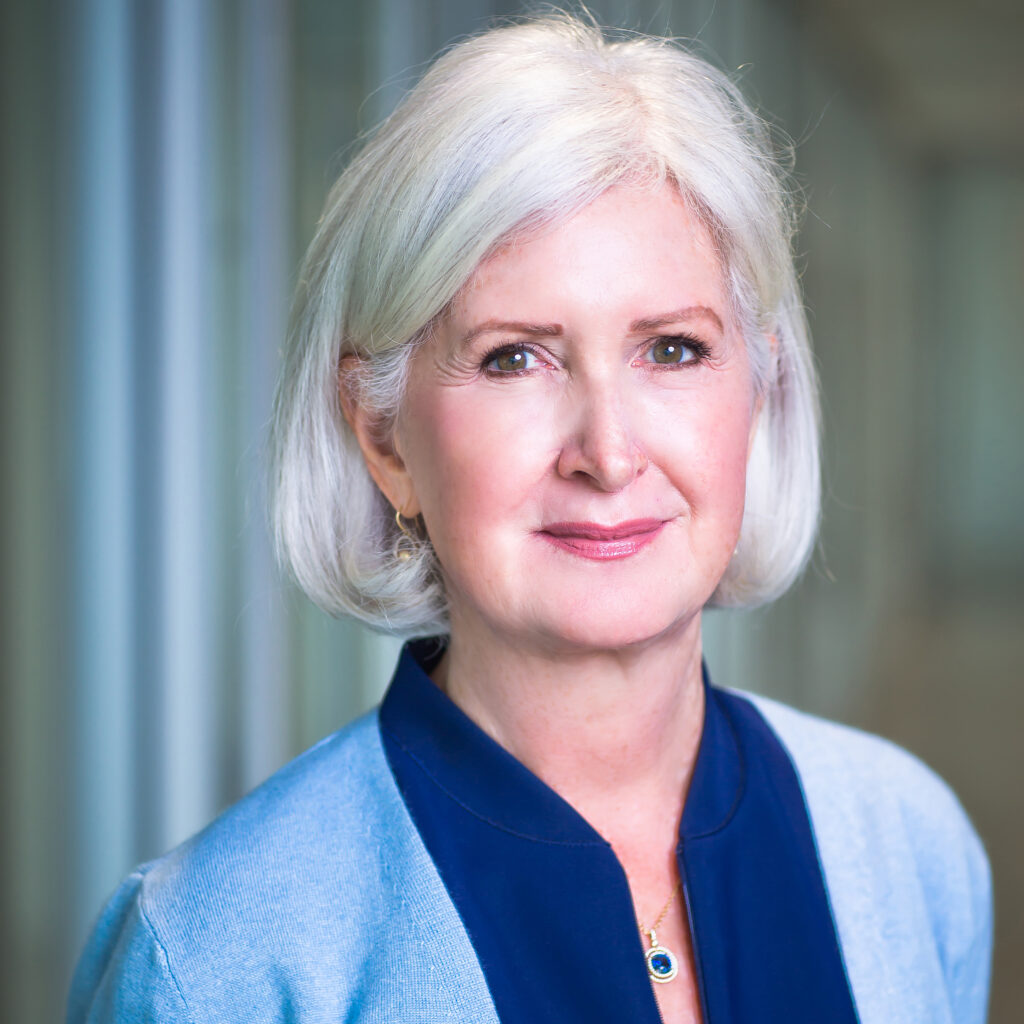
The Alexander Group is pleased to announce that Margaret Anderson has joined the firm as Managing Director.
Anderson brings more than three decades of leadership, strategy and advisory experience spanning health care, life sciences, public policy, professional services and not-for-profit organizations.
In her new role, Anderson will help broaden The Alexander Group’s relationships with senior executives, boards, and organizations across a range of sectors. She will also help identify and develop executive search and advisory opportunities, drawing on her extensive leadership experience and network.
“Margaret is an outstanding addition to The Alexander Group,” said John Lamar, Managing Director of The Alexander Group. “She has spent her career working at the intersection of health care, life sciences and public policy, advising senior leaders at some of the country’s most respected organizations, and brings an unusually broad perspective to our firm. In addition, she has coached executives and served on not-for-profit CEO search committees, giving her firsthand insight into the challenges boards face when selecting their next leader.”
Prior to joining The Alexander Group, Anderson spent almost a decade as a Managing Director at Deloitte Consulting, working across federal health, not-for-profit and life sciences organizations. She also served as Chief Marketing Officer for Deloitte’s Federal Health Sector.
Previously, Anderson was Executive Director with FasterCures, a Center of the Milken Institute, leading the organization’s strategy, thought leadership and programs, and represented FasterCures on numerous boards and advisory groups. Anderson also served as a Board member and Acting President & CEO of Melanoma Research Alliance.
“I am excited to join The Alexander Group, a firm whose reputation has been built on trusted relationships and recruiting exceptional leaders,” said Anderson. “I have spent my career helping leaders and boards through pivotal moments in their organizations. I look forward to bringing that experience and my network to The Alexander Group and helping clients identify the leadership they need for what comes next.”
Anderson is also the founder of Golden Road, LLC, where she advises and coaches accomplished leaders navigating career and organizational transitions. She is currently a UC Berkeley School of Public Health Impact Fellow, focusing on the economic impact of paid family leave, and is writing a book on the arc of a woman’s career. Anderson is based in Washington, DC.
Guest: Faith Wheeler, Founder, Faith Wheeler & Company; Author, Chickens Don’t Fly Host: Jane Howze, Managing Director, The Alexander Group Episode date: August 12, 2026 | Run time: 30 minutes
Faith Wheeler, founder of Faith Wheeler & Company and author of the memoir-cookbook Chickens Don’t Fly, joins Jane Howze to discuss what actually keeps restaurants in business. Wheeler traces her path from 1980s advertising into a 16-restaurant portfolio at the $60 million Spectrum Foods group, explains how a menu fix at San Francisco’s Town Hall earned her the nickname “the restaurant doctor,” and shares the mindset shift, trading “I would love to” for “I will,” that led her to publish a 220-page, linen-bound “kitchen table book” a decade in the making.
Key Takeaways
What does Faith Wheeler say is the number one thing that keeps customers coming back to a restaurant?
Recognition — not food quality or research-driven menu design. Wheeler says no matter how much market research a restaurant does, “the number one thing a customer wants” is to feel recognized: a warm greeting, a favorite drink brought without asking, a hand on the table when they arrive. She calls the effect a “mini vacation” that turns a visitor into what she calls a “nucleus customer” who stays loyal as trends change.
How did Faith Wheeler get the nickname “the restaurant doctor”?
The name traces to her PR work at Mitchell Rosenthal’s San Francisco restaurant Town Hall, where general manager Doug Washington asked her to review the menu. She flagged that it had no cheese; the chef pushed back, then created a dish nicknamed “Faith’s melted cheese toast” that became the menu’s top seller — after which the chef started greeting her as “doctor.”
Can a restaurant succeed with mediocre food but great service?
Not for long, Wheeler says, though “mediocre” is relative. She points to the Houston’s restaurant brand as an example of a chain that has thrived on consistency and value rather than culinary surprise, arguing that food, service, staff continuity, and comfort all have to come together for a restaurant to outlast its competitors.
What mindset shift led Faith Wheeler to write Chickens Don’t Fly?
Wheeler says she stopped saying “I would love to,” a phrase she hears often from executives who want a career change, and started saying “I will.” She describes her own career moves not as pivots but as “the new bloom on the plant,” each one growing out of the last, and says the book itself had been “in her brain for 30 years” before she committed to it.
What is a “kitchen table book,” and how is Chickens Don’t Fly structured?
Wheeler coined the term for a cookbook-memoir hybrid meant to live on a kitchen counter rather than a coffee table: a 220-page, linen-bound, four-color book with more than 100 recipes and photographs, printed in Faenza, Italy. The stories are organized around seven locations that shaped her cooking, each paired with recipes and the people behind them, and it took about a year to produce with photographer Clay McLachlan.
From Advertising to a $60 Million Restaurant Group
Jane Howze introduces Faith Wheeler and asks how her hospitality career began.
“Faith is an entrepreneur, she’s an author, and she’s what people would call the restaurant doctor, in that her career in hospitality has impacted and set many a restaurant on its path to success.” Jane Howze
“My career started in my 20s in advertising. When I moved to the Bay Area in 1987, I went from working at Dole Foods as a marketer to Spectrum Foods, which was a $60 million white-tablecloth restaurant company — brands like MacArthur Park, Chow, and Prego. I had 16 different restaurants, and I just loved that job so much.” Faith Wheeler
Starting Faith Wheeler & Company
After having a baby, Wheeler left Spectrum to start her own firm, taking much of the talent network she’d built with her.
“As my husband aptly said, there was a new sheriff in town, so it was time to reconsider my nights in the restaurants. I started my own company, and Faith Wheeler and Company was fortunate to pick up all the general managers who were ready to start their own stores.” Faith Wheeler
How She Became “The Restaurant Doctor”
Wheeler explains the origin of her industry nickname, rooted in a menu fix at Mitchell Rosenthal’s Town Hall.
“There’s a wonderful story from Town Hall, where Mitchell Rosenthal had hired me to do PR. The general manager, Doug Washington, asked me to look at the menu because I was very good at analyzing menus. I came back and said, this menu doesn’t have any cheese on it and the public loves cheese. The chef was angry, but he went back and put a dish on the menu he named after me, Faith’s Melted Cheese Toast, and it became the number one selling item. That’s when he said, okay, doctor.” Faith Wheeler
What Actually Makes a Restaurant Succeed
Wheeler argues recognition, not research, is what keeps customers loyal and that consistency beats novelty over time.
“Understanding your customer is so important that, no matter how much research you do, you learn that the number one thing a customer wants is recognition. If you go to the same restaurant many times and no one notices you’re there, you’re less apt to care for the place, versus if you get a warm embrace.” Faith Wheeler
“I’ll use Houston’s as an example. I’d argue they’ve done enormously well because of their value and their consistency — all the pieces of the puzzle they’ve pulled together. Consistency, a strong food program, that warm embrace, terrific service, comfortable chairs — it all comes together.” Faith Wheeler
Staffing, Turnover, and Culture
Asked through TAG’s recruiting lens, Wheeler says front-of-house turnover is normal — only her business partners are expected to stay for the long haul.
“One can’t count on all of those people as lifers unless they’re part owners of that store. The front of the house especially turns over often. I would only expect my partners to stick with me forever. If my chef leaves, I would hope my first-in-line cook would take that role, and hopefully the consumer wouldn’t notice the difference.” Faith Wheeler
The Power of the Pivot: From Restaurant Doctor to Author
Jane Howze asks about “the power of the pivot.” Wheeler reframes the idea entirely.
“I’m not even sure I see my career moves as pivots. I see them as the new bloom on the plant — they’re all interrelated, but each one forms from the piece before. Writing a book was something that was in my brain for 30 years. I think pivoting, or even realizing your dreams, starts from an undying feeling that you must. Not ‘I would love to,’ but ‘I’m going to, somehow, some way.’” Faith Wheeler
“The one thing I love about the book is there’s an underlying resonance of courage on every chapter.”Jane Howze
“If you read the book, I’m very big on the word courage. It starts with ‘care,’ which is French for heart. I let my gut and my heart drive — that separates me from a lot of rational people.” Faith Wheeler
Building Chickens Don’t Fly: A “Kitchen Table Book”
Wheeler describes the book’s structure and the year-long production process.
“The recipes have been kicking around for a very long time — some go back to my childhood, some were iterated from chefs I worked with. The stories are based on seven locations I either lived in or that influenced my cooking, and it was easy to break the book up by location and let the recipes follow the stories.” Faith Wheeler
“There were times I did six setups in a day, flying all over the place to get the right shots. My fantastic photographer, Clay McLachlan, got a call in October saying we didn’t have enough assets and had to go to New York and Nashville for a three-day turnaround. It’s a big project when you’re working on a four-color book with over 100 photos and recipes.” Faith Wheeler
Where to Find the Book — and What’s Next
Wheeler closes with upcoming signings, where readers can buy the book, and her next travel destination.
“I’m all lined up at Hudson Grace in New York City on the 17th of September, the 18th in Greenwich, Connecticut — another Hudson Grace opportunity — and the first of October I’m in a brand-new store for me called Books by the Bay, a Sausalito bookstore that also runs a wonderful 501(c)(3) called Literacy by the Bay.” Faith Wheeler
Highlights
“No matter how much research you do, you learn that the number one thing a customer wants is recognition.” Faith Wheeler, Founder, Faith Wheeler & Company
“I don’t even know if I see my career moves as pivots. I see them as the new bloom on the plant.” Faith Wheeler, Author, Chickens Don’t Fly
“It starts with ‘care,’ which is French for heart. I let my gut and my heart drive.” Faith Wheeler, Founder, Faith Wheeler & Company
By the Numbers
$60 million — size of Spectrum Foods, the white-tablecloth restaurant group where Wheeler managed 16 restaurants before starting her own firm
16 — restaurants under Wheeler’s management at Spectrum Foods
220 pages — length of Chickens Don’t Fly, a four-color, linen-bound book printed in Faenza, Italy
100+ — recipes and photographs featured in the book
~1 year — production time for the book, after roughly 30 years of the idea taking shape
8 completed, 3 upcoming — book signings held or scheduled as of the recording, including Hudson Grace (NYC, Sept. 17; Greenwich, CT, Sept. 18) and Books by the Bay (Sausalito, Oct. 1)
About Faith Wheeler
Faith Wheeler is the founder of Faith Wheeler & Company and the author of Chickens Don’t Fly, a 220-page “kitchen table book” that blends memoir, cookbook, and career-reinvention story. Known in the San Francisco restaurant industry as “the restaurant doctor,” she built her career managing 16 restaurants for the $60 million Spectrum Foods group before founding her own hospitality consultancy and working with restaurateur Mitchell Rosenthal’s San Francisco restaurant Town Hall.
About Jane Howze
Jane Howze is Managing Director of The Alexander Group, an executive search firm specializing in senior leadership roles for law firms, professional services firms, and life sciences organizations.
Janet Foutty spent more than three decades at Deloitte, culminating in her role as Executive Chair of the Board of Deloitte US, the largest professional services organization in the country. Before that, as Chair and CEO of Deloitte Consulting, she led the digital transformation and growth through major investments in digital, AI, and cloud.
But Janet’s impact extends well beyond the balance sheet. She’s a tireless advocate for women in technology, STEM education, and women’s health, and the co-author of the bestselling book Arrive and Thrive: 7 Impactful Practices for Women Navigating Leadership. Her work spans women’s leadership, emerging technology, and equity in healthcare.
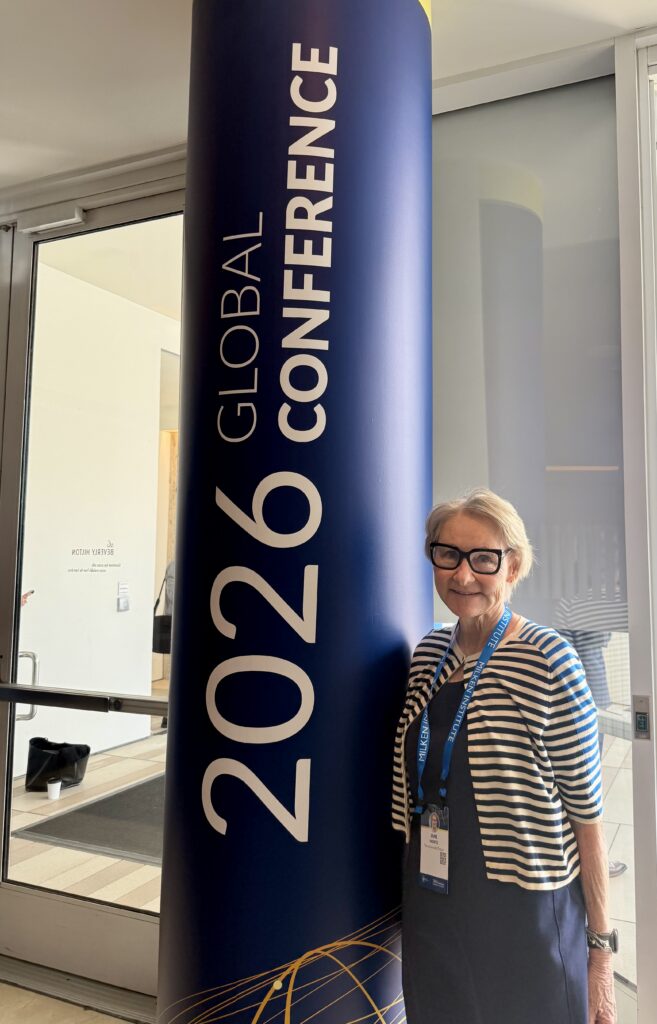
Managing DirectorJane Howze is attending Milken Institute 2026 Global Conference, an annual cross sector leadership summit, bringing together global leaders in finance, technology, government, health and philanthropy, posting her thoughts throughout the week.
We are posting daily collection of Jane’s thoughts and impressions from the Global Conference in Los Angeles as she attends various seminars and panel discussions.
Day One
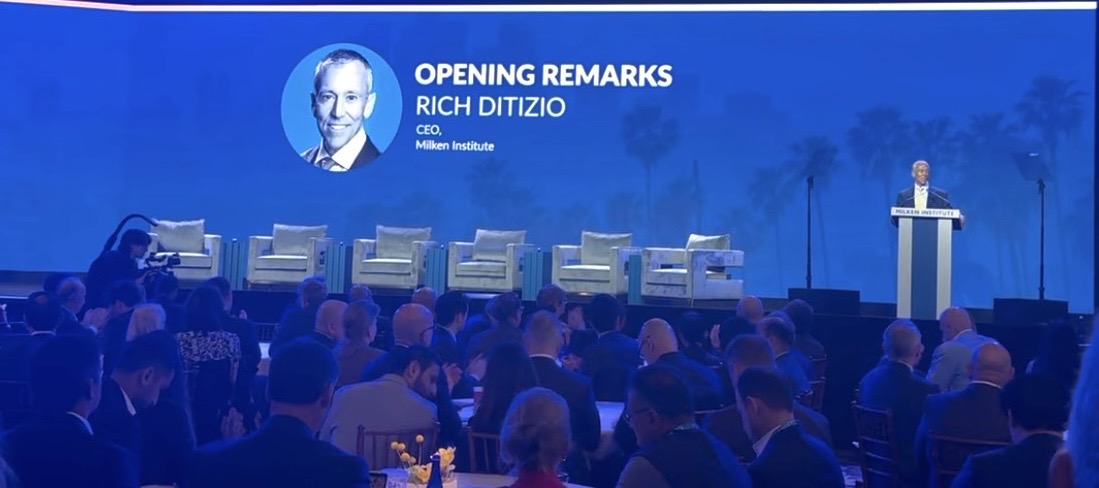
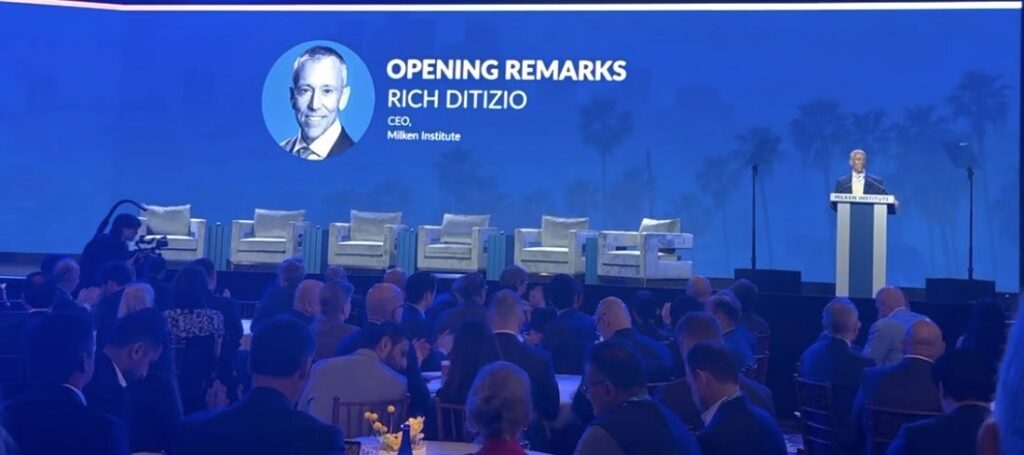
Milken Institute CEO Richard Ditizio Welcome Speech
Securities and Exchange Commission, Chairman Paul Atkins on the SEC’s Opportunities and Challenges
Since taking the helm of the Securities and Exchange Commission, Chairman Paul Atkins has signaled a new direction for one of America’s most consequential financial regulators. From capital formation to investor protection and market regulation, join us to hear his perspective on the opportunities and challenges defining the next era of the SEC’s agenda.
SEC Chairman Paul Atkins focused on restoring the attractiveness of U.S. capital markets, emphasizing the need to modernize regulation and “do some housecleaning” to reverse the steady decline in public companies—from the Russell 5000 to closer to 3000.
He underscored the importance of reinvigorating the IPO market by reducing the cost and complexity of going public, noting that disclosure requirements like the 10-K have become overly burdensome and often unclear in defining what is truly material.
On cryptocurrency, he made clear it is not outside the SEC’s authority but acknowledged that unclear and inconsistent rules have created confusion and hindered innovation—signaling a shift toward more practical, transparent guidance. Atkins also called for curbing frivolous litigation and avoiding the weaponization of corporate governance, arguing that both undermine market confidence.
Across all these themes, his message was consistent: create a clearer, more workable regulatory framework that encourages innovation and makes the U.S. a more compelling place to invest.
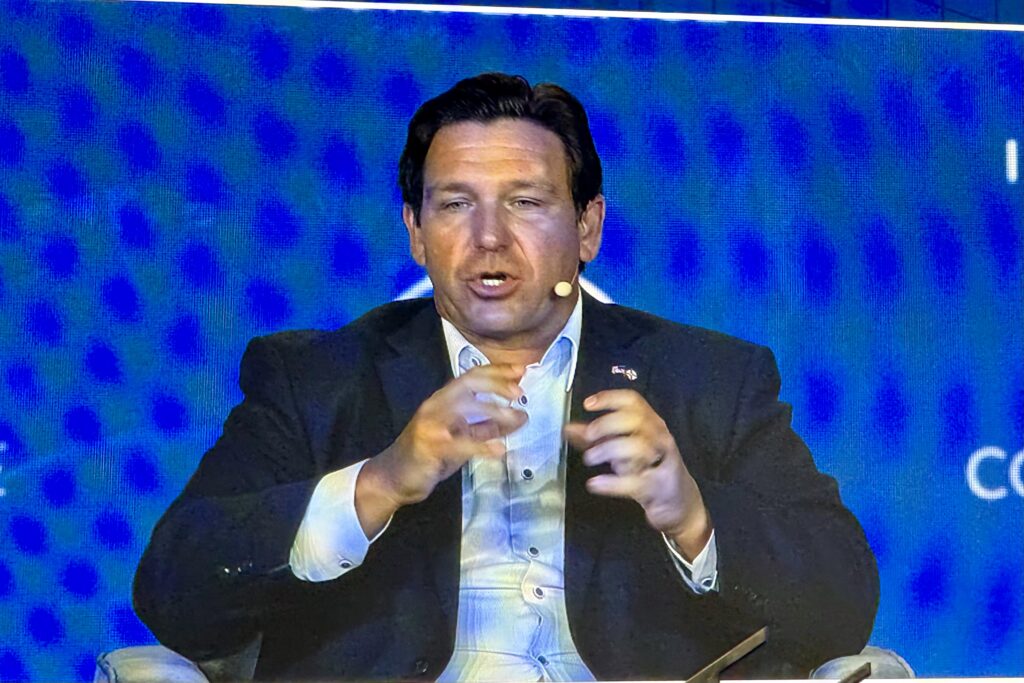
Building a Future-Ready Workforce: A Conversation with Florida Governor Ron DeSantis
Florida Governor Ron DeSantis discussed key policy priorities to build a workforce ready to power the next chapter of American growth, including among other topics, college sports and his successes as Florida’s governor.
On college sports, DeSantis is one of the most prominent voices in a growing national push for reform. He serves as vice chair of the Trump White House’s newly formed college sports commission, alongside Yankees President Randy Levine, with former Alabama coach Nick Saban lending his considerable credibility to the effort.
The stakes, DeSantis made clear, are high: under the current chaos of NIL rules and the transfer portal, athletes can effectively play for seven years — a situation he called unsustainable. Without congressional action, he warned, the financial pressure on universities becomes a slow-motion threat to non-revenue sports. Olympic programs, women’s sports, smaller athletic departments are all potential casualties of the system. States with major college sports programs want it fixed, and DeSantis positioned himself as optimistic that it can be.
He was equally direct about Florida’s ongoing property tax battle. His vision — eliminating property taxes on homesteaded properties — is bold, politically complicated, and still in motion. The fight between the Florida House and Senate over pace and approach has slowed things down, but DeSantis is playing a longer game, pushing for a November 2026 ballot measure and arguing that Floridians shouldn’t pay “rent to the government” on a home they already own.
The Future of Storytelling: A Conversation with Laurene Powell Jobs and Darren Walker
In a moment of profound transformation across media and technology, Laurene Powell Jobs, Founder and President, Emerson Collective, and Darren Walker, President and CEO, Anonymous Content, come together for a timely conversation on the power of storytelling. As streaming platforms and shifting economic models redefine creative industries, these two leaders will share their perspectives on how to preserve artistic integrity and expand access.
Powell Jobs delivered what may have been the most quietly urgent message of the gathering.
“There has never been a greater need to break down walls and see our humanity,” she said. For Powell Jobs, that’s not a philosophical position. It’s an investment strategy. When she evaluates where to put capital, she says she looks first at character, specifically, people who want to move the human race forward. The idea that mission and returns are separate conversations is one she’s long since abandoned.
And the market, she argues, is confirming it. Theatrical releases are on the rise. Barnes & Noble is opening more bookstores. Young people, she observed, are desperate for community. The through-line is unmistakable: when people are isolated and the world feels fractured, they reach for stories.
“Beautiful stories well told always have an audience,” she said simply.
What Faith Means To Me
Gregory Boyle, Founder, Homeboy Industries, Farah Pandith, Muhammad Ali Global Peace Laureate, Muhammad Ali Center; Senior Fellow, Council on Foreign Relations, David Wolpe, The Max Webb Emeritus Rabbi, Sinai Temple; Scholar in Residence, Maimonides Fund, Kelsey Grammer, Actor; Founder, The American Revelation: Celebrating America’s 250th Anniversary, John Studzinski, Vice Chairman, PIMCO
What does it mean to live a life of faith in an era defined by uncertainty and accelerating change? For many, faith is not a relic of the past but a living resource, a source of strength, moral clarity, and enduring community. In this conversation, panelists reflect on their personal journeys and examine how faith traditions continue to orient, sustain, and connect us in a world that often pulls us apart.
Below are the thoughts that resonated the most with Jane.
“Faith is not an assurance that all will be alright, but there is always hope.”
“Technology has not solved our problems. People say,” Why did my child die, but they never say, why me, when experiencing a promotion.”
We will continue following and reporting from the Milken Global Conference throughout the week.
Barnet Bain is an Academy Award–winning filmmaker, author of How to Be a Friend, and a thought leader at the intersection of creativity, connection, and human potential.
Best known for producing What Dreams May Come, Bain has spent his career exploring how stories shape not only what we see on screen, but how we relate to one another in everyday life. In conversation, he brought that perspective to leadership, arguing that the quality of our professional impact is inseparable from the quality of our relationships.
Bain’s discussion with Managing Director Jane Howze offers a compelling reminder that success is not only measured by outcomes but also by the strength of the relationships that make those outcomes possible.
Alan Abrahamson is one of the most respected and influential voices in Olympic and international sports journalism.
Over a career spanning decades, Alan has covered every Olympic Games since 1992, reporting from the center of the world’s biggest sporting moments while offering rare insight into the leadership, pressure, and decision-making that shape outcomes on the global stage.
Known for his depth, independence, and storytelling, his work goes far beyond medals and results to explore the human dynamics behind elite performance.
As the Olympic spotlight intensifies, we’re thrilled to welcome Alan to share his perspective on what the Games reveal about leadership, resilience, and the people who carry the weight of the world’s expectations.
Sometimes the most compelling conversations begin in unexpected places. In this episode of Impact & Insight, podcast host Jane Howze welcomes Dr. Evan Collins, not first as a business leader or innovator, but as the physician who treated her after a broken shoulder. What quickly became clear, however, was that Dr. Collins brings far more to the exam room than clinical expertise. With an MBA from Rice University and decades of experience as an orthopedic surgeon at Methodist Hospital, he is deeply curious about how organizations evolve, how innovation takes hold, and how systems can better serve people.
In this wide-ranging conversation, Dr. Collins reflects on his journey into medicine, his decision to pursue business training after 20 years in practice, and how that dual perspective shapes his work today. He shares how Methodist partners with physicians and administrators to drive innovation, improve operating room efficiency, reduce patient wait times, and thoughtfully integrate technologies like AI—always with patient care at the center.
The episode also explores leadership development in medicine, including how to engage and mentor younger physicians, define meaningful success, and build innovations that are both practical and sustainable. It’s an insightful look at the future of healthcare through the eyes of someone who understands service, strategy, and the importance of delivering better outcomes—both inside and outside the operating room.
Find the latest episode of Impact & Insight below:
If you’d asked The Alexander Group team about AI usage at the end of 2024, most of us would have admitted familiarity with ChatGPT and the general concept of AI. Still, many of us had yet to dive in, much less dip a toe into the swiftly moving waters of progress.
Fast forward 365 days, and AI has become a daily tool for both business and personal use. Rather than being intimidated or worried about the technology, we’re leaning into learning through Webinars, classes, and tutorials, and we’re not alone.
According to, what else but, ChatGPT, 56 percent of Americans report using AI tools. AI usage rates among U.S. workers are highest in technology (76 percent), finance (58 percent), and professional services (57 percent).
Where Google was once the go-to answer, many of us are turning to AI search engines ChatGPT, Gemini, and Claude. About 60 percent of Americans are now using these search engines to seek information, create action item lists, write and edit, and even for emotional support.
From fifth-grade math problems and vacation planning to proofreading and research, we’re making AI work for us, leaving more time for quality client interactions and successful search outcomes.
“I’ve continued to use AI in an expanding number of ways.
Professionally, it has become an invaluable tool for market and position research, as well as for proofreading and refining my writing. It’s not perfect, but it’s an exceptional resource.
Personally, I use AI to research products, restaurants, travel options—really, anytime I’m looking for reliable information.”
“I am hopeless when it comes to math, and I accepted the fact long ago that I am indeed not smarter than my fifth grader. So, when my daughter came home needing help with adding, subtracting, multiplying, and dividing fractions of all types, I turned to ChatGPT.
I took a picture of her worksheet, uploaded it, and my trusty (and non-judgmental) Chat assistant gave me step-by-step instructions for solving each problem. It even caught a mistake with one of the multiple-choice questions on her worksheet (none of the available options were correct), which her teacher confirmed the next day at school.”
“AI seems to be here to stay, and the world is using it for just about everything.
Anytime you Google something, the first thing that pops up is the AI response. I can’t think of a single industry or function that isn’t tapping into AI in some capacity and working to maximize it further.
There is no question that it is powerful and transformative. It reminds me of how the Terminator movies were so ahead of their time. While so much of AI is incredibly beneficial for accomplishing what we aspire to, some of us are concerned that it will replace critical skills, such as thinking, writing, and problem-solving, especially among younger generations.
We are humans and not robots, and would like to stay that way.
“I am in the process of elevating my kitten nursery in my house, and I have used Chat to ideate on design, including layout, colors (I can describe the feeling or vibe I’m looking for and the paint brand I prefer, and it will give me specific color names/options), and sourcing ideas for furniture and equipment.
I rough-sketched our two-week trip through Slovenia, Northern Italy, and Istria this summer by offering Chat the number of days and what we like (hiking, cats, history, art, food, wine). I was able to pinpoint where in the Dolomites we’d want to go/hike, given our interests and physical ability, the best driving routes, and how to break up the travel, and so on. I used it while we were on our trip to brainstorm fun things to do for the day, or how to solve problems that came up.”
“I have used ChatGPT to make weekly action lists for myself and to find recipes for gin cocktails. I’m working my way through a free ChatGPT course to learn about more ways to use it. Research uses it for brainstorming purposes.”
Abby Buchold, Senior Researcher
“I usually use it for simple things like setting reminders to change out a filter or to communicate with my daughter if they are upstairs instead of yelling. The newest addition is a smart plug, and then we tell Google to turn off the Christmas tree.”
Yumaira Vela, Accountant
The legal industry is experiencing one of the most significant eras of change in its history. In this episode of Impact and Insight, Managing Director, The Alexander Group and Principal of SFK Advisors LLC, Sally King—a respected advisor and former COO to several top global law firms—shares how leadership, culture, and technology are reshaping the way elite firms operate. From the rise of business-focused C-suite roles to the disruptive force of AI, Sally brings a practical perspective on what firms must do today to thrive tomorrow.
Listen to the Impact & Insight Podcast on Spotify.
Jeroen Plink is the COO and Co-Founder of Legaltech Hub, and has been a transformative legal technology executive since the early 2000s.
A former Clifford Chance lawyer, he has more than 25 years of experience building companies, guiding startups and private equity investment, and as a senior business advisor in the legal technology sector. He is an accomplished innovator and thought leader, and recently shared his perspective on the impact and potential of AI in the legal industry.
Tell us a bit about your career path and how you made the jump from being a practicing lawyer to the legal technology sector.
I started my career as a corporate lawyer at Clifford Chance in Amsterdam, working on cross-border transactions and seeing first-hand how much time highly qualified lawyers spend on work that is important but, frankly, quite repetitive.
“There has to be a better way to do this” was often my thought during late-night due diligence work, and a conversation about this over dinner with a colleague led me to the entrepreneurial side. He and I co-founded Legistics, a company that built software for due diligence. Two years later, Legistics was acquired by Practical Law Company. After a few years in London working on legal tech applications, I came up with the idea of launching Practical Law in the US. I moved my young family to New York to lead the US. launch.
Ultimately, Practical Law was sold to Thomson Reuters. My Practical Law journey was a formative experience in scaling a legal tech business and securing adoption at the largest firms and corporations in the world.
Since then, I’ve worked with multiple legal tech ventures, served as CEO of Clifford Chance Applied Solutions, and sat on the boards of companies like Casetext, Kira, and others. Those roles gave me a front-row seat to how technology, when done well, actually changes the business and practice of law.
Legaltech Hub is a natural culmination of that journey. We built it because buyers, vendors, and investors all lacked a single, objective view of the legal tech market. As COO and co-founder, I get to combine my legal background, my operator experience, and my work as an investor into one mission: making the legal tech ecosystem more transparent, data-driven, and effective.
How would you define the state of AI in the legal sector today? In what areas are firms leveraging that technology at present, and where is the potential to increase/expand its impact and utilization?
We’re at a genuine tipping point. AI has been in legal for years – think technology-assisted review in e-discovery or early contract analytics – but the public release of large language models (LLMs) in late 2022 completely changed the industry’s trajectory.
Firms are indeed using AI in practice today. Right now, the most common and mature use cases we see across firms and corporate legal departments are:
Document & Clause Work – Drafting, redlining, clause extraction, and playbooked negotiation support, often grounded in a firm’s own precedent bank.
Legal Research & Knowledge Retrieval – AI-assisted research layered over traditional databases, plus internal knowledge search over opinions, memos, and templates.
Summarization at Scale – Summarizing long documents, hearings, interview notes, discovery productions, and even entire matters for internal or client reporting.
E-Discovery and Investigations – More intelligent classification, clustering, and prioritization of large document sets.
Operational Tasks – Time entry narratives, matter opening, conflicts descriptions, engagement letters, and other routine but high-volume workflows.
There are, however, areas where the potential is still under-realized. The next phase of impact goes beyond “co-pilot” features to deeper structural change:
AI-First Workflows – Designing end-to-end processes (e.g., an M&A review, a regulatory change program) around AI from the start, rather than sprinkling AI on top of legacy workflows.
Matter Economics & Pricing – Using AI over matter data to inform staffing models, budgets, and alternative fee arrangements in a far more granular way.
Knowledge-Driven Products – Turning firm expertise into semi-productized offerings – compliance tools, diagnostics, playbooks – sold as subscriptions or fixed-fee services.
Client Collaboration – Shared AI-enabled workspaces with clients, where both sides see the same data, risks, and status in real time.
So, I’d describe the current state as: broad experimentation and deep adoption in certain areas, with a clear path to more transformative, workflow- and business-model-level change over the next few years.
What are some of the challenges you’ve seen in the uptake and adoption of AI solutions in law firm environments, and how do firms overcome those behavioral, functional, or other institutional barriers?
The challenges I see are less about the technology and more about behavior, incentives, and governance. Key barriers to adoption include:
Validation Tax – Currently, in many cases, the return on investment is dampened by the (increasingly perceived) need to validate. AI does a first pass of a task, and then human lawyers validate the results. As the technology matures, this will reduce.
Billable-Hour Economics – If your business model rewards hours, a tool whose headline promise is “do this in half the time” can feel misaligned.
Risk Culture & Perfectionism – Law firms operate in a zero-defect environment. “Occasional hallucinations” is not an acceptable feature in that context.
Change Fatigue & Tool Sprawl – Many firms already have more tools than they fully use. Lawyers are rightly skeptical of “yet another platform.”
Skills and Confidence Gaps – Associates and partners aren’t trained prompt engineers; without guidance, they either over-trust or under-use the tools. Many lawyers don’t see the “art of the possible.” The imagination gap is real.
Client Expectations – Some clients are pushing firms to use AI; others are nervous. That ambiguity tends to slow internal decisions.
What the more successful firms are doing:
Start with concrete, high-value use cases. Pick a few workflows – e.g., first-draft research memos, playbooked NDAs, or deposition summaries – where AI can clearly save time and improve consistency. Measure the impact and talk about it.
Create a proper AI governance structure. The firms doing this well have a cross-functional AI committee (IT, KM, risk, innovation, practice leadership, professional development) that sets guardrails, approves tools, and owns a roadmap, rather than letting each partner or practice improvise.
Co-design with lawyers, don’t “deploy at” them. Sit down with partners, associates, and professional staff and redesign the workflow together. If they help shape it, they’re far more likely to use it.
Invest in training and playbooks, not just licenses. Clear guidance – “use it for X, never for Y; always do Z as a human check” – plus hands-on training sessions and champions in each practice group.
Align incentives. That can mean recognizing matter teams that use AI to deliver better value, factoring efficiency into compensation discussions, or building AI usage into innovation awards and promotion narratives.
Let technology support you.
Where lawyers are no longer cutting their teeth on mind-numbing but useful training tasks like due diligence as a result of AI, AI is not the problem but the solution. Also, leverage the technology to train the partners of tomorrow. For example, Verbit, in collaboration with AltaClaro, has developed mock depositions using AI in a transformative way.
In short, technology is the easy part. The hard part is treating AI adoption as a strategic change initiative, not an app rollout.
Information security/cyber security is always near top of mind for law firms and their clients when implementing new technologies. What are the risks inherent in AI utilization and how can firms think through addressing those?
Security and confidentiality are existential issues for law firms, so it’s healthy that they’re skeptical.
There are certain key risk areas we focus on in conversations with firms:
Don’t Use Consumer AI – Rely instead on specialist tools like Harvey, Legora, CoCounsel, Lexis+AI, August, Newcode.ai, and others, or the enterprise version of LLMs that explicitly confirm that they don’t access confidential data or train their models on your prompts and outputs.
Client Policies – Ensure you comply with client requirements and restrictions on AI use. An AI governance tool like Truth Systems may help here.
Model Behavior Risks – Be aware of and know to look for hallucinations, biased outputs, or “over-confident wrong answers” in high-stakes contexts.
Access & Identity – Who can use which models on which datasets, from where, and with what log-in? A tool like Lega may help gain insights here.
Supply-Chain Risk – Many AI tools are built on top of underlying LLMs and cloud providers; firms need to understand that full stack.
Regulatory & Cross-Border Issues – Different jurisdictions have different views on data residency, privacy, and AI regulation. Global firms have to harmonize a policy across all of them.
Some practical mitigation strategies are quickly becoming best practice:
Use enterprise-grade, non-training environments. Whether it’s a vendor tool or a firm’s own AI deployment, ensure contractual and technical guarantees that client data is not used to train public models.
Segment data and apply least-privilege access. Treat your knowledge repositories and client data as different risk tiers and don’t make everything searchable by everyone just because the AI can handle it.
Create firm-wide AI use policies. Set clear guidelines about when public tools are prohibited, when approved tools may or must be used, how to label AI-assisted work, and when human review is mandatory.
Vendor due diligence. Extend your existing security and privacy questionnaires to include AI-specific topics, including model sources, data retention, red-teaming practices, audit rights, and more.
Monitor and iterate. Log AI usage, review incidents or near-misses, and update guardrails. AI is moving fast; your governance has to be a living framework, not a one-off policy document.
The overall message I give firms is this: you can be secure and still be ambitious. The real long-term risk is not “we tried AI, and something went wrong”; it’s “we refused to engage and drifted behind our clients and competitors.”
As you look to and beyond the horizon in legal innovation, what do you see as the next conceptually revolutionary technology out there?
If you look just a little ahead of where we are today, I think three developments are especially important.
Agentic, workflow-native AI. Today’s tools are mostly copilots: they respond when you ask them something. The next wave will be agents that can take multi-step actions across systems – “ingest this data room, update our risk register, draft the client summary, and route issues to the right people” – all while staying inside strong guardrails.
AI-native legal platforms, not AI features bolted on. We’ll see platforms designed from scratch around AI: data models, permissions, user experiences, and business models that assume AI is doing a large share of the work. That has big implications for how legal work is priced, staffed, and measured.
A shift from “tools” to “operating model change.” The truly revolutionary impact won’t be a specific product; it will be firms and legal departments re-architecting how they deliver value – more productized services, more collaboration with clients, and new career paths for people who are great at orchestrating human-plus-machine workflows.
From our vantage point at Legaltech Hub – where we track vendors, advise firms and vendors, and speak regularly with investors – I’d summarize it this way: we’re moving from an era where technology supported the traditional model of legal work, to one where technology is starting to reshape that model itself.
That’s both the challenge and the opportunity for everyone in the ecosystem.