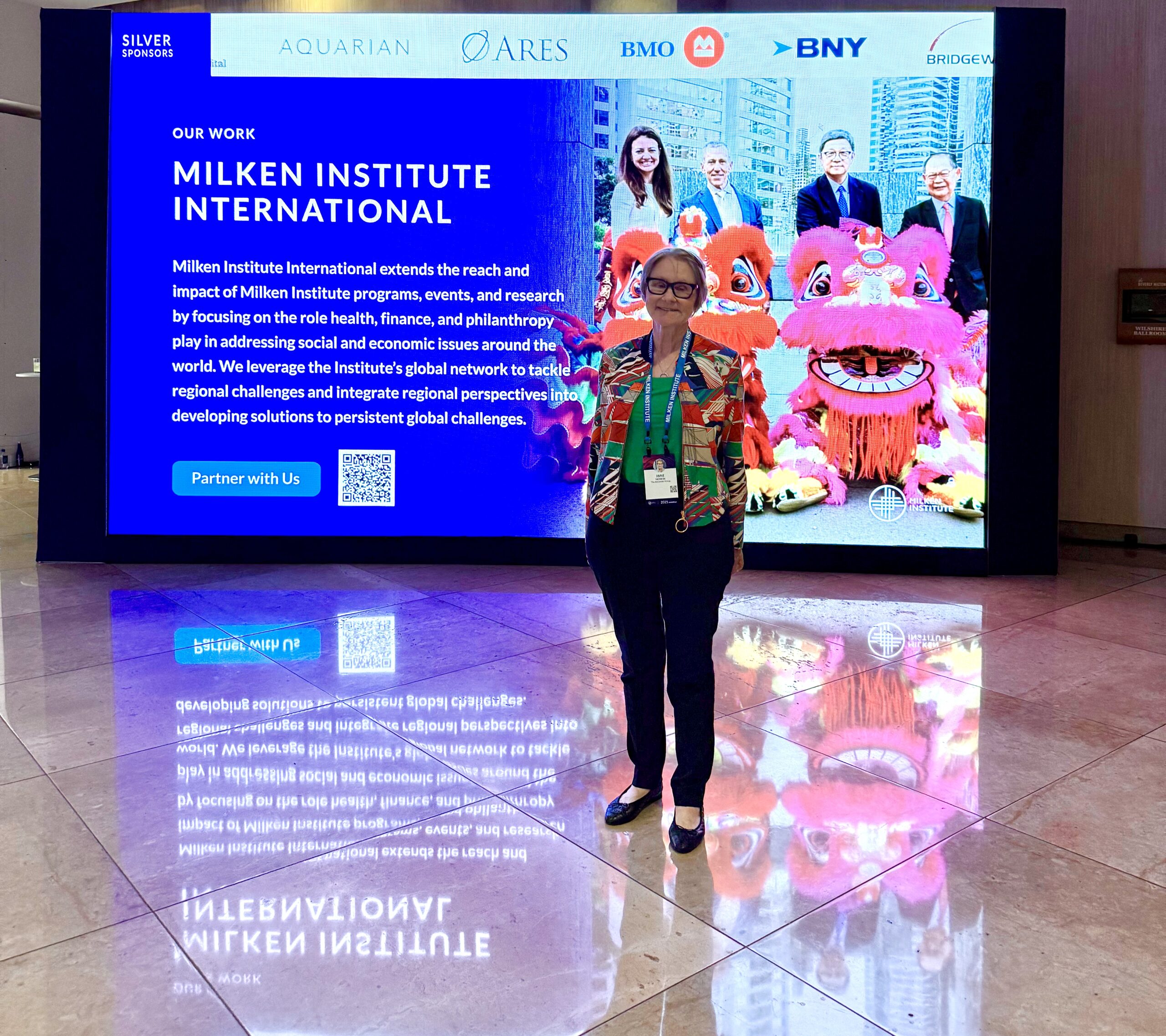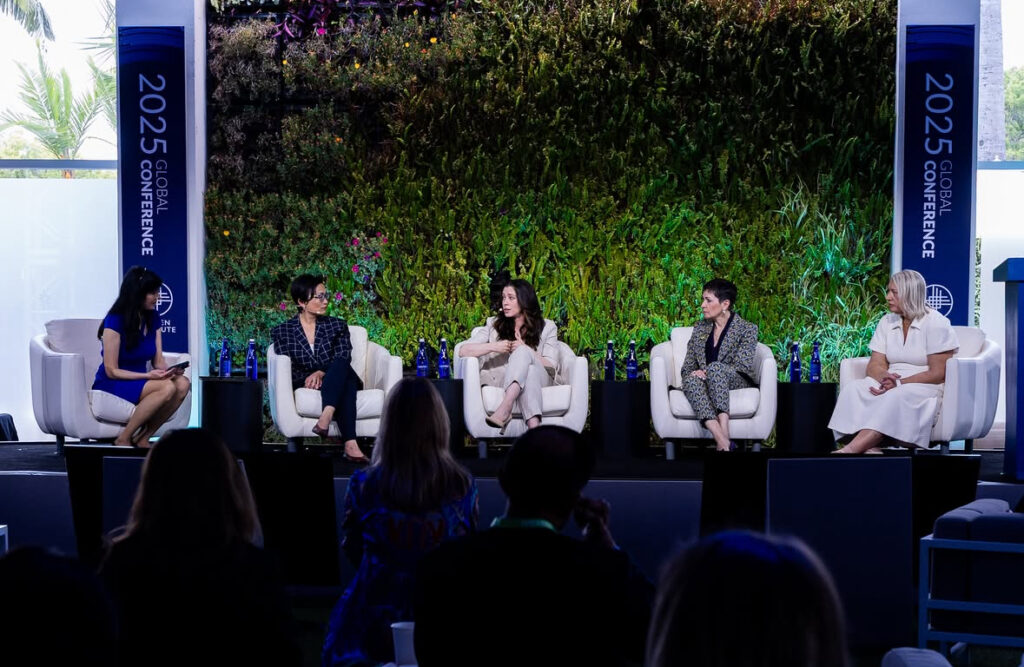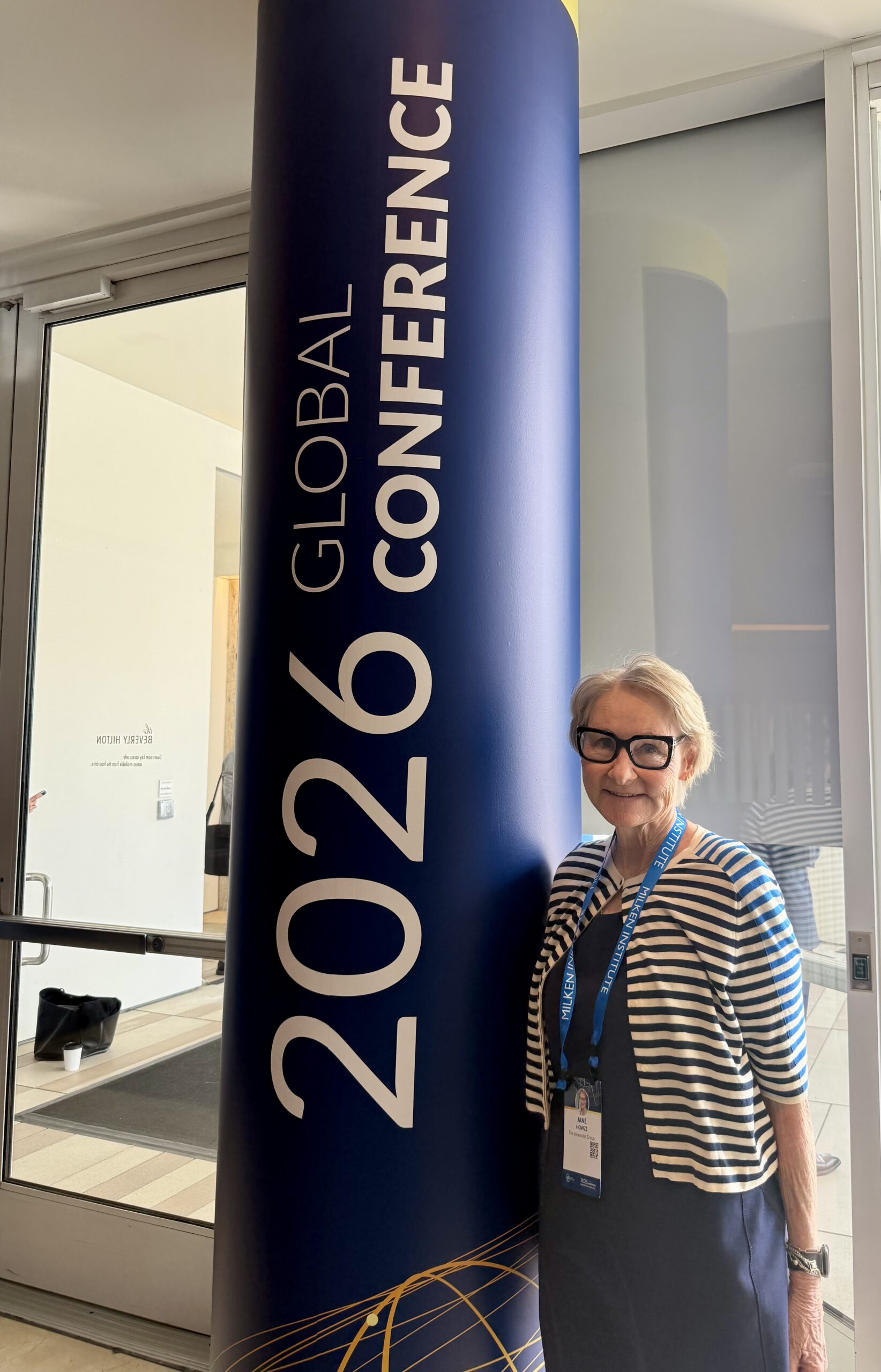
We continue to highlight the speakers and topics that resonated with Managing Director Jane Howze at the Milken Institute Global Conference. Famous faces and relevant topics such as aging and health, the importance of an investor knowing the team behind a business, and AI’s impact on the music industry are among the panel discussions Howze attended at the conference.
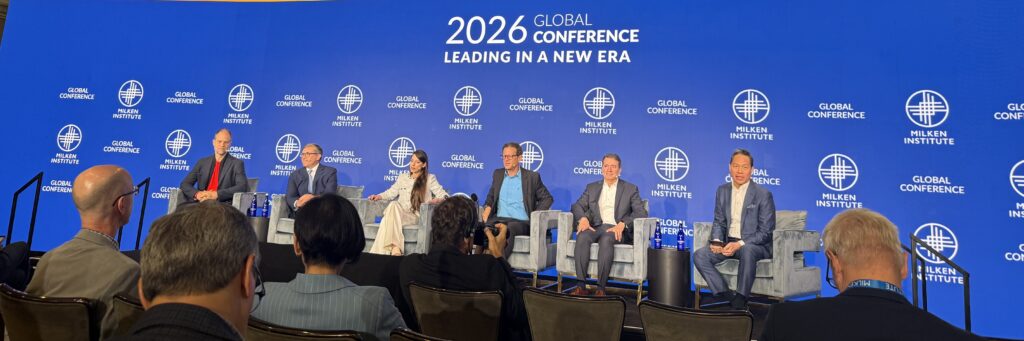
Breakthroughs Reshaping Aging and Longevity

Scientific and technological advances are transforming our understanding of health, aging, and human biology in ways unthinkable just a decade ago. Regeneration, rejuvenation, peptides, reprogramming, and AI-enabled precision health now shape the longevity narrative, championed by voices ranging from fringe biohackers to wellness influencers to world-class physicians and scientists. Yet, this expansion of approaches, claims, and products has made it difficult for markets and consumers to discern what is ready for broad application from what is still emerging. New speculative interventions can also take the focus away from those proven to extend healthy life. As capital flows into the longevity space, how can markets distinguish promise from hype and translate credible science into investable, scalable solutions—while also clarifying what individuals can safely apply today? 

American Medical Association’s CEO John Whyte, MD, MPH, put it plainly: the U.S. medical system is built to treat illness, not prevent it. Doctors are paid when patients are sick.

By the Numbers

85% of hospital visits are age-related

24% of Medicare goes to kidney disease

16% Alzheimer’s risk reduction possible with lifestyle changes

Panelists pointed to a growing movement toward whole-body medicine: approaches that examine the interconnected systems driving chronic disease rather than chasing individual symptoms.

“To date, there is not one drug approved for longevity. We are treating everything around aging — but not aging itself.”

Alzheimer’s: A Case Study in What’s Possible

A new clinical trial was highlighted as a signal of what prevention-focused medicine can achieve. Participants can now access free risk assessments for Alzheimer’s. Data shows lifestyle interventions alone can reduce risk by 16 percent. Panelists also pointed to an emerging diagnostic: a brain cholesterol test, still in development, that could function like a standard lipid panel but for neurological health — and could be available for under $150.

The challenge, panelists acknowledged, is the pipeline. Decade-long clinical trials are incompatible with the pace at which longevity science is advancing. Rethinking trial design may be as urgent as the research itself.

The Behavior Change Imperative

The panel’s most actionable message was also its most fundamental: the biggest levers for longevity aren’t pharmaceutical. They’re behavioral.

Exercise.

Consistent sleep.

Targeted supplementation, including B-complex vitamins. And regular lab work to catch problems before they become diagnosed.
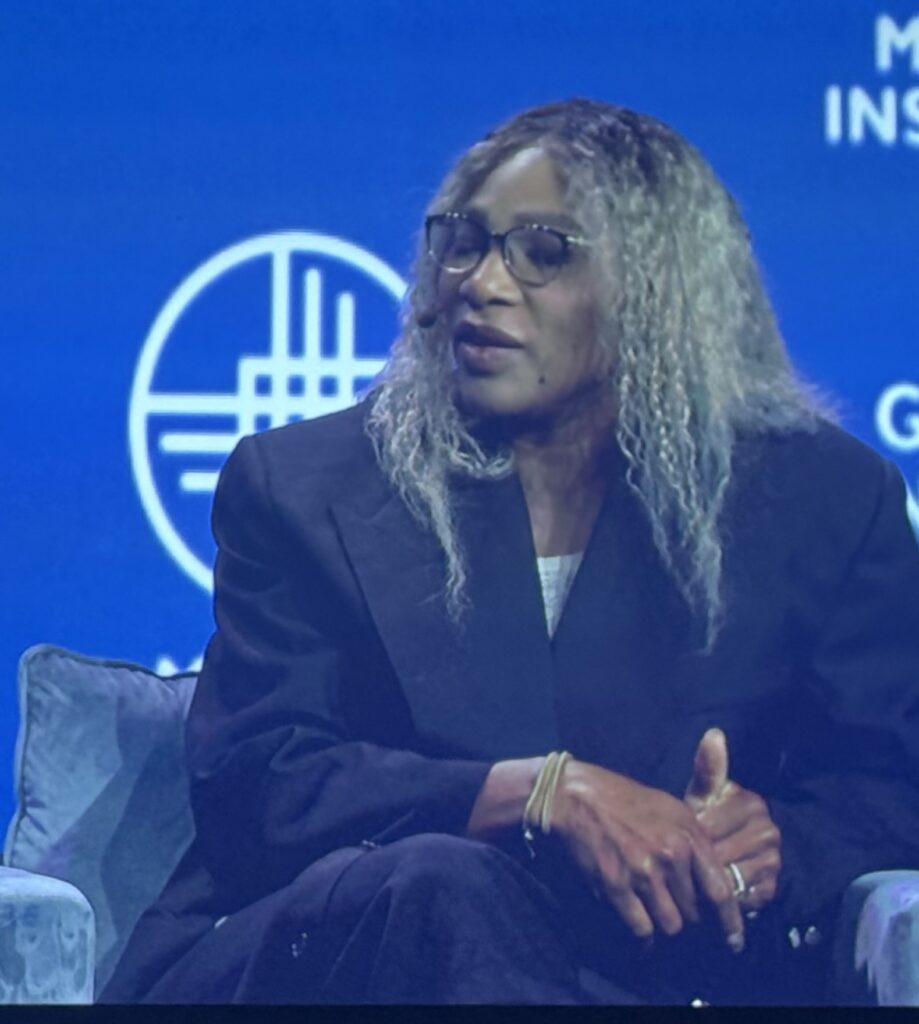
Backing What’s Next: A Conversation with Serena Williams

With 23 Grand Slam titles and four Olympic gold medals behind her, Serena Williams channeled her competitive edge into venture capital, founding Serena Ventures.

Williams came to venture capital the way most great investors do — not through a credential, but through curiosity. She started as an angel investor, writing early checks and learning the business from the inside out.

That practice took years to build. Before taking on institutional capital as a general partner, Williams spent significant time cultivating relationships which meant getting to know other investors, understanding how they thought, and building access to the kind of deal flow that only comes from trust. “VC is a game of who you know,” she noted. The work of becoming a great investor, she made clear, happens long before a term sheet is ever signed.

Williams doesn’t wait for opportunities to come to her, instead she studies markets, seeking out leaders building in spaces she believes in, taking the time to understand the human being behind the business.

She looks for founders with staying power, who possess the ability to navigate the inevitable hard stretches of building a company, hold a team together, and make sound decisions under pressure.
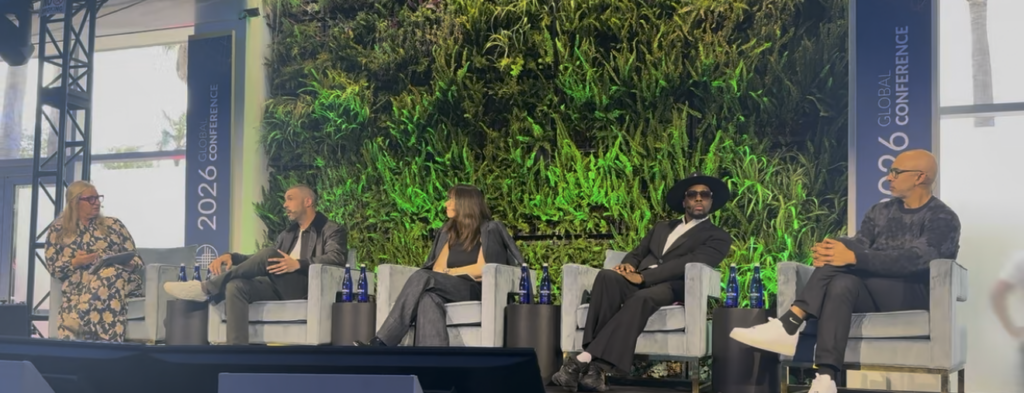
Scaling the Global Music Economy

From streaming milestones to expanding global audiences, the music industry is a dynamic, interconnected business. The music business has always been shaped by technology, but the panelists at this year’s Milken Institute Global Conference made clear that the current inflection point feels different. Data now drives nearly every decision, from A&R to release strategy. And yet, as one panelist put it, no algorithm has figured out how to manufacture a chill down your spine.

“Data is essential, but it doesn’t replace goosebumps” was the prevailing sentiment in the room. The ability to move a listener — really move them — remains the irreducible currency of the art form, even as spreadsheets increasingly inform which artists get signed, which tracks get pushed, and which markets get prioritized.

Wyclef Jean drew perhaps the sharpest line of the discussion. His declaration — “before there was AI, there was I” — cut to the heart of what’s at stake for artists watching machine-generated music edge into the mainstream. The implicit challenge: if listeners found out their favorite song was written by an AI, would it hit the same way?

Teddy Swims offered a more pragmatic view. For him, AI isn’t a threat. It’s a tool he uses to assist in his creative process. The time he saves using AI allows him to dedicated more time to touring and interacting with fans.
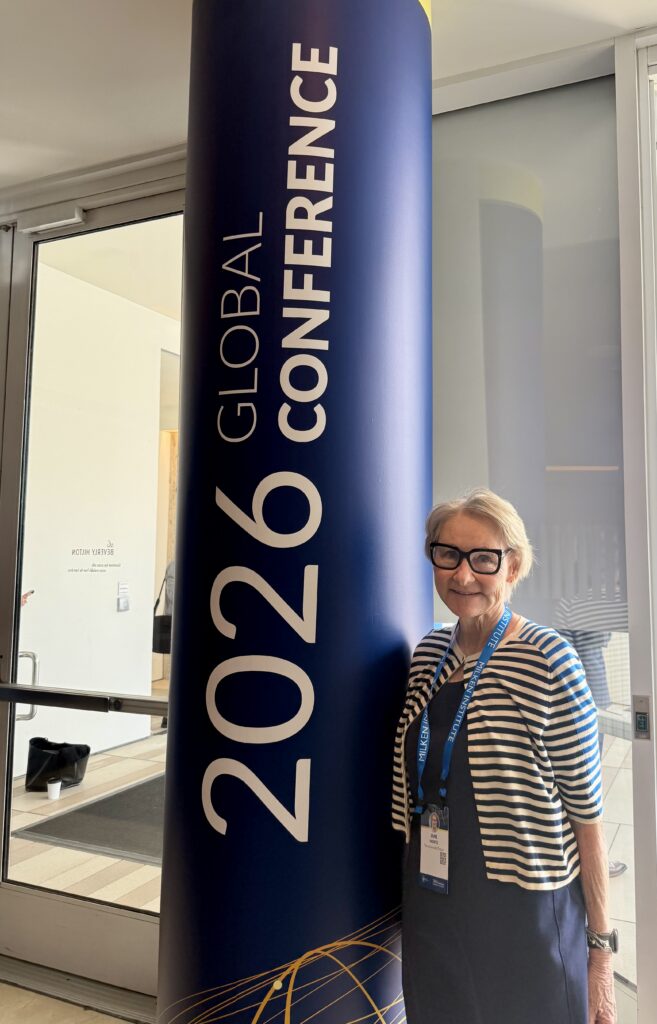
Managing Director Jane Howze is attending Milken Institute 2026 Global Conference, an annual cross sector leadership summit, bringing together global leaders in finance, technology, government, health and philanthropy, posting her thoughts throughout the week.

We are posting daily collection of Jane’s thoughts and impressions from the Global Conference in Los Angeles as she attends various seminars and panel discussions.

Day One

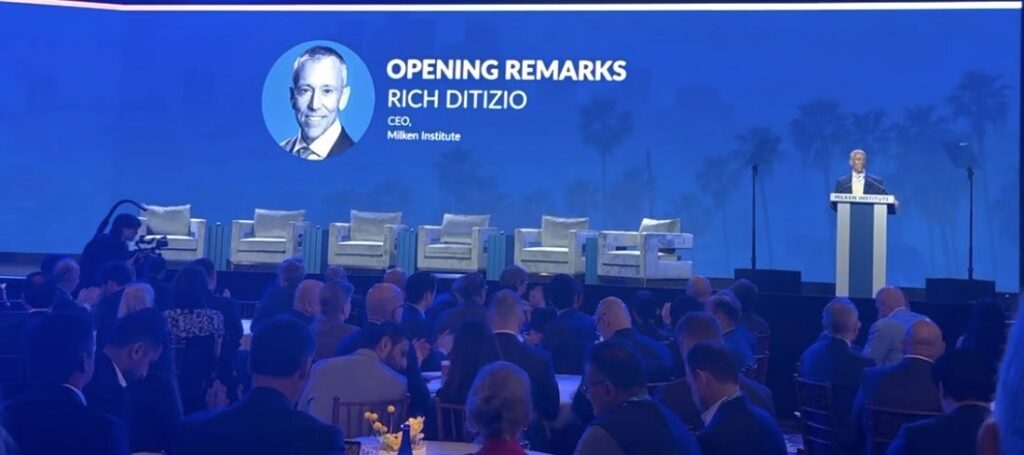
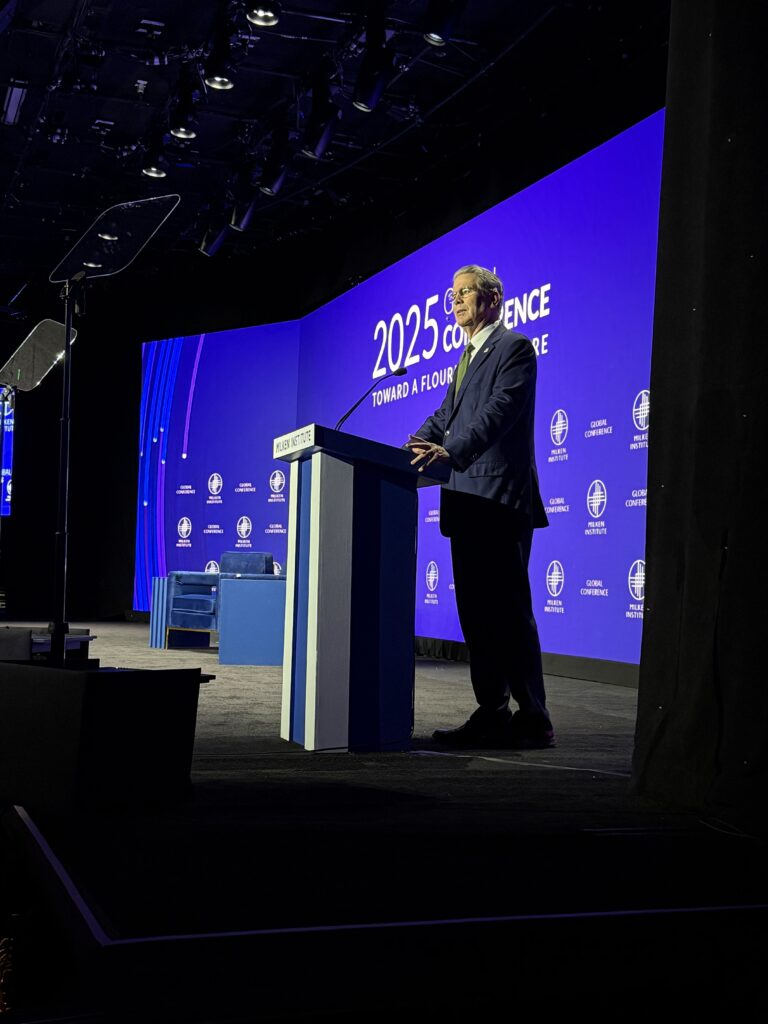
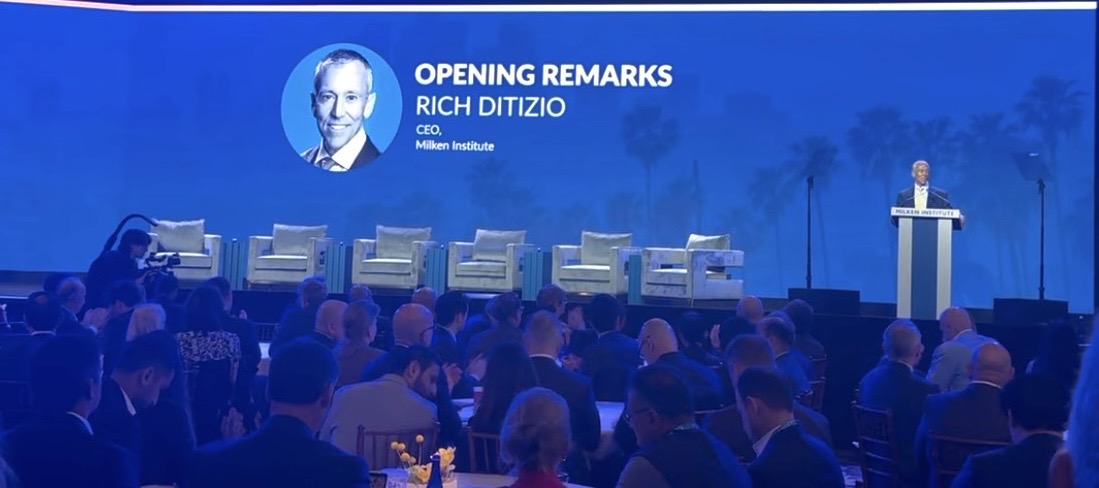
Milken Institute CEO Richard Ditizio Welcome Speech

“At​ ​the​ ​2026​ ​Milken​ ​Global​ ​Conference,​ ​Milken​ ​CEO​ ​Richard​ ​Ditizio​ ​opened​ ​with​ ​a​ ​striking​ ​image​ ​taken​ ​by​ ​astronauts—Earth​ ​suspended​ ​against​ ​the​ ​vastness​ ​of​ ​space.​ ​

From​ ​that​ ​distance,​ ​there​ ​is​ ​no​ ​sign​ ​of​ ​poverty,​ ​war,​ ​hatred,​ ​or​ ​gun​ ​violence.​ ​But​ ​as​ ​he​ ​reminded​ ​us,​ ​the​ ​closer​ ​we​ ​look,​ ​the​ ​more​ ​those​ ​realities​ ​come​ ​sharply​ ​into​ ​focus—violence​ ​normalized,​ ​even​ ​anticipated.​ ​His​ ​message​ ​set​ ​the​ ​tone​ ​for​ ​a​ ​conference​ ​that​ ​brought​ ​together​ ​leaders​ ​across​ ​business,​ ​government,​ ​technology,​ ​and​ ​philanthropy​ ​to​ ​confront​ ​those​ ​hard​ ​truths​ ​and​ ​push​ ​for​ ​solutions.​ ​

Kristalina​ ​Georgieva​ ​spoke​ ​to​ ​the​ ​fragility​ ​of​ ​the​ ​global​ ​economy​ ​and​ ​the​ ​need​ ​for​ ​cooperation​ ​in​ ​a​ ​fractured​ ​world,​ ​while​ ​Neal​ ​Mohan​ ​and​ ​Dina​ ​Powell​ ​McCormick​ ​reflected​ ​on​ ​the​ ​accelerating​ ​impact​ ​of​ ​technology​ ​and​ ​AI​ ​on​ ​society.​ ​

Across​ ​panels—from​ ​finance​ ​leaders​ ​like​ ​Jenny​ ​Johnson​ ​to​ ​global​ ​CEOs​ ​and​ ​philanthropists—the​ ​consistent​ ​theme​ ​was​ ​clear:​ ​the​ ​challenges​ ​we​ ​face​ ​are​ ​urgent,​ ​interconnected,​ ​and​ ​will​ ​not​ ​be​ ​solved​ ​by​ ​old​ ​approaches.​ ​

The​ ​call​ ​was​ ​for​ ​new​ ​thinking,​ ​real​ ​collaboration,​ ​and​ ​a​ ​willingness​ ​to​ ​confront​ ​uncomfortable​ ​realities​ ​head-on.​“

Securities and Exchange Commission, Chairman Paul Atkins on the SEC’s Opportunities and Challenges

Since taking the helm of the Securities and Exchange Commission, Chairman Paul Atkins has signaled a new direction for one of America’s most consequential financial regulators. From capital formation to investor protection and market regulation, join us to hear his perspective on the opportunities and challenges defining the next era of the SEC’s agenda.


SEC Chairman Paul Atkins focused on restoring the attractiveness of U.S. capital markets, emphasizing the need to modernize regulation and “do some housecleaning” to reverse the steady decline in public companies—from the Russell 5000 to closer to 3000.

He underscored the importance of reinvigorating the IPO market by reducing the cost and complexity of going public, noting that disclosure requirements like the 10-K have become overly burdensome and often unclear in defining what is truly material.

On cryptocurrency, he made clear it is not outside the SEC’s authority but acknowledged that unclear and inconsistent rules have created confusion and hindered innovation—signaling a shift toward more practical, transparent guidance. Atkins also called for curbing frivolous litigation and avoiding the weaponization of corporate governance, arguing that both undermine market confidence.

Across all these themes, his message was consistent: create a clearer, more workable regulatory framework that encourages innovation and makes the U.S. a more compelling place to invest.

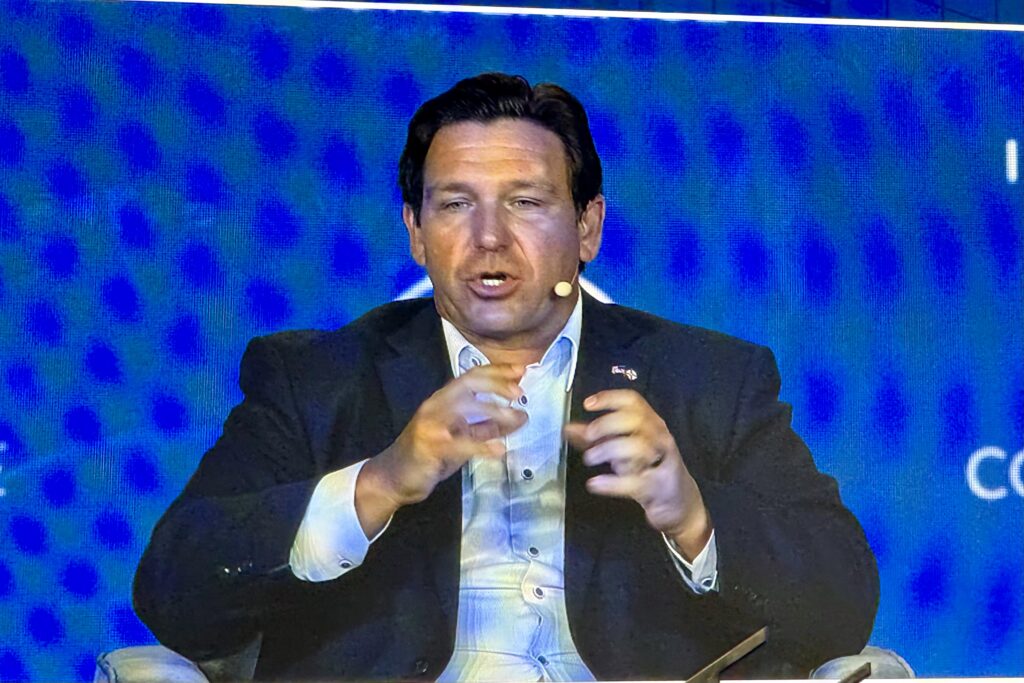
Building a Future-Ready Workforce: A Conversation with Florida Governor Ron DeSantis

Florida Governor Ron DeSantis discussed key policy priorities to build a workforce ready to power the next chapter of American growth, including among other topics, college sports and his successes as Florida’s governor.

On college sports, DeSantis is one of the most prominent voices in a growing national push for reform. He serves as vice chair of the Trump White House’s newly formed college sports commission, alongside Yankees President Randy Levine, with former Alabama coach Nick Saban lending his considerable credibility to the effort.

The stakes, DeSantis made clear, are high: under the current chaos of NIL rules and the transfer portal, athletes can effectively play for seven years — a situation he called unsustainable. Without congressional action, he warned, the financial pressure on universities becomes a slow-motion threat to non-revenue sports. Olympic programs, women’s sports, smaller athletic departments are all potential casualties of the system. States with major college sports programs want it fixed, and DeSantis positioned himself as optimistic that it can be.

He was equally direct about Florida’s ongoing property tax battle. His vision — eliminating property taxes on homesteaded properties — is bold, politically complicated, and still in motion. The fight between the Florida House and Senate over pace and approach has slowed things down, but DeSantis is playing a longer game, pushing for a November 2026 ballot measure and arguing that Floridians shouldn’t pay “rent to the government” on a home they already own.

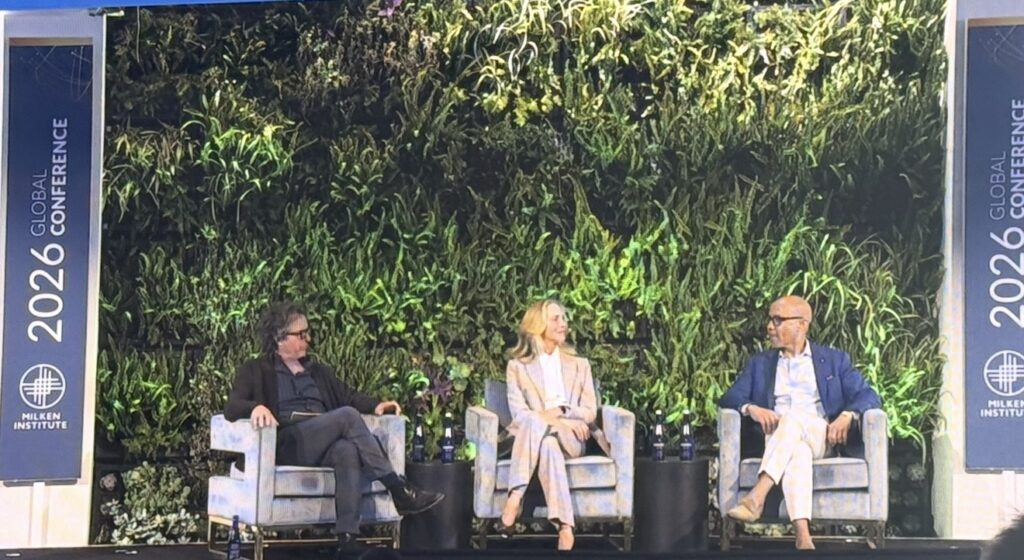
The Future of Storytelling: A Conversation with Laurene Powell Jobs and Darren Walker

In a moment of profound transformation across media and technology, Laurene Powell Jobs, Founder and President, Emerson Collective, and Darren Walker, President and CEO, Anonymous Content, come together for a timely conversation on the power of storytelling. As streaming platforms and shifting economic models redefine creative industries, these two leaders will share their perspectives on how to preserve artistic integrity and expand access.

Powell Jobs delivered what may have been the most quietly urgent message of the gathering.

“There has never been a greater need to break down walls and see our humanity,” she said. For Powell Jobs, that’s not a philosophical position. It’s an investment strategy. When she evaluates where to put capital, she says she looks first at character, specifically, people who want to move the human race forward. The idea that mission and returns are separate conversations is one she’s long since abandoned.

And the market, she argues, is confirming it. Theatrical releases are on the rise. Barnes & Noble is opening more bookstores. Young people, she observed, are desperate for community. The through-line is unmistakable: when people are isolated and the world feels fractured, they reach for stories.

“Beautiful stories well told always have an audience,” she said simply.

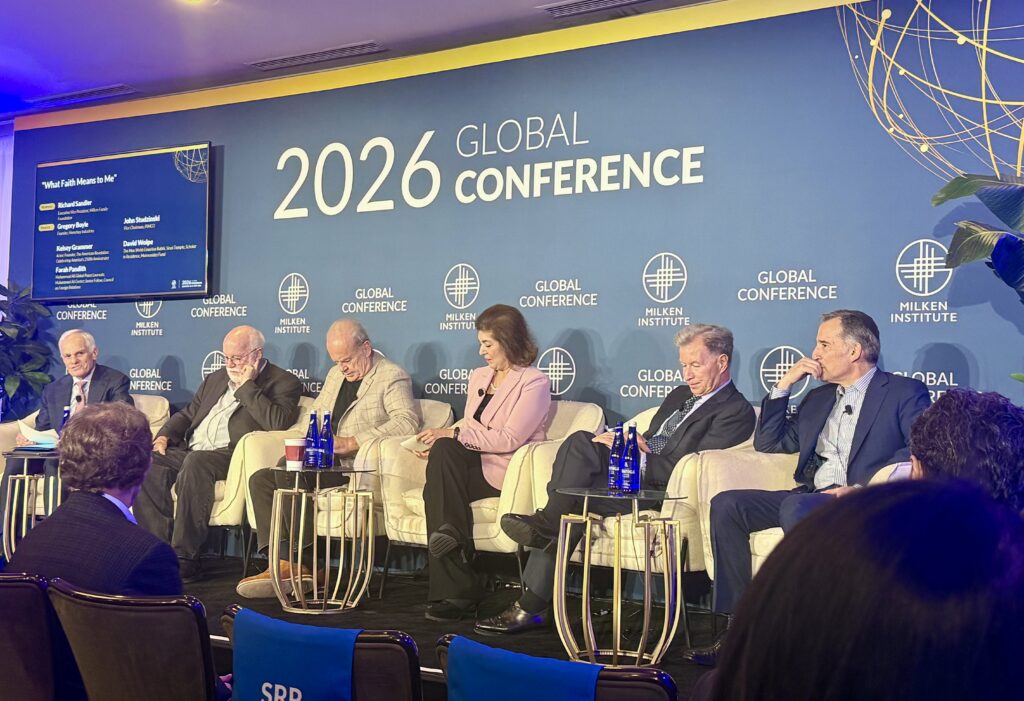
What Faith Means To Me

Gregory Boyle, Founder, Homeboy Industries, Farah Pandith, Muhammad Ali Global Peace Laureate, Muhammad Ali Center; Senior Fellow, Council on Foreign Relations,
David Wolpe
, The Max Webb Emeritus Rabbi, Sinai Temple; Scholar in Residence, Maimonides Fund, Kelsey Grammer, Actor; Founder, The American Revelation: Celebrating America’s 250th Anniversary, John Studzinski, Vice Chairman, PIMCO

What does it mean to live a life of faith in an era defined by uncertainty and accelerating change? For many, faith is not a relic of the past but a living resource, a source of strength, moral clarity, and enduring community. In this conversation, panelists reflect on their personal journeys and examine how faith traditions continue to orient, sustain, and connect us in a world that often pulls us apart. 

Below are the thoughts that resonated the most with Jane.

“Faith is not an assurance that all will be alright, but there is always hope.”

“Technology has not solved our problems. People say,” Why did my child die, but they never say, why me, when experiencing a promotion.”

We will continue following and reporting from the Milken Global Conference throughout the week.

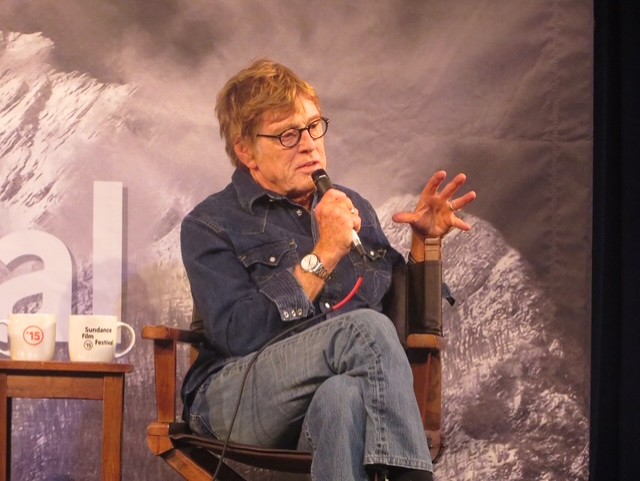
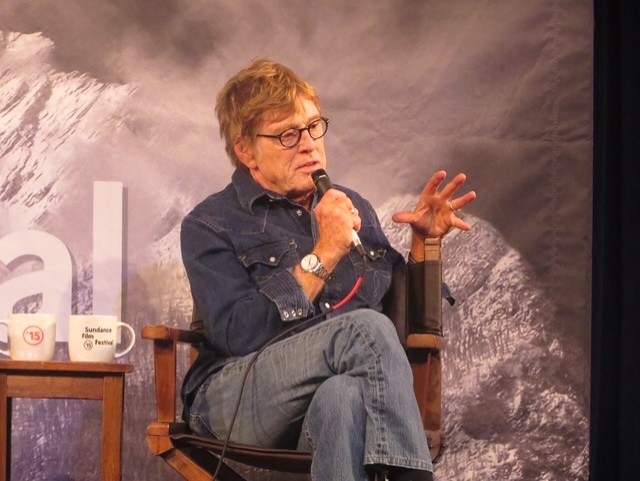
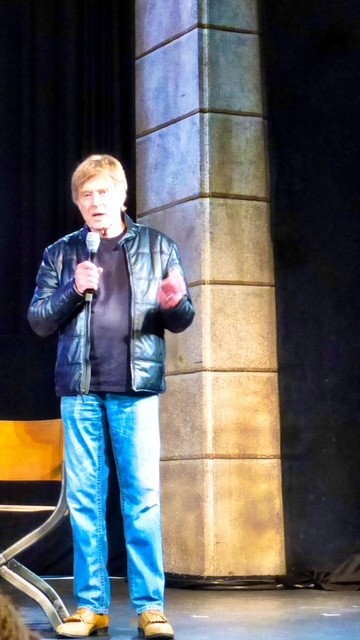
The death of Robert Redford — beloved actor, philanthropist, and champion of independent film — brought tributes from around the world. None were more heartfelt than those from the Sundance film community, where Redford’s vision of founding the Sundance Film Festival in 1981 gave thousands of filmmakers and actors their first opportunity.

I have been fortunate enough to review films at Sundance for more than a decade, which has left me with a deep appreciation for Redford and the festival’s role in shaping independent cinema. Below are five of my favorite Sundance films that capture his legacy.

Steven Soderbergh’s Sex, Lies and Videotape (1989) tells the story of a man (James Spader) whose habit of videotaping women talking about their lives disrupts the fragile marriage of a young couple (Andie MacDowell and Peter Gallagher). Its honest, sometimes uncomfortable take on intimacy and betrayal surprised Sundance audiences, won the Audience Award, and helped kick off a new wave of independent filmmaking. More than thirty years later, this low-budget, cerebral film still packs a punch and remains one of the defining titles that put the Sundance Film Festival on the map.

(Available on Amazon, Apple TV, or Fandango at Home.)

Searching for Sugar Man (2012) tells the story of 1970s singer-songwriter Rodriguez, who many considered the equal of Bob Dylan but who vanished from the music scene after recording just two albums. A bootlegged copy of one of his records made its way to South Africa, where he became a cult hero, selling more records than Elvis Presley. The film follows the search from South Africa to California and Detroit to uncover what really happened to him, with the final scenes famously shot on an iPhone after the production ran out of money — a testament to the power of storytelling over budget. This extraordinary documentary went on to win the Academy Award for Best Documentary Feature and remains one of Sundance’s most uplifting discoveries.

(Streaming on Amazon, Apple TV, or Google Play Movies.)

Financed by private donations, Rebirth (2011) followed five individuals impacted by the 9/11 attacks over a ten-year period as they grieved and rebuilt their lives. The film focused not on the event itself, but on how humans are hard-wired to heal, interweaving intimate stories with time-lapse footage of Ground Zero’s cleanup and rebuilding. I think of this remarkable film every September and wonder how the individuals are faring decades later. For many years, clips of this emotional film were screened at the 9/11 Memorial Museum.

(Available on Apple TV and Amazon Video.)

Blythe Danner delivered what may be her career-best performance in I’ll See You in My Dreams (2015), playing a widow navigating aging, grief, and a late-in-life romance with the handsome and dashing Sam Elliott. Written and directed by then-unknown Brett Haley, it’s an honest story about loss, resilience, and the unexpected ways love and friendship can return to your life. With a bigger studio marketing push, Danner might well have been an Oscar nominee. This is the film I most often recommend to friends — and they always thank me.

(Available on Netflix, Amazon Video, Fandango at Home, and Apple TV.)

The tender coming-of-age drama CODA (2021) follows Ruby (Emilia Jones), the only hearing member of a deaf family, as she serves as their interpreter while pursuing her dream of becoming a singer. One of the film’s most powerful moments shows the world through her parents’ eyes — able to see the applause when she sings on stage but not hear it. The music, filled with familiar oldies, gives the film much of its heart. Apple acquired CODA for a record $25 million, and it went on to become the first Sundance premiere to win the Academy Award for Best Picture. Troy Kotsur also made history as the first deaf male actor to win an Academy Award.

(Available on Apple TV, Amazon Prime, Google Movies, and Fandango at Home.)

There have been thousands of films that got their start at Sundance, but these five remain my personal favorites. They reflect the powerful, daring storytelling that Robert Redford championed, ensuring that his vision for independent film will live on.

Jane Howze is managing director of The Alexander Group, a national executive search firm. She has covered every Sundance Film Festival since 2011. 

Managing Director John Mann wrote this blog post a week after Hurricane Harvey made landfall in the Houston area on Aug. 26, 2017.

Hurricane Harvey dumped a record-breaking 60 inches of rain across the area, prompting 17,000 rescues, flooding hundreds of thousands of homes, and displacing more than 30,000 people.

John’s story of community connectedness, loss, and resilience in the face of disaster is just as powerful and poignant today as it was in 2017. We share this story and John’s thoughtful action items as a remembrance of all who lost so much and those who saved so many, suffered, and persevered to rebuild and start again.

The rain started on Saturday, August 26th, and continued throughout the day. By late Saturday evening, the unrelenting torrential rains and their puddles quickly morphed into flooded streets in just a matter of minutes. By 5:00 am Sunday morning, the houses on my block in Bellaire, an inner-loop Houston neighborhood, began to flood, and I found myself helping several neighbors evacuate to our house.

We built our dream house this spring, a two-story New Orleans-style house. At the last minute, we decided to build it an extra 18 inches above the city requirement. Our neighborhood had flooded in prior years, but our lot had never flooded. At the time, I thought our decision may have been overkill, but it turned out to be home-saving. 

With the help of a couple of neighbors, I used a kayak to rescue a 90-year-old neighbor whose daughter and first responders were unable to reach. She was by herself and unable to get out of bed as water filled her bedroom. It was a scary and surreal experience. By Sunday afternoon, the water had risen to within one foot of our front door. The water rose and eventually receded 24 hours later, though the rains would not stop for another 48 hours. After the water receded, we breathed a sigh of relief and began to take stock.

Our garage and cars flooded, and we lost power and plumbing for 36 hours, but thankfully, our house did not flood. Twenty-one neighbors sought refuge at our house on Sunday evening, all of whom had lost their houses and most everything in them. The mood was somber; we were all in a state of shock and disbelief. We gave up our sons’ rooms, and every other room in our house was filled with people on couches and air mattresses. Sadly, for unexplained reasons, no rescue boats or helicopters found their way to our street.

On Monday morning, we discovered that our house was one of the few in our neighborhood that did not flood. In the last week, my wife and I have been doing everything we can to help our neighbors begin the arduous process of rebuilding their homes. We, along with a cadre of volunteers, have removed furniture, sheetrock, insulation, and flooring.

After a home has flooded, it is essential to remove the sheetrock and flooring as soon as possible to prevent mold growth and allow the house to dry out. Our street, like so many others around Houston, is lined with huge debris piles. The rancid stench of mold is overwhelming. The cleanup alone will take weeks, if not months, and will serve as a poignant reminder of the catastrophic devastation.

I, like many others, donated money in years past when tragedies struck other areas of the country and world. I would text a donation, give money or supplies, attend a fundraiser, and feel good about contributing. However, I never understood how my donations were distributed or the exact impact my donation would have. Over the past week, I have received numerous inquiries from clients, friends, and family members who wanted to offer their assistance. I also learned what to do and not to do when offering to help:

1)   Volunteer your time, not your religion or politics. Many of my neighbors and I went house-to-house to assist families with whatever they needed. We asked them if we could help and quickly got to work photographing and documenting destroyed furniture and belongings, as required by insurance companies, and removing furniture, sheetrock, and boxing salvageable belongings. We offered to wash clothes, towels, and linens, and with each house, we became more adept at identifying other opportunities to lighten the homeowner’s tremendous burden.

We did this as efficiently and quickly as possible, without regard for the family’s political beliefs, religious affiliation, or ethnicity. We just wanted to help our neighbors. Unfortunately, I noticed a few organizations that appeared to have ulterior motives of espousing their religious or political beliefs in exchange for their help. Others overthought it and wanted to establish command posts and interview families to “determine needs.”

The requirement of your time is simple and straightforward: show up and be willing to work right away. Ask, “Do you need a hand?” and quickly get to work.

2)   Donate thoughtfully. As reported on CBS News, some donated items hinder recovery and are not necessary. Also, I learned that recoveries are fluid and dynamic, and requirements change daily.

In the first few days, housing, food, and materials to help remove water-soaked sheetrock and flooring were scarce and in high demand. Then the need moved to fans, dehumidifiers, boxes, and packing tape. One San Francisco friend and client did two things that touched me deeply. The Power of Business and Style CEO Anne Sagendorph sent a letter to her clients describing our plight. She followed that by sending a huge order of boxes for my neighbors to pack up their remaining belongings. Another business friend from across town donated a chair, a nightstand, and lamps she was no longer using. My neighbors will never meet this thoughtful friend, but they will have light and a place to sit in their temporary housing thanks to her. 

Today’s needs are different. I am now trying to find animal shelters that will temporarily house cats and dogs as families transition to temporary housing (mostly apartments, many of which have a limit to the size and number of pets). Again, a client has jumped in and is trying to help our neighborhood. Bottom line: determine what is needed and when it is required. Be thoughtful and creative. 

3)   Houston visitor/volunteers –are you needed? Most shelters and organizations have multiple needs. If you are a doctor or pharmacist who wants to volunteer, there are plenty of opportunities to serve. On the other hand, if you just want to help, make sure you have a plan, a place to volunteer, and a place to stay.

Many flood victims, even if they are still in their houses, are too traumatized to want company, even if you are there to help. I had to tell an old college friend who wanted to travel to Houston to help that, with my neighbors using me as a fallback shelter, I couldn’t accommodate him. 

If there is no specific assignment for you, determine if the money you would spend on flights and hotels would make a greater impact than your time. Many not-for-profits have up-to-the-minute wish lists on Amazon of items they need most. And in the final analysis, nothing works better for not-for-profits (and some displaced families) than cash.

4)   Select organizations that make an immediate impact. I discovered that those who lost everything almost immediately needed shelter, food, and transportation. Some who lost their wallets or credit cards needed cash. Sadly, perhaps because of its enormous scale, there is no single nonprofit that has been able to adequately support Houston’s colossal needs. There seems to be disagreement about whether big organizations (think SPCA and Red Cross) are as effective as grassroots fundraising organizations, such as Houston Texans star player JJ Watt’s Hurricane Harvey Fundraiser and the Cantor Fitzgerald Relief Fund, which give 100 percent of the funds collected to hurricane victims. Those seeking a smaller, more transparent animal rescue group may wish to consider Friends for Life. Also, consider a direct gift of gift cards or cash.

Disaster recovery is a marathon, not a sprint. Hurricane Harvey will soon roll off America’s radar (pardon the pun), and life for some of us in Houston will soon return to normal. The rebuilding effort that lies ahead for many will be challenging and stressful. Donations will be required for months to come. Find your cause, or causes, within the disaster, and spend time researching to determine when, how, and what you can do to help.

It’s not every year college graduates receive life lessons from a famous frog and the chairman of the Federal Reserve, but in 2025, commencement speeches by celebrities, athletes, and political leaders are as varied as those turning tassels this spring.

While college graduation season continues through mid-June, in the spirit of optimism for the future of the Class of 2025, we are highlighting some of the year’s standout quotes from speeches at Johns Hopkins University, Emerson College, Princeton University, and NYU.

Jerome Powell, Chairman of the Federal Reserve, Princeton University

“We all move at our own pace, and that’s ok. Fifty years later, I can tell you something I did not know then: The vast majority of what you need to know about work, about relationships, about yourself, about life, you have yet to learn. And that itself is a tremendous gift.

Over the remainder of your life, you must continue to educate yourself and to grow as a person, becoming more focused on what really matters, more widely knowledgeable, better read, more disciplined, and more strategic. But also wiser, kinder, more empathetic, more generous, more loving, more forgiving of others and of yourself. Each of us is a work in progress. The possibilities for self-improvement are limitless.”

Actress Jennifer Coolidge, Emerson College

“When you find the thing that you want to do, I really want to highly recommend, just friggin’ go for it. You really have to psych yourself up into believing absurd possibilities, and you have to believe that they are not absurd.”

Actress Molly Shannon, NYU

“Whatever road you choose to follow, you will hit bumps. These bumps will make you feel stuffed or like a failure, or make you regret choosing to go down that road in the first place–the key is how you react.” 

Musician Andree3000, Berklee College of Music

“If you are an artist, your job is to stay true to what you feel and stay true to your instincts and stay true to what drives you.”

Actress Regina Hall, Fordham University

“What I don’t remember is my GPA, I don’t remember many of my tests or exams, what I do remember are the people who helped me type papers late at night, my professors, who took extra time with instructions and support, because college is not merely an academic institution. It’s a stepping stone to building independence and testing the limits of your moral compass. So we look to you to hold humanity to the highest standard, to remind us of our divine nature. You will exemplify the excellence that resides in us all.”

Former Major League Baseball shortstop for the New York Yankees and Baseball Hall-of-Famer Derek Jeter, University of Michigan

“You owe it to yourself to think long and hard about what you want to do with your life. To think about what you value most. It’s a choice. Your choice. There may be unwanted side effects with those dreams, too. Side effects like doubt, criticism, endless hours at work. But that’s the price you pay.”

Actor Lavar Burton, Howard University

“Remember that you are descended from some of the most resilient souls in the history of humanity. And whatever you do, do not allow fear to paralyze you into non-action.”

Today Show co-host Al Roker, Siena College

“Truth matters, and that’s never been more relevant than right now. We are in a moment when truth is under attack, when the loudest voice, too often, drowns out the most honest one, where misinformation spreads faster than facts, and that’s why your voices matter.”

Sal Khan, Educator, Founder and CEO of Khan Academy, Johns Hopkins University

“There’s no Forbes list of the 500 happiest people on Earth. If there were, I suspect most of them would be people we’ve never heard of, but they’ve had a few things in common. A strong community of friends and family, a sense of purpose, a way to express themselves creatively. They’d feel appreciated. They’d laugh often, they’d see the glass half full and not take themselves too seriously. Many would have basic financial security, but plenty would have far less material wealth than most of us. So, as you build yourself in the traditional sense, also invest in what gives you meaning.”

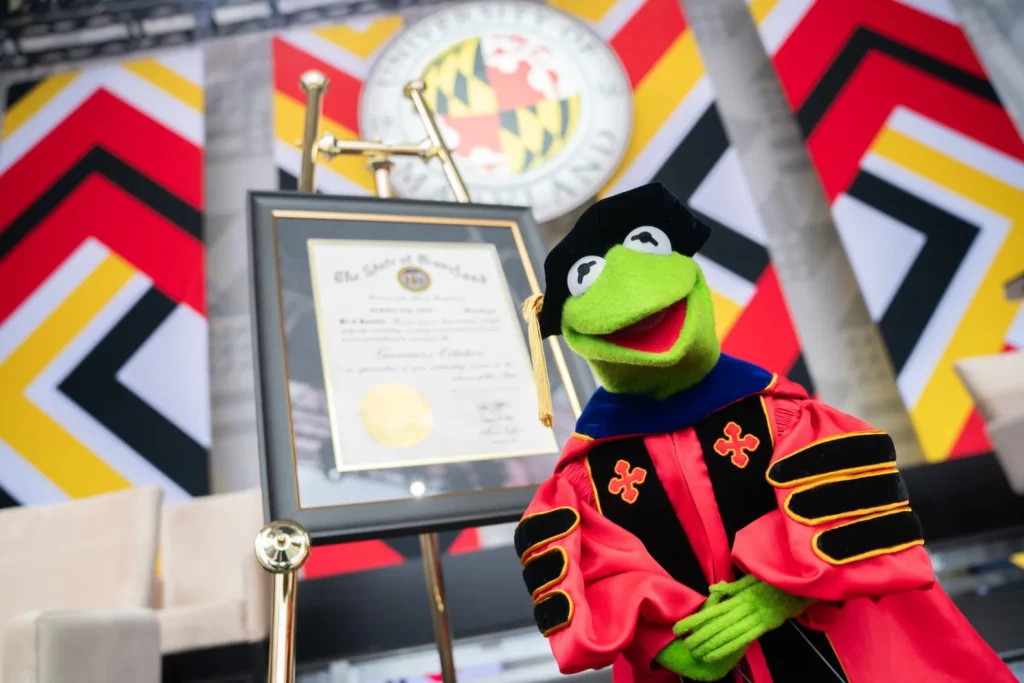
Philosopher and Musician, Kermit the Frog, University of Maryland

“Life is not a solo act; no, it’s not. It’s a big, messy, delightful ensemble piece, especially when you are with your people. Life is better when we leap together.”

Civility and cohesion were the overarching messages from the first day of the Milken Institute Global Conference.

Managing Director Jane Howze is again attending the annual event in Los Angeles, sharing her takeaways and insights from daily sessions featuring thought leaders, politicians, scientists, professional athletes, entrepreneurs, business leaders, and celebrities.

The Milken Institute Global Conference brings together the world’s brightest minds to address the most urgent challenges and unlock the most promising opportunities of our time. The four-day event connects individuals with the capital and influence to drive change with experts and innovators transforming health, finance, business, technology, philanthropy, industry, and society.

“The call for civility really impacts everyone,” Jane said. “Rich Ditizio’s speech was powerful. It’s energizing and hopeful to see people of different geographies and politics come together to listen and learn.”

The 28th annual Global Conference by the numbers:

  • Four Days
  • 200 Sessions
  • 300+Registered Media
  • 900 Speakers
  • 4,000+ Participants

Milken Institute CEO Richard Ditizio set the tone for the conference during his welcome speech with encouraging words and a plea for civility, despite differences.

“The future will not be built by living within our own echo chambers. It will be built by bold, inclusive coalitions that reflect the world we’re trying to realize,” said Ditizio. “And we have many past successes to lead the way—we see time and again, when capital, innovation, and collaboration come together, remarkable things happen. I know the challenges we face are enormous—but I also know that our capacity to meet them is even greater.”

Listen to Rich’s opening speech here.

Read on for highlights from various panels Jane attended throughout the first day of the Milken Institute Global Conference, covering the economy, the healthcare system and women’s health issues.

A Conversation with US Secretary of the Treasury Scott Bessent

Treasury Secretary Scott Bessent spoke at the Milken Institute Global Conference on Monday. Bloomberg Media reporters noted a few key quotes from his speech below.

Bessent says the Trump administration’s goal is to make the US an even more appealing destination for international capital.

“Tariffs are engineered to encourage companies like yours to invest directly in the United States. Hire your workers here. Build your factories here. Make your products here.”

“I hope you can see the bigger picture now. The Trump economic agenda is more than the sum of its parts. Trade, tax cuts and deregulation may be three distinct policies. But each policy is mutually reinforcing. And acting in concert, they push toward the same goal — to solidify our position as the home of global capital.”

Bessent is sketching out his vision for the American dream. Asked what the next 250 years should look like, he says, “To me, it’s equal opportunity for great outcomes.”

From Experience to Excellence: Women Redefining Business and Financial Wellness

Led by Sheryl WuDunn, Co-Founder of FullSky Partners and co-owner of Kristof Wines, the session explored the impact women are having on the entrepreneurial segment, thanks to trailblazing female founders, high-profile celebrities, Fortune 500 executives, and private sector leaders. It delved into safeguarding women’s cognitive health and the importance of adopting lifelong strategies for optimizing healthy longevity. 

Jane was struck by the power and information shared during this “amazing talk.”

“The old script of how women are supposed to age is broken. Women are tearing it up midlife is no longer a winding down but actually gearing up.

Women are living longer than men, earning more degrees, starting more businesses at twice the rate of men and the fastest growing group of entrepreneurs are women over 45. That’s not a footnote that’s a power shift.

Why?

Because the system wasn’t built for women with ambition and aging parents and mortgages and hot flashes. So instead of waiting for the system to catch up women are building their own. They’re reinventing careers, demanding flexibility and bringing decades of wisdom and grit to the table. They’re not just chasing success, they are defining it on their own terms, that includes health, wealth and purpose. But here’s the kicker. For all this, women still face 2/3 of Alzheimer’s cases, we spend 23% more of our lives in poor health than men and end up with 30% less in retirement.

That’s just not unfair, that’s unsustainable.”

Watch the panel discussion here.

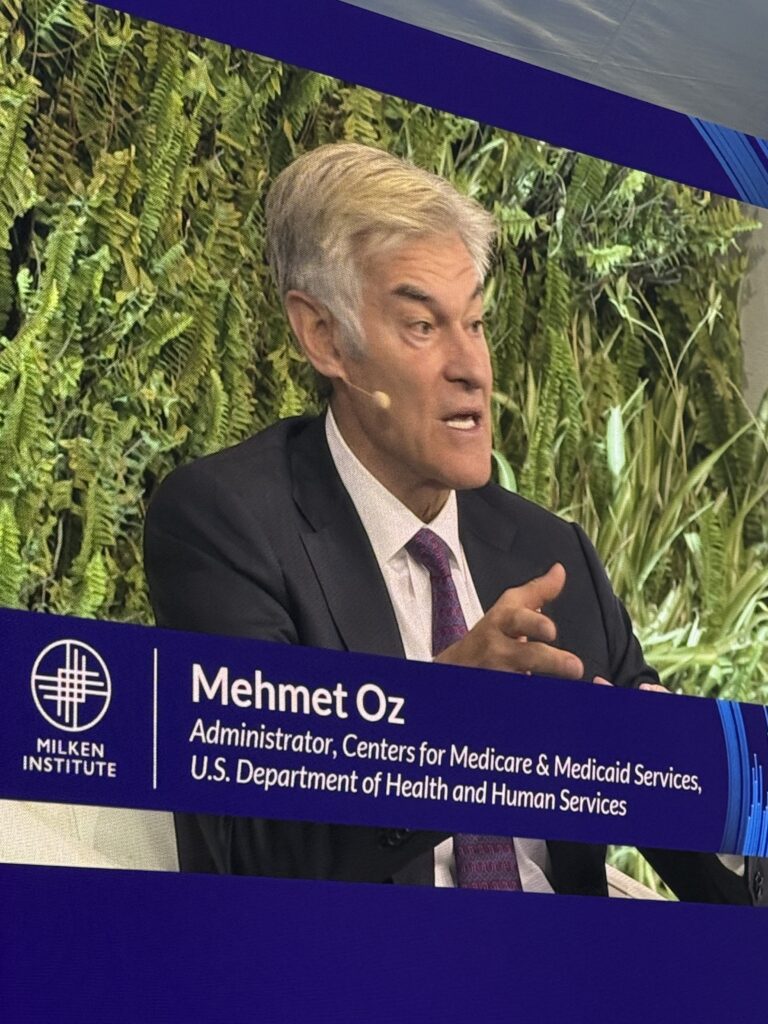
A Conversation with Centers for Medicare & Medicaid Services Administrator Mehmet Oz

Q: What have your first set of priorities been at the Centers for Medicare & Medicaid Services?

We’re starting off with the broad reality. We actually have objectives and key results. Start with the people–this is something I did not appreciate from the outside. I’ve never been in government before. These are highly competent, skilled individuals, very mission-driven. They come to work at HHS because they want to make America a healthier place. And many don’t feel like they’ve had the freedom to do that. So just activating the natural talent that we have within the organization is an initial focus of ours.

A: The main way we’ll deal with health care issues in America is by dealing with the 70% of the costs that are driven by chronic illness, much of it, of course, because of lifestyle choices that we’re making, sometimes without complete awareness of the impact it will have on us.

We spend twice as much as any other developed country in the world, twice as much for our health care per capita, and yet our health quality continues to drop. We have the highest mortality rate for moms delivering babies. We have a tragically dropping a differential between Europe and life expectancy. We’re now five years behind. When I was in medical school, we were equal to Europe. So we’re not getting our money’s worth; we can’t just throw money at the problem. We have to use it wisely and judiciously to make sure that vulnerable are cared for, but also we do our fiduciary responsibility to the American taxpayer.

Tap here to download the full transcript.

Follow The Alexander Group on LinkedIn and Instagram for updated information and pictures from the Milken Institute Global Conference.

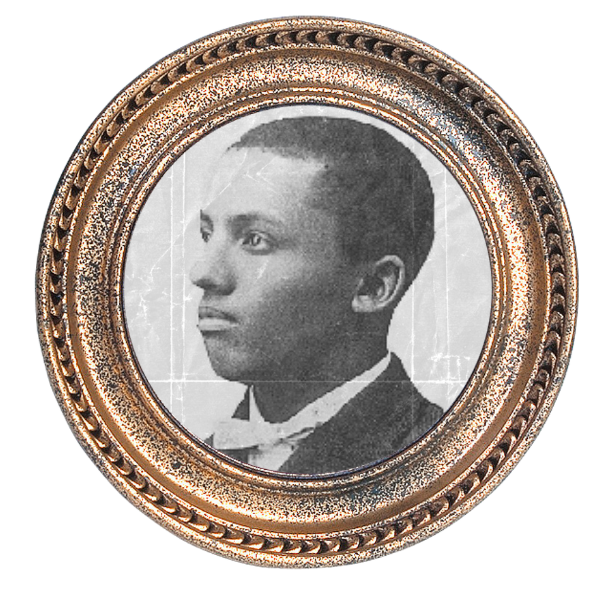
This February, we’re delving deeper into the origins of Black History Month and welcoming insights from clients and friends of the firm about ways we can honor the mission and vision Dr. Carter G. Woodson established in 1926.

Dr. Carter G. Woodson was a distinguished Black author, editor, publisher, and historian who founded the Association for the Study of Negro Life and History in 1915 in Chicago, describing its mission as the scientific study of the “neglected aspects of Negro life and history. Black History Month evolved from that idea and celebrates the historic contributions of Black people. The month has been marked every February since 1976.  

Woodson’s parents were illiterate former slaves, and his foundational education was spotty at best. Instead of the classroom, he worked in the West Virginia coal mines and on the family farm. He entered high school at 20 and graduated two years later.  

Throughout his lifetime, Woodson became a school supervisor in the Philippines and later traveled throughout Europe and Asia after earning a bachelor’s degree in literature from Berea College in Kentucky.   

Dr. Woodson also earned a master’s degree from the University of Chicago and became the second Black American, after W.E.B. Du Bois, to obtain a Ph.D. from Harvard University. He joined the faculty of Howard University and eventually served as Dean of the College of Arts and Sciences.  

The February timing of Black History Month was intentional by Dr. Woodson, who launched Negro History Week in the second week of February to coincide with the birthdays of Abraham Lincoln and Frederick Douglass.  

More than 100 years later, Black History Month is a significant event, highlighting well-known and less familiar individuals and their accomplishments, innovations and experiences.  

The 2025 Black History Month theme of African Americans and Labor focuses on the various and profound ways work and working of all kinds—free and unfree, skilled and unskilled, vocational and voluntary—intersect with Black people’s collective experiences.  

As an executive search firm, we understand the importance of work and are privileged to connect our clients with talented leaders across a swath of industries and roles.  

We’re honored to have two friends of the firm share what Black History Month means to them and how we can actively participate in the annual event not just in February but every month on the calendar.  

William M. Washington III, Global Chief Financial Officer, Baker McKenzie  

As an African American CFO, Black History Month holds special significance for me. It is a time to reflect on the rich history, culture, and contributions of African Americans to our society. This month provides an opportunity to engage in meaningful discourse and gain deeper insights into the struggles and triumphs of our community.  

During Black History Month, it is important to remember and honor influential figures such as Martin Luther King Jr., Harriet Tubman, Barack Obama, and Maya Angelou. Their contributions have left an indelible mark on American history and continue to inspire us today. 

Growing up, my parents taught me the importance of knowing about Black history year-round. They instilled in me the value of understanding our heritage and its impact on our present and future. Black History Month is a reminder of the resilience, strength, and determination that have been the hallmarks of our journey.  

By celebrating our history, we acknowledge our progress and the work that still needs to be done to achieve true equality and justice. 

As an African American leader, I believe it is my responsibility to mentor and guide others, helping them to rise and achieve their full potential. One quote that resonates deeply with me is from Booker T. Washington: “If you want to lift yourself up, lift up someone else.” This quote embodies the spirit of Black History Month for me. It is a call to action to support and uplift one another as we strive for success. 

To actively participate in Black History Month, consider supporting Black-owned businesses. This helps to promote economic empowerment within the community. Additionally, donating to charities that support Black causes can make a significant impact. Organizations like Black Lives Matter, NAACP, and the ACLU are doing important work that benefits the community. Lastly, participating in local movements and events can provide valuable opportunities to learn and engage with others who are passionate about celebrating Black history and culture. 

Black History Month is a time to celebrate our heritage, reflect on our progress, and commit to lifting each other up. It is a reminder that our collective strength lies in our unity and our ability to support one another. Let us continue to honor the legacy of our ancestors and work towards a brighter future for all. 

Marjorie Josaphat, Executive Director, Human Resources, Milken Institute 

Here are some ways we have honored Black History throughout the year and my 30 years in Human Resources: 

  • Highlighting courses taught by black authors in celebration of Black History Month. 
  • Sharing short, animated clips about Black historical figures with staff. 
  • Encouraging staff to share foods from their diverse backgrounds, including African, Caribbean, and American cuisine. 
  • Sharing short biographies of lesser-known yet impactful Black men and women who have contributed to the formation and elevation of people in America. 

At Milken Institute, we honor Black History throughout the year by ensuring diverse speakers and contributors at all our conferences and by fostering a diverse workforce. 

Learn More About Black Leaders, Innovators, Educators and Creators: 

Association for the Study of African American Life and History (ASALH®) 

National Association for the Advancement of Colored People (NAACP)

https://naacp.org/ 

Smithsonian 

https://www.si.edu/events/black-history-month

In recent years, mental health has emerged from the closet to be openly discussed in the business world. Corporate America talks about it in terms of work-life balance, burnout, and managing stress while offering resources and advice. Yet, I have never seen much written about post-traumatic stress disorder (PTSD).

Two years ago, I was involved in a horrible accident. It was an accident that changed my life in every way. I promised myself that once I got far enough away from it to gain perspective, I would write about it and what I learned.

It was one of those wonderful spring nights in Houston where the sun sets at 7:30, the humidity is low, and it is pleasantly warm—the days you just want to be outside. My husband and I walked to dinner two blocks away from our home as is often our habit. There were lots of people walking the streets, all enthused by the wonderful weather.

After dinner, we crossed the busy intersection of Kirby Drive, where people were crossing ahead and behind us. Suddenly, I was thrown in the air by a car that had run a red light and hit me. Time stood still, and out of the corner of my eye, I could see my husband being thrown in the air as well. My husband lay dazed in the middle of the street. I thought he was dead. I was covered in blood and also lying in the intersection. He later admitted he thought I was dead. Fortunately, other cars stopped and formed a circle around us to protect us from being run over us a second time. The driver reluctantly stopped but did not get out of the car. For a short period of time, I could not move my legs, and there was a large tire track where the car had run over my right foot. An ambulance arrived within ten minutes and, with sirens blaring, whisked us to the emergency room.

After spending the night in the emergency room, I was diagnosed with two broken legs along with a deep cut above my eye that required surgery. My husband was battered and bruised. I avoided surgery by agreeing not to put weight on my feet for two months and using a wheelchair. Healing my broken legs bruised and battered face would be the easy part.

Touring Amsterdam shortly after the accident.

The following day I posted details of my accident on Facebook assuring friends that I would be okay and vowing to get back to work the next week, wheelchair and all. Along with numerous messages of love and concern, there was a message from a therapist friend that said, “Jane I strongly recommend you and your husband get PTSD counseling.” I wondered what he meant because I was worried about getting from my wheelchair into a shower. It didn’t take long to find out.

During a torrential downpour the next day, we embarked on our first of many doctors’ appointments. My husband and I panicked. We knew what we could see but didn’t know what we couldn’t see—just like in the accident. Was a car going to come out of nowhere and run us down? Would we be unexpectedly rear-ended? Not surprisingly ,it took us 90 minutes to make the six-mile trip. I was shaking and in tears.

My emotions were not limited to car rides. As I recovered, I sat in my wheelchair in our home—a 17th-floor high-rise—where I looked out on the scene of the accident. My heart raced, and I broke out into a cold sweat as memories of the accident engulfed me—the sound of metal hitting my leg, the nearby pedestrians screaming for the driver to stop, and the claustrophobia I felt riding in an ambulance strapped to a spinal board. These thoughts consumed me.

I knew I needed help to deal with my emotional injury. The first order of business was to learn what PTSD is and what can be done to treat it.

What is PTSD?

Most people associate PTSD (post-traumatic stress disorder) with soldiers returning from combat. But it is broader than that. PTSD is an emotional reaction to traumatic events (accident, natural disaster, violence, assault) that can take the form of nightmares, heightened anxiety, avoidance, memory lapses, and intense physiological reactions to reminders of the trauma, such as rapid heartbeat and sweating.

Studies indicate that 3.5 percent of the US population will experience PTSD in a given year. It can happen immediately after the event or years later. People of any age, gender, ethnicity and background can experience it.

PTSD can be mild. One friend was in a bicycle accident and ended up in a ditch with no one to help her. While she does not have nightmares about the accident, she no longer rides bicycles, and the accident has not had any emotional impact on her except her depriving herself of the joy of bike riding. It can also be severe and affect the quality of one’s life. We all have heard stories about people who were sexually abused as a child and in their adult years start having recurring nightmares and anxiety so severe it affects their ability to sustain relationships.

Treatment for PTSD

There are many ways to treat PTSD, including medication, traditional therapy, and specific targeted therapies. Targeted therapies include Prolonged Exposure Therapy, which teaches individuals to approach trauma-related memories they have been avoiding, Cognitive Processing Therapy, which teaches people to identify how the traumatic experiences have affected their thinking and entail consciously modifying disturbing thought patterns that interfere with the patient’s life, and Eye Movement Desensitization and Reprocessing which involves the patient revisiting the trauma in bits and pieces with alternating stimuli (eye movement or tapping) in a structured session.

In my case, I did not want to take medication and knew that traditional therapy –talking about my childhood—would not help. I googled the Veteran’s Administration website, which has considerable information about PTSD and treatments. One referral led to another and to yet another, and I found a specialist who was close to my home (another positive since driving long distances was not in my traumatized husband’s wheelhouse, and I could not drive). My therapist specialized in Eye Movement Desensitization and Reprocessing (EMDR).

My therapy involved sitting face-to-face with my therapist. In her calm and soothing voice, she asked me to describe the accident—not only what happened but what I felt in my body as I described it. She would ask me to describe the negative feelings and rate the distress I felt. She did this while instructing me to follow her hand with my eyes or while tapping on my arm or leg.

Visiting the Rijksmuseum

I’m not sure why the eye movement works but one Harvard researcher hypothesizes that for reasons connected with the biological mechanism involved in Rapid Eye Moment (REM) sleep, internal associations arise and the client begins to process the memory differently and from an empowered place. My therapist, Jennifer Christian, states, “The body is made to heal; EMDR taps into this healing process, calms the nervous system, reduces the level of distress when remembering, and helps us to reconnect with ourselves.”

Each time I visited her and processed the memory I started to see it differently and my distress lessened. From being scared and angry, I started thinking, “Yeah, this happened, but you know what? I am okay. I survived. I am resilient.”

How long does the therapy last and does it work?

One of the benefits of EMDR therapy is that it is not something you do for years. Most protocols require eight treatments. After five sessions, I felt like my old self and saw the accident as just an unfortunate alignment of the stars rather than an event that would define who I was.

Before and after: Back in Amsterdam—and back on her feet—one year later

The EMDR Institute reports that more than 30 positive controlled outcome studies have been done on EMDR therapy. Some of the studies show that 84 to 90 percent of single-trauma victims no longer have post-traumatic stress disorder after only three 90-minute sessions. Another study, funded by the HMO Kaiser Permanente, found that 100 percent of the single-trauma victims and 77 percent of multiple trauma victims no longer were diagnosed with PTSD after only six 50-minute sessions. In another study, 77 percent of combat veterans were free of PTSD in 12 sessions.

With the focus today on mental health, perhaps corporations should investigate whether this treatment would be beneficial for depression, low self-esteem, or even work-related stress. One of the many lessons I learned from my accident was that talking about mental health and asking for help was part of the healing process.

Let the talking and healing begin.

Throughout the past year, we’ve enjoyed an array of global travels, meaningful books, thought-provoking films, and live music experiences that prompted us to dance and sing. Deeming something “the best” is a heady move, but The Alexander Group knows a few things about exemplary talent, so we offer these 2024 arts and pop culture superlatives as we head into 2025.

Jane Howze, Managing Director

Best Film: Documentary Daughters streaming on Netflix. It’s about a daddy/daughter dance, where the fathers are incarcerated. Look for it to get an Oscar nod.

Best Concert: It’s hard to pick as I went on a concert BINGE this year. Taylor Swift (multiple shows), Joni Mitchell at the Hollywood Bowl, and the Rolling Stones in San Francisco. 

Best Trip/Travel Destination: The Gleneagles in Scotland for a bucket list golf trip.

John Mann, Managing Director

Best Film(s): Movies are Will and Harper and The Menendez Brothers documentaries. Will and Harper’s insight into a personal conversation with one of my favorite actors, Will Ferrell, and his good friend’s transformative journey. 

The Menendez Brothers is gripping— the story of these infamous brothers and their plea for mercy.

Best BookFramed by John Grisham (currently reading). It’s the perfect mix of my interest in nonfiction and crime thriller documentaries and shows like Dateline and 20/20.

Best Trip/Travel Destination: Spending Thanksgiving with family on the Big Island, Hawaii. It was an unforgettable week filled with beautiful moments, amazing company, fantastic golf, and breathtaking sunsets.

Jean Lenzner, Managing Director

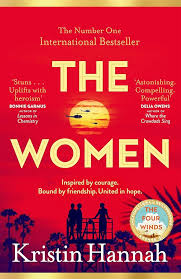
Best Book: The Women by Kristen Hannah

Sarah Mitchell, Director

Best Book: All Fours by Miranda July

Wellness by Nathan Hill was a close second but was published in 2023

Best Concert/Album: Ben Folds at the San Francisco Symphony!

Best Trip/Travel Destination: We were absolutely delighted by our August visit to Bend, Oregon. Incredible hiking, views, food, and craft beer in Central Oregon. We can’t wait to go back.

Kyle Robinson, Director of Research

Best Film: Deadpool & Wolverine. Funniest movie I’ve seen in quite a while.

Best Trip/Travel Destination: Disneyworld! It was a trip “for the kids,” but it also fulfilled a lifelong wish for my wife and me. We can’t wait to go back!

Jacqueline Griffin, Director of Accounting and Administration

Best BookThe House of Cross by James Patterson

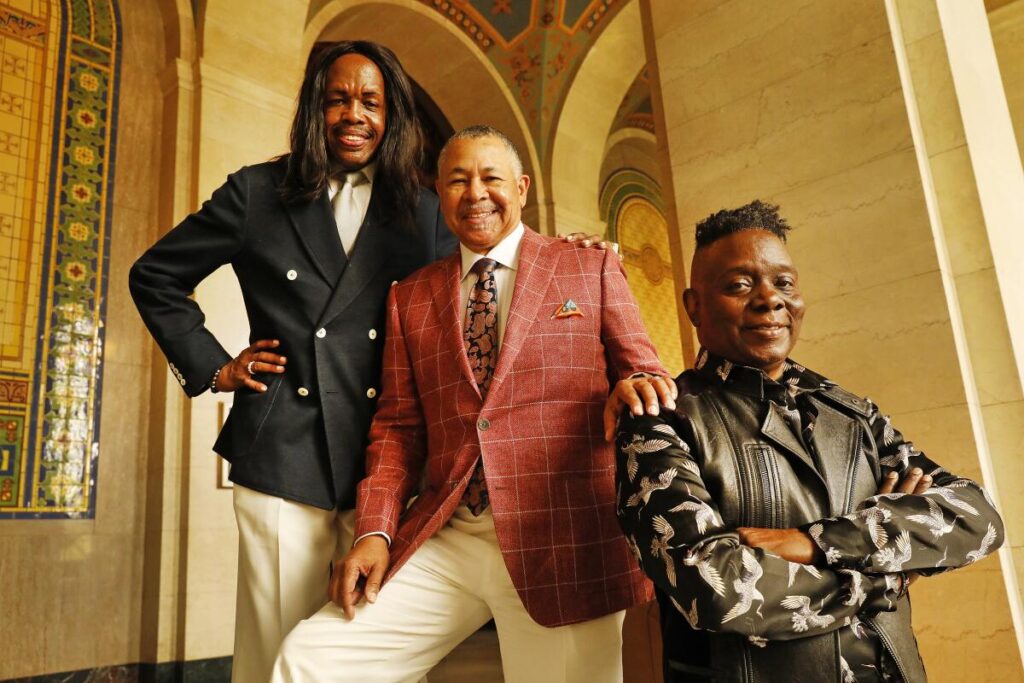
Best 2024 Concert/Album: Earth Wind and Fire and Santana

Anthony Ott, Senior Associate

Best BookAfter the Rain by Alexandra Elle. It is a book comprised of gentle reminders for Healing, Courage, and Self-Love. It is for everyone learning how to dance in the rain. Your storms do not define you. Trust your pilgrimage and uncover your joy.  It’s an easy peace-giving read.

Best Concert/Album: I went to The Beach Boys! How nostalgic that was!

Best Trip/Travel Destination: I was heading to New Orleans for a golf trip, but it was canceled at the last second because of a hurricane warning. I was at the airport and called by my brother, who was also there for our annual golf trip to celebrate our birthdays. We pivoted quickly to Las Vegas and got comped rooms at the Bellagio. We had an opportunity to play Bali Hai Golf Club, the only championship golf course remaining on the famed Las Vegas Strip. When we pulled up to the 18th hole, Butch Harmon was there watching… the most nervous I have EVER been standing over a golf ball.

Abby Buchold, Senior Research Associate

Best Concert: Sarah McLachlan in early July was the only concert I attended this year—the tickets were a birthday gift from my husband. She performed all of the songs from her 1993 album, Fumbling Towards Ecstasy. I wore that CD out and had to buy a new copy in 1997! As trailing GenX-ers, her music was a college staple for my husband and me. She’s just as amazing now as she was in the 90s!

Best Trip/Travel Destination: We traveled to beautiful Thessaloniki, Greece with some friends in May. Thessaloniki is a lovely city in northern Greece on a bay just off the Aegean, and it is the hometown of one of our travel companions. Highlights included Mt. Olympus, Philippi, and Grevena, a town known as the mushroom capital of Greece. We had nearly perfect weather and enjoyed visiting many seaside tavernas for amazing seafood. I never thought I’d love fried sardines, but I do now.

Jennifer Lee, Administrative Assistant

Best Film: Deadpool & Wolverine

Best BookAtomic Habits by James Clear (came out in 2018, but I read it this year)

Best Concert/Album: Ten Days – Fred Again

Best Trip/Travel Destination: Goldbar, Washington

Lindsay Ames, Research Associate

Best Concert/Album: My favorite concert of 2024 is a combination with my favorite travel destination (as my family and I haven’t been travelling much lately). Las Vegas, Nevada, for the Sick New World 2024 festival. 

My husband and I have gone two years in a row to this festival, for its inaugural and second years, to see our favorite heavy/nu-metal band, System of a Down.  We were planning to attend next year as well, but SOAD decided not to headline for 2025 (Metallica and Linkin Park, with their new lead singer, were co-headlining the bill instead), and the festival was not able to sell out like they had the first two years and canceled.

My, how the times have changed. Not a decade ago, businesses sought to outdo each other’s holiday parties. Companies vied for the most astonishing locale, hottest caterer, and spirits—so much so that the production overshadowed the season’s true nature.

Happy mature businesswoman receiving Christmas present from her coworkers on office party.

Ever since the New York Times and the New Yorker published articles chronicling allegations of sexual assault and harassment against producer Harvey Weinstein and seemingly every media star or mogul you have ever heard of, with more women coming forward each day, corporate America is taking notice.

Challenger, Grey & Christmas, an outplacement consulting firm, conducted a holiday party survey of 150 human resource representatives titled, “Is the ‘Weinstein effect’ causing companies to curtail celebrations?” The firm reported that about 10 percent of employers will not hold a holiday party this year after having held them in the past. Less than half of employers (47.8 percent) will provide alcohol at holiday parties this year, down from 62 percent in 2016. “Employers are currently very wary of creating an environment where inappropriate contact between employees could occur,” said Andrew Challenger, Vice President of Challenger, Gray & Christmas.

A Company Party has the Word “Company” in it.

During my 40-year career, I have attended more than 500 holiday and office parties. Most of them, even back then, were participated in by well-behaved executives, but there were always a few situations where you just shook your head and wondered, “What were they thinking?”

  • Not grokking the purpose of the party. Many people go to a holiday business party (theirs or a business client’s or partner’s) with a different mindset. They assume it is a party—which it is in a sense. More importantly, work occurs under various conditions, from regular workdays to those with many of the same people. There are people at the party who establish your salary, if you are ready for the promotion or if they want to do business with you. Because you are not in the office, it can be tempting to be overly casual or say things that you would not otherwise say in the office.
  • Hors d’oeuvres do not mean dinner. Some people at business gatherings make a beeline for the serving table and pile a plate so high with food that I worry the plate will crack from the weight. They eat so much that you cannot even distract them with a “happy holiday.”
  • Talking to only those with whom you work. If you are hosting a party for clients or potential clients, avoid the temptation to speak with your work colleagues. Remember, many of the people attending may only know a few people. You are a host, even if you don’t know many attendees.
  • Arriving too early or leaving too late. Nothing is worse than guests who attend a party 15 minutes before the event begins. Well, there is something worse: the guests have a good time staying long after the party ends.
  • Drinking too much. Getting sloshed at a business event is one of the worst ideas ever, but it happens at every holiday business party. And the next day, you can hear the whispers, “Did you see Evelyn struggle to find her way out of the house?” “Boy, Bob sure was not feeling any pain last night.” Do you want to be the person everyone talks about the next day? Will that engender respect or help your career? Enough said.

Advice from a Pro

Cindy Clifford, President of The Clifford Group and one of the nation’s leading PR gurus, has planned thousands of corporate events. She offers the following advice:

  • Dress up but not so much that you stand out. Consider the occasion. The attire for a business open house may differ from that of a cocktail party.
  • Arrive about 15 minutes after the party starts and leave before it ends. You don’t have to say goodbye when you leave; folks are busy. You can sneak out.
  • Mix and mingle with everyone. Avoid only talking to your close colleagues and those you know.
  • Make light conversation about holiday shopping, holiday plans, business, etc. It is not time to get into the nuts and bolts of work, especially not your career. And it goes without saying that this is not the year to discuss politics. Avoid pitching your business if you are at a prospective client’s gathering.
  • Eat the food. Someone planned this event, and they want to see people enjoying it. Don’t ask for a to-go box or act like this is your first meal in months.
  • Alcohol. If you have one or two drinks, switch to Perrier. Do not drive other colleagues home unless you are a solid, sober, designated driver.
  • There are different rules for home parties. If it’s at your boss’s home, bring a small gift. Do not bring a bottle of wine that says, ‘I didn’t put any effort or thought into this.’ Instead, get a book you love, a box of fancy candy, or something special. If you are attending a party at home, don’t ask for bourbon if only wine is served. Only wander the house if you ask. If you break something, let the host know.
  • Write a thank you note and mail it. This is so rare nowadays and very impressive to the receiver.
  • Respect others’ boundaries. Be careful not to become overly physically familiar with people you don’t know well. It is a new day, and it is better to err on the safe side.
  • Have fun. But remember, it’s business.