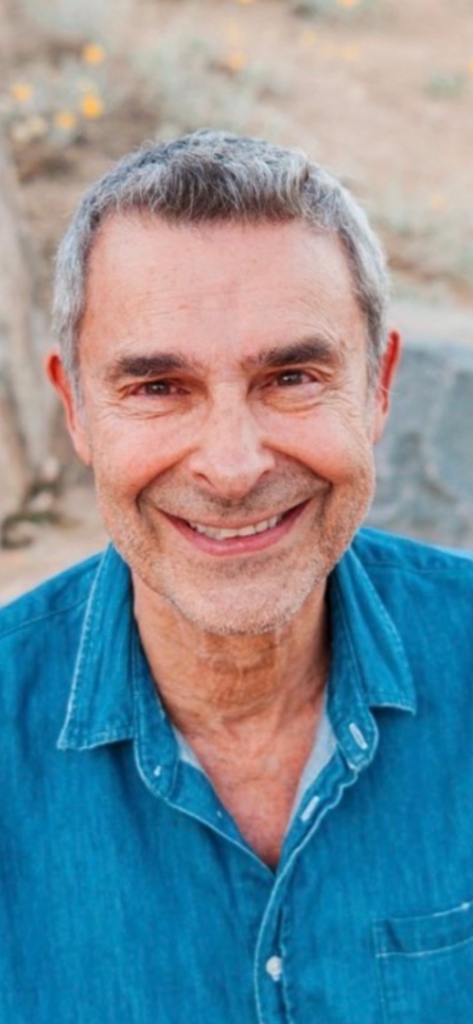
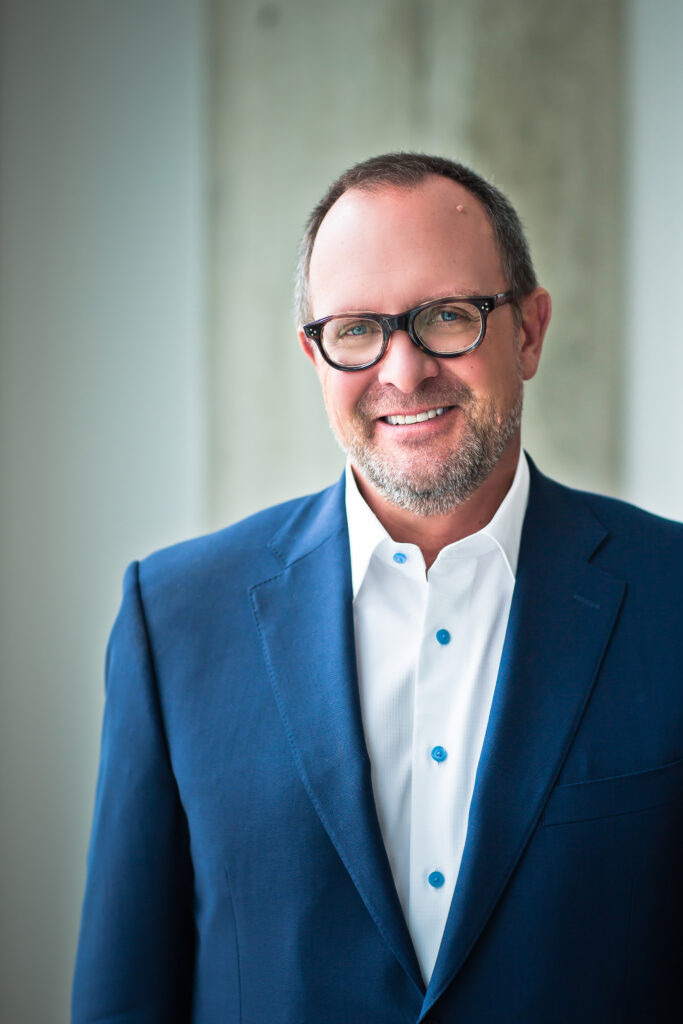
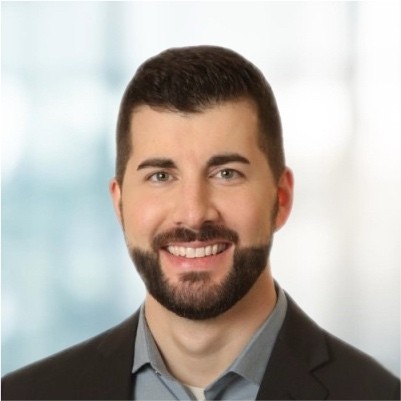
Barnet Bain is an Academy Award–winning filmmaker, author of How to Be a Friend, and a thought leader at the intersection of creativity, connection, and human potential.
Best known for producing What Dreams May Come, Bain has spent his career exploring how stories shape not only what we see on screen, but how we relate to one another in everyday life. In conversation, he brought that perspective to leadership, arguing that the quality of our professional impact is inseparable from the quality of our relationships.
Bain’s discussion with Managing Director Jane Howze offers a compelling reminder that success is not only measured by outcomes but also by the strength of the relationships that make those outcomes possible.
The National Alopecia Areata Foundation (NAAF) serves the community of people affected by an autoimmune skin disease called alopecia areata that results in hair loss and emotional, psychological distress.
Alopecia areata causes hair loss on the scalp, face, and sometimes on other areas of the body, affecting as many as 6.8 million people in the U.S., with a lifetime risk of 2.1%. The types of hair loss can be patchy (alopecia areata), complete loss of hair on the scalp (alopecia totalis), or, in extreme cases, the entire body (alopecia universalis). NAAF is a 501(c)(3) nonprofit organization founded in 1981.
NAAF’s work with and for the community of people affected by alopecia areata – including the family, friends, medical professionals, research scientists, biopharmaceutical developers, and government representatives who care about them – is informed by a Vision that articulates organizational aspirations and five Core Values that guide their work to carry out NAAF’s Mission.
Vision: An empowered community with a choice to embrace or live free from alopecia.
Mission: NAAF drives research to find a cure or acceptable treatment for alopecia areata, supports those impacted, and educates the public about the disease. Values – Helping the alopecia community lead their lives with GRACE.
Growth: Create and nurture positive change for the future of our community
Resilience: Enhance the ability to mentally and emotionally cope with adversity
Advocacy: Wield influence to create awareness and affect real change
Compassion: Listen to understand and demonstrate care through meaningful support
Empowerment: Build strength and confidence through connections, tools and resources
Governance: NAAF is governed by a volunteer Board of Directors, with advice from Research Advisory Councils and leading Key Opinion Leaders.
NAAF consistently meets or exceeds the rigorous standards of excellence for good governance and transparency set forth by the National Health Council, the Better Business Bureau Wise Giving Alliance, and Candid. Programs –NAAF staff members serve constituents in three primary program areas: patient and community support, awareness & advocacy, and research to find treatments or cures.
Staff Team Culture Statement
The NAAF staff is a community-centered team that values integrity and respect in all our interactions. We actively collaborate to leverage our diverse strengths and perspectives. We have high aspirations for ourselves, our team and our community. We are bold and resourceful, approaching challenges with courage. We care deeply about our work and the people we serve. Our remote workplace thrives through accountability and responsiveness. We are committed to learning, to being proactive, and to remaining nimble so we can adapt quickly to changing circumstances and new opportunities. Our commitment to this team culture empowers our success and brings joy and meaning to the work we accomplish on behalf of our community.
The Position: President & Chief Executive Officer (Remote)
The President & CEO has full responsibility and accountability for NAAF’s success. This executive will provide leadership, working in partnership with the Board of Directors, to formulate and pursue the Vision and Mission of NAAF, as expressed through annual and strategic plans. They will provide overall direction of internal and external policy and program development and oversee all NAAF operations.
The President & CEO will serve as the chief spokesperson for NAAF and primary liaison with outside stakeholders. This executive will also be responsible for developing key revenue streams to support approved programs, in partnership with NAAF’s growing development team. The President & CEO holds office at the pleasure of the Board of Directors. This executive will have the power to designate, appoint, or remove agents or employees of NAAF.
Specifically, they will:
• Lead NAAF with a clear vision, mission, values, strategies, and goals. Serve as the “face” of the organization and the main advocate for patients with alopecia areata, community members, and key industry stakeholders.
• Lead development of NAAF’s 3-Year Strategic Plan in collaboration with the Board of Directors, Executive Team, and with significant input from the medical, scientific, and NAAF community at large. Ensure execution of each plan to achieve agreed-upon outcomes and metrics.
• Develop growth strategies for NAAF at the national level; in partnership with the Board, determine NAAF’s role internationally, as the largest alopecia areata patient advocacy organization in the world.
• Take primary responsibility for setting strategy around fundraising and new revenue streams, in conjunction with the Chief Growth Officer (CGO). Directly responsible for fostering relationships with large donors, industry partners, and major corporations.
• Provide visionary leadership and collaboration for NAAF’s growing development programs, including growing the Walk for Alopecia into a multi-million-dollar annual event and increasing the number of donors making higher dollar gifts to NAAF.
• Provide visionary leadership and collaboration with NAAF’s Chief Mission Officer (CMO) to set strategy around research and development, in conjunction with the NAAF’s medical and scientific Key Opinion Leaders (KOLs), industry partners, and pharmaceutical companies to ensure that safer, more affordable, accessible and acceptable treatments continue to be available in the near future.
• Participate as an alopecia areata KOL at various meetings, forums, panels, and webinars, largely in partnership with pharmaceutical companies and medical groups.
• Travel and represent NAAF at various medical-related meetings, e.g., NHC, AAD, EADV, as appropriate and in conjunction with appropriate staff.
• Lead an Executive Team made up of a Chief Operating Officer (COO), CGO, and CMO, overseeing the strategy and execution of each functional area of the organization. Oversee and approve all hires; mentor, motivate, coach, develop, and inspire all staff. Provide positive leadership, direction, and guidance. Create and nurture an environment of diversity, inclusion, and belonging where all staff feel like they are appreciated, valued, and inspired to be the best versions of themselves, perform at a high level, and realize their full potential. Embrace and embody the values reflected in the Staff Team Culture Statement (below).
• Provide strategic direction on awareness, advocacy programs, and invest in growing NAAF’s new advocacy structure and achieving key advocacy metrics.
• Responsible for the overall operation of NAAF, including implementing policies and practices to strengthen the internal organization of NAAF. Ensure compliance with all NAAF’s established policies and procedures.
• Accountable for financial results, compliance, and overall financial management with oversight from NAAF’s Finance Committee, Chair, Finance Committee, and Board of Directors. Develop and monitor the annual budget and routinely report to the Board and Finance Committee regarding the state of NAAF’s finances, operations, and programs.
• In conjunction with the COO, prepare all materials for the Board of Directors. In conjunction with the CMO and CGO, prepare for and participate in Research Advisory Council meetings, Industry Partner Program (IPP), and research-related meetings, assisting the Mission team as needed and required.
• Partner with Board Chair and Executive Committee on Board Development to increase and empower the Board’s role in governance, networking, and revenue generation.
• Provide strategic direction, planning, and oversight of the annual NAAF Conference, including input on key presenters and sponsors and other related matters with the CMO and COO.
• Execute such other general responsibilities as may be delegated by the Board, Finance, Governance, and Audit Committees.
• Regular travel is to be expected: attendance at events, meeting with donors, presentation & speaking engagements, etc.
The new Chief Executive Officer will ideally have 15+ years of experience in health-related association management or related activities. They will be an inspirational and strategic leader with expertise in negotiating, consensus-building, and problem-solving.
This executive will have excellent analytical, communications, and interpersonal skills and established writing and public speaking ability. The new CEO will be highly motivated and creative, with a solid work ethic, sound judgment, and ability to handle pressure well. Persistence, persuasiveness, and perseverance are essential. A good sense of humor is a plus.
They will have an open, collaborative, and “roll-up-the-sleeves” management style that focuses on developing, engaging, and empowering colleagues and the broader NAAF community. This executive will also possess well-developed leadership, communications, teambuilding, and influencing skills; unquestioned integrity; and the experience, confidence, and stature to effectively lead an organization.
Other qualifications include:
• CEO or “ready now CEO” of similar sized or larger non-profit organization. Track record of effectively leading through growth and change.
• Successful track record in creating and implementing successful fundraising strategies, including ownership of individual solicitations, grants, sponsorships, and contracts, and ideally, strong familiarity with growing successful peer-to-peer programs.
• Strong track record leading, motivating, and engaging a team where all staff feel appreciated, valued, engaged, and are operating at their very best.
• Experience working on public policy initiatives with national health-related organizations.
• Experience effectively interfacing with, and deriving strategic and program objectives from researchers, physicians, and professionals with technical expertise.
• Track record of successfully interfacing with a diverse volunteer Board of Directors.
• Strong experience and knowledge of the US healthcare industry, including profit and not-for[1]profit organizations.
• Willingness and ability to travel (primarily nationally) as necessary to develop relationships with corporate, pharma, and health industry leaders, the NAAF staff, and the larger alopecia areata community.
• Comfortable with Microsoft office suite and familiarity with utilizing CRM programs such as Salesforce.
• An undergraduate degree is required; an advanced degree such as an MBA, MS or related graduate degree is preferred.
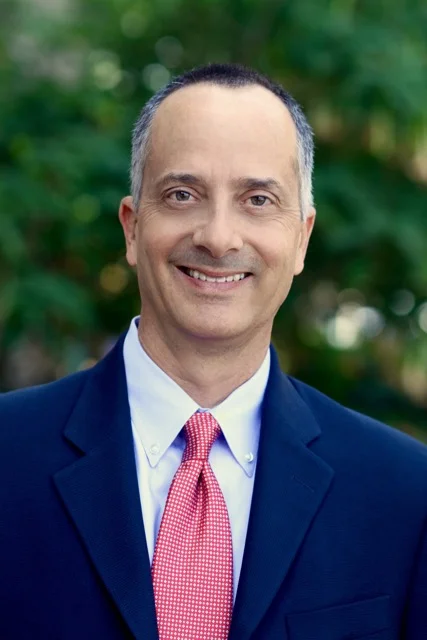
Alan Abrahamson is one of the most respected and influential voices in Olympic and international sports journalism.
Over a career spanning decades, Alan has covered every Olympic Games since 1992, reporting from the center of the world’s biggest sporting moments while offering rare insight into the leadership, pressure, and decision-making that shape outcomes on the global stage.
Known for his depth, independence, and storytelling, his work goes far beyond medals and results to explore the human dynamics behind elite performance.
As the Olympic spotlight intensifies, we’re thrilled to welcome Alan to share his perspective on what the Games reveal about leadership, resilience, and the people who carry the weight of the world’s expectations.
The Alexander Group introduces its first podcast, “Impact & Insight: Leadership, Perspective, Change,” a conversation with innovators, change-makers, and leaders from diverse industries and interests.
Managing Director Jane Howze kicks off The Alexander Group’s inaugural podcast with Cynthia Jamison, Public Company Chairman and Author of “Shards in My Hair: Tales from Breaking the Glass Ceiling.”
Shards in My Hair is a lighthearted yet cautionary tale about what it means to make it to the top echelons of business.
Cindie Jamison rose from entry-level training programs to chair multiple public company boards of directors-along the way encountering the lessons and pitfalls that inevitably occur over the course of a career. As a finance executive, she endured tough bosses, bad jobs, “you can’t make this stuff up” adventures, and colorful characters along the way.
As a single mom, she struggled financially, emotionally, and logistically to raise four boys. The combination of the two makes for a ride that will entertain, teach, scare, and thrill you.
Her light touch and self-deprecating approach make this book fun to read, laugh-out-loud funny—yet still achingly personal and vividly instructional for anyone trying to balance it all and climb the corporate ladder.
Developing Leadership Capability Across the C-Suite
(A Perspective from Beth Ehrgott, The Alexander Group)
In today’s world of constant disruption — shifting markets, rapid technological tides, uncertain economies — one enduring reality holds: the strength and trajectory of an organization ride on the shoulders of its leaders. For the modern C-suite, leadership development is no longer a checkbox exercise. It’s a strategic, evolving discipline.
Why It Matters
CEOs and the entire C-Suite are asked to operate on multiple planes: deliver positive financial results, build and sustain a growth culture, guide transformation, and anticipate the future. Leadership isn’t a static asset. It’s living, breathing, and must adapt with the same speed and intentionality that companies demand from the rest of the business.
At The Alexander Group, over four decades of working alongside boards and executive teams, we’ve observed that deliberate leadership capability building is the true differentiator of enduring companies. One of the most rewarding aspects of our work is helping clients define what leadership capability really means for their organization — not just for the next hire, but for the company they aspire to become. With preparation, clarity, and courage, these leaders become catalysts for growth and transformation.
The best companies see leadership capability as a long-term investment — cultivating leaders who adapt, innovate, inspire, and translate vision into impact.
Here’s a real-world moment that captures this:
Before beginning two pivotal C-suite searches for a publicly traded biotech client, the CEO and I invested time in reimagining what the leadership team would need two to five years out. Their science was world-class; their pipeline promising. But they lacked scaled commercial leadership globally and enterprise-level strategists who could lead the company through organizational metamorphosis. The CEO recognized that transformation starts with people — but also that leaders must be aligned in vision, drive a “we” culture, and carry both operational grit and strategic imagination. That groundwork shaped not only how we recruited but how the leadership narrative unfolded.
Seven Competencies You Must Cultivate at the Top
1. Strategic Capability
Turning vision into action is both an art and discipline.
Strategic capability means anticipating shifts, connecting the dots, and aligning people and priorities to long-term value. It’s where big-picture thinking meets purposeful execution.
2. Leadership & People EQ
When executives invest in leadership development, it signals that people matter. This isn’t about elevating a few individuals — it’s about shaping the collective DNA of an organization. Emotional intelligence, inclusion, and cultural stewardship turn leadership into a shared language that drives performance.
3. Operational & Cross-Functional Fluency
Complex organizations require leaders who think beyond their verticals. At scale, no function stands alone —appreciating how finance, technology, operations, commercial, and risk intersect leads to smarter decisions and deeper collaboration.
4. Digital & AI Aptitude
Technology has become another business differentiator. C-suite leaders don’t need to code, but they must know how to harness digital tools to unlock opportunity, mitigate risk, and make faster, data-driven decisions.
5. Change Resilience & Agility
Change isn’t an event. It’s constant. Agility helps leaders stay grounded while navigating uncertainty. The best leaders balance steadiness with speed — providing clarity and confidence when everything else feels in motion.
6. Governance & Board Readiness
Today’s executives often operate in the boardroom as well as the business. Understanding governance, fiduciary duty, and board dynamics strengthens stewardship and prepares leaders for broader influence.
7. Personal & Reflective Capacity
Great leadership begins with self-awareness. Reflective leaders pause, learn, and realign — they lead with clear, values-rooted decision-making. These are the quiet levers that help leaders remain authentic, ethical, and sustainable.
A Parting Thought
If leadership capability development is framed merely as a program or HR initiative, it will always fall short. Done right, it becomes part of the operating system — it’s how teams learn faster, collaborate more deeply, and stay one step ahead of disruption.
Over our more than 40 years at The Alexander Group, working with clients globally, we’ve seen how building intentional leadership capabilities not only elevates individual executives but also transforms the enterprise itself. And it’s an honor to partner with leaders who are willing to lean into that work — not just for today, but for what’s next.
Since our founding in 1984, our firm has conducted dozens of COO searches for the nation’s leading law firms. Over that time, one truth has become clear: the search doesn’t end when the candidate accepts the position. Running a large law firm today is complex. The modern COO must lead international management teams, safeguard client data, ensure operational resiliency, and navigate a dynamic regulatory and political landscape.
When a law firm hires a new COO, the first 100 days are critical to establishing credibility, building trust, and laying the foundation for long-term success. We asked four sitting COOs at Am Law 100 firms to share advice for law firm chairs and managing partners on how to set a new COO up for success. All these COOs were highly complimentary of their chairs for a smooth introduction and orientation to their firms.
Their collective wisdom can be distilled into six key actions.
Signal Visible Support from Day One
Every COO we spoke with emphasized how important it is that chair and firm leadership visibly endorse the new hire—both publicly and privately.
Dave Boden, COO of Haynes Boone, described how his chairman’s strong support gave him immediate credibility among partners and allowed him to do his job effectively. Boden suggests that a chairman’s support should show up in firmwide announcements, an introduction at partners’ meetings, and ideally a personal message (video or in person) reinforcing the COO’s qualifications and the chair’s confidence.
Create a Structured, Thoughtful Orientation
Don’t leave onboarding to chance.
Victor Nuñez of Cooley described a multi-week orientation program that included office visits, participation in board meetings, and scheduled introductions to key partners and business professionals. That blueprint was developed jointly by HR and senior leadership to make sure no relationship was overlooked. Whether formalized or not, the early months should map out key meetings, topical briefings, and office visits.
Facilitate Relationship-Building Across the Firm
Speed matters in establishing trust.
Brian Gross of Morrison & Foerster emphasized that his earlier interviews across the firm gave him insight into the partnership’s mindset even before day one. For firms that ran a leaner search, replicate that exposure after the hire: identify the 20–30 partners whose support is critical and make sure the COO meets them early, ideally in person. As part of that, the chair can accompany the COO on initial office visits or roadshows to accelerate buy-in. It is equally important for a new COO to meet not only their direct reports, but also the team underneath their direct reports. As one COO commented, “It’s important to meet the people who are doing a lot of the hard work.”
Set Communication Rhythms and Clear Boundaries
Agreeing on communication protocols from the start is essential.
Weekly one-on-ones with the chair, informal check-ins, and periodic strategy dinners help keep the COO plugged into firm leadership. Equally important: clarifying decision-making authority and escalation protocols. For example, Rob Brown of Sheppard, Mullin, Richter & Hampton made the point that a clear mutual understanding between the COO or Executive Director and the Chair/Managing Partner on where the Chair wants to be involved in joint decisions very much helps to build mutual trust and understanding. The absence of that clear framework can slow down critical decision-making and create organizational confusion.
Balance Patience with Momentum
Early listening is critical.
Several COOs described their first months as a “honeymoon period” spent observing, asking questions, and building informal influence. Boden, for instance, used that time to gather observations and perspectives from his chairman, laying the groundwork for future initiatives. That said, some COOs cautioned that waiting too long may not be ideal—early personnel moves, or other changes might be necessary. The key is to pace change carefully and communicate the rationale clearly to partners.
Include Coaching and Team Building
Many firms, especially those hiring a first-time COO or someone from outside the legal industry, find it beneficial to engage an experienced coach. A coach who has held a COO role within a law firm can help the new leader grasp the nuanced dynamics of firm operations and avoid common pitfalls.
In our work, we often pair coaching with a facilitated team-building session for the COO and their direct reports. Using Personalysis, a well-known personality-based assessment tool, we explore how each team member makes decisions, communicates, and contributes. From these results, we produce a team profile that helps everyone understand how to collaborate more effectively, providing the COO with early insights into leading their team. Direct reports frequently tell us this exercise helps them adapt more quickly and fosters early trust.
The Payoff
When onboarding is handled intentionally, the results speak for themselves: stronger alignment between leadership and partners, smoother decision-making, and a COO freed to focus on strategy rather than credibility-building. As one COO put it, “If you don’t have the partnerships, confidence, and solid channels of communication, you’re crippled from the start.”
For firms preparing to welcome a new COO, taking these six steps—visible support, structured orientation, relationship-building, clear communication, paced change, and coaching/team-building—can transform a promise-filled hire into a transformational leader.
Tara Bunch, COO of the American Kidney Fund, describes herself as a “strategy nerd” whose career has spanned media, nonprofits, and strategic consulting.
As the Chief Operating Officer of the American Kidney Fund (AKF), Bunch oversees core operational areas—finance, administration, human resources, and IT—and acts as liaison to the Board of Trustees’ Audit and Finance Committees. In this AKF executive interview, Bunch shares how strategic leadership and cross-functional experience have shaped her role at the helm of American Kidney Fund leadership.
This nonprofit executive Q&A offers insights into how mission-driven operations can thrive under thoughtful, agile leadership.
About Tara Bunch
A Harvard M.B.A. graduate, Bunch began her career in strategic consulting for media and entertainment businesses at Accenture and wound her way through heady roles at Discovery Communications, Travel Channel Media, and National Geographic. She was the Director of Global Strategy and Business Development at National Geographic, where she transitioned from Chief of Staff in 2014 to Deputy Chief Operating Officer in 2016.
Her affinity for strategic planning was rewarded when she was named Chief Business Operations Officer at the National Geographic Society, where she served as an enterprise leader accountable for managing critical staff functions, including information technology, human resources, facilities, finance, planning, metrics, evaluation, and research.
The road ahead for the American Kidney Fund is laden with opportunities for Bunch, her team, and the Board of Directors to continue the organization’s life-changing work on behalf of the more than 35.5 million Americans living with kidney disease.
“What I appreciate about strategic planning at AKF is the broad engagement we have in the process. So often, strategic plans seem to come from a black box and are put on a shelf. At AKF, we spend about a year pulling the plan together, with input from across the organization and the Board of Directors,” Bunch said. “I am excited to see how our plan will change from our current one, recognizing both the progress and the challenges we have faced since finalizing it at the end of 2022.”
Tara Bunch’s Perspective: Strategy, Agility, and Operational Excellence in Nonprofit Leadership
Read more of the conversation between Director Sarah Mitchell, The Alexander Group, and American Kidney Fund COO Tara Bunch below.
How COO Tara Bunch Applies Strategic Thinking to Nonprofit Operations
Q: Your early career included management consulting and financial leadership roles. How have those experiences shaped your current work in nonprofit operations and informed your strategic approach as COO of the American Kidney Fund?
Bunch: This is likely a bias toward my financial analysis roots, but I still love the adage, “show me your financials and I will tell you what you care about.” Also, “no margin, no mission.” I think the most misunderstood part of nonprofit work is the notion that we aren’t as analytical, or we don’t pay as much attention to the bottom line. Strategic thinking and financial analysis—the same skill sets I honed in the earliest parts of my career— are still key to the work I do at the American Kidney Fund.
I think my early years in consulting developed my muscles of both getting up to speed quickly on the issues at hand and being able to shift from one topic to another. As Chief Operating Officer at AKF, I may have meetings about upcoming Board Committees first thing in the morning, then shift to our training strategy for staff, then have a conversation about our financial statements and how to think about the rest of the year. All of that before noon!
In terms of leadership, I have learned to be flexible and adapt my approach based on the unique circumstances I face, utilizing past experiences to make more effective decisions. In all the roles I have held, I still return to the basics of breaking down problems or opportunities into manageable pieces that we can successfully address.
I hope along the way, I am inspiring and motivating my team toward our shared goals and mission.
Tara Bunch on Shifting from For-Profit to Nonprofit
Q: We regularly hear from executives looking to make a move from for-profit to nonprofit leadership. How did you navigate your transition from for-profit to nonprofit organizations, and what advice would you share with others looking to make the leap?
Bunch: It wasn’t really a conscious decision, but it feels like the ultimate path I was on all along. I started my professional career in strategy consulting. Coming out of college, it seemed like an amazing opportunity to experience different kinds of organizations and industries while (hopefully) adding value and efficiency to their operations. I think I have always had that kind of mindset – both to help solve problems but also to look for ways to make things work better.
Many of my consulting clients were in the media space, so when I decided to attend graduate school, I wanted to transition into the educational media world upon graduation. Two reasons: one, I found the business side of media fascinating and a place where I could add value, and two, I realized during my consulting years that it was always a better experience when I truly believed in the product. I ended up taking an internship at Discovery Communications after graduating and stayed there for nearly seven years. It was a great opportunity to bring my skill sets – financial, analytical, strategic – to an exciting time in media when HD and streaming were just ideas coming to fruition. The organization also went public during my time there, which was a learning experience in and of itself.
My next move was to National Geographic, but I started on the for-profit side. After a few years, I was asked to help onboard the new CEO. It was supposed to be for just a few months, but I transitioned into his Chief of Staff. A year or so later, that position enabled me to be part of a transaction that solidified the future of the nonprofit side of National Geographic, and I remained on the nonprofit side for the remainder of my time there. So, while this was absolutely a shift from for-profit to nonprofit, I think the thread that ran through it was that the “product” each was putting out was something trying to be good for the world. We can argue whether or not TV is “good,” but in my mind, a documentary is better than most consumer products.
The biggest difference for me is the ability in nonprofits to think long-term, truly. Yes, we have daily, monthly, and annual financial pressures and realities, but the vision and mission of nonprofits reach well past the tenure of their employees. We can also be creative in who we partner with and how those partnerships can work. While we need outside funding to operate, we can also enter partnerships that don’t involve funding if the organizations can bring something unique to the table to advance our mission. It allows for a lot of freedom to try different things.
How Tara Bunch’s COO Role Shaped Her Leadership Approach
Q: As the COO of AKF, you lead a range of diverse functional areas. How did you learn to manage large teams across functions, and how has your management style changed over the last decade as you’ve grown?
Bunch: My management style has definitely changed over the years. At first, leaders tend to manage staff in their own area of expertise – for me, it was in Financial Planning & Analysis. I think from my years in strategy consulting, I always thought about the connections across functions – while finance, technology, and human resources absolutely require different skills and areas of focus, they ultimately need to work together to effectively allow an organization to function well. And while I may not know how to code technology, as an employee, I know what it feels like to try to learn a new platform, or what the annual performance review process feels like from an employee perspective – I can take that insight into leadership of those functions, while ensuring I have an amazing team with those deeper skill sets.
The most challenging transition of a function I ever had was managing facilities at National Geographic, a team of engineers, mechanics, and other staff, whose jobs I had no personal experience with. I knew I needed to trust the team to give me the information I needed, and my value was in the connections of their work to the rest of the organization. By bringing the detail(s) and the big picture together, we were able to create a really high-functioning team for the organization.
I think what has changed the most about my management style is the comfort I have in sharing when I don’t know something. It isn’t a weakness – it is an opportunity to learn something and recognize the skills and knowledge of those on the team. I don’t need to know all the answers or know how to do everything. My value is guiding my teams and helping them unlock their ideas; I can help them understand how things may fit into the overall organizational perspective, and how important each of them is to that bigger picture. My hope is that it creates a culture of trust and learning across the teams I manage, and in support of the organization as a whole.
Tara Bunch on American Kidney Fund Leadership and Impact
Q: You are four years into your tenure as COO at AKF, and previously you served as Chief Business Operations Officer at National Geographic. What was your experience in moving to a voluntary health organization? Are all nonprofits the same, or have you found marked differences in what spells success?
Bunch: I think nonprofit organizations are generally more similar than dissimilar; they are groups of people working to make something better in the world. The kinds of smart, driven, and creative people I had the pleasure of working with at National Geographic are the same kinds of smart, driven, and creative people I have the honor of working beside at the American Kidney Fund.
The largest difference for me in moving to AKF is the singularity of focus around people with kidney disease, what they need, and how we can help them live healthier lives. It is a smaller organization in terms of staff size than I have worked at previously, but that focus allows us to have an immense positive impact on people living with kidney disease, their caregivers, and the policies, research, and education that we develop to one day eradicate these illnesses. We are small but mighty.
I think success at any nonprofit comes from the belief in the mission and the creativity of those involved to come up with ways to make that mission a reality. Before I got to AKF, the COVID pandemic was in full force, and it had a devastating effect on kidney patients. The team at AKF quickly pivoted and created a grant program to help patients, providing emergency funding for assistance with life-critical needs, such as food, transportation, nutritional supplements, and medical expenses. It is that kind of thinking that I think makes a successful organization – how can we quickly mobilize in the face of whatever is new coming our way and make a difference for those we pledge to support?
Inside AKF’s Evolving Strategy and Impact
Q: What is on the horizon for AKF?
Bunch: So many things! A few I think are exciting are our focus on the clinical and medical side of kidney disease, and our forthcoming strategic plan.
In 2024, we hired a full-time nurse practitioner who serves as AKF’s Senior Director of Clinical Education, and a part-time Chief Medical Officer – both firsts for AKF. We have always had a Medical Advisory Committee and medical practitioners on our Board to help guide us, but investing in staff with these skill sets will really turbocharge our ability to advocate for kidney patients.
I am a self-proclaimed strategy nerd, so working on the next version of AKF’s strategic plan is exciting for me. What I appreciate about strategic planning at AKF is the broad engagement we have in the process. So often, strategic plans seem to come from a black box and are put on a shelf. At AKF, we spend about a year pulling the plan together, with input from across the organization and the Board of Directors. I am excited to see how our plan will change from our current one, recognizing both the progress and the challenges we have faced since finalizing it at the end of 2022.
*Even though our series is titled “Five Questions with Extraordinary Leaders,” we welcome additional insight from the featured leaders, and Ms. Bunch was no exception, so this installment includes a bonus question and answer.
Keeping Teams Engaged in Challenging Times
Q: How do you approach the challenges of recruiting and keeping your team engaged and motivated during economic uncertainty and political shifts?
Bunch: I feel like I have seen so many talent market shifts throughout my career. I think back to the tough market I entered into in 2002 after grad school, the downturn in 2008-ish, and of course, all of the challenges throughout COVID.
There are two main ways I feel like I have been successful in leading an engaged and motivated team – showing empathy and focusing on connection. We all know we often spend more time with our work colleagues (or working) than we do with people in our personal lives, so we should strive to make that time fulfilling. While jobs aren’t required to provide happiness, the best jobs do; they also provide challenge, connection, and provoke curiosity.
As a leader, I try to identify opportunities for growth for my team and be honest when either I don’t know something or something isn’t possible. Building that trust is key when the outside world is scary or uncertain. My team (hopefully) knows that they can trust me to give them guidance and also empathize when things are not in our control. Honesty is a big part of that too – I admit when I don’t know something or need help. That was harder for me to do early in my career, but I want to model to the people I work with that I don’t have all the answers, but I will help find them.
I also try very hard to build and maintain connections across my team and the organization. We are a hybrid organization, so we are mostly interacting virtually. But the time we do spend together, we make it intentional: team meetings and training, crossover meetings with other staff. I start every team meeting with a question – something like “what did you have for breakfast”, or “what is your favorite thing to write with” – so that the team can get to know each other in a different way. And I end every team meeting with kudos, which allows me and the team to shout out major and minor accomplishments. My goal is to create those connections that carry over into work – if you know you and another colleague REALLY like red pens, you may be more likely to reach out about a question you have.
The Alexander Group Global Executive Search
The Alexander Group has the privilege of partnering with leaders who bring both vision and operational excellence to the organizations they serve. Executives like Tara Bunch, COO of the American Kidney Fund, exemplify the kind of strategic, empathetic leadership needed to drive meaningful impact in today’s complex landscape.If your organization is seeking exceptional talent to navigate change and deliver results, we’d be honored to help you find your next extraordinary leader.
Whether your organization is entering a phase of accelerated growth, preparing for a strategic exit, or solidifying leadership post-investment, identifying an exceptional sales leader is one of the most consequential decisions a company will make.
In my experience conducting searches for sales executives at privately held and investor-backed companies in the lower-middle market, I have witnessed firsthand the transformative impact of the right hire—and the significant cost of the wrong one.
When Founder-Led Sales Reaches Its Limits
In many emerging growth companies, the CEO, President, or founder often serves as the de facto head of sales. Early on, this dual role makes perfect sense. These leaders are frequently the company’s original and most effective salespeople, having built the business one relationship at a time. However, as the organization matures, this arrangement becomes unsustainable. Founders find themselves stretched thin, unable to focus on strategic initiatives as tactical demands consume their time. Without a shift in sales leadership, the company risks stalling just when it’s poised to scale.
The transition to a dedicated sales leader is a critical inflection point—and one that must be handled thoughtfully. A common misstep is promoting the top-performing salesperson into a leadership role. While individual contributors may excel at closing deals, sales leadership requires a distinct set of skills. High-performing sellers drive revenue; effective leaders build systems and teams that scale it. It is the difference between being a doer and becoming a multiplier.
What Sets Sales Leaders Apart in the Lower-Middle Market
Sales leadership in the lower-middle market bears little resemblance to that in large, publicly traded enterprises. Here, sales executives must be both visionary and hands-on. They often operate as both architect and executor, designing scalable systems while still engaging in frontline activities.
This hybrid, “player-coach” model is essential. The most effective leaders thrive in the field alongside their teams, guiding live deals, coaching in real time, and playing a pivotal role in onboarding and developing talent. They lead with humility and purpose, celebrating team success over individual accolades.
Builders First, Leaders Always
In many cases, the sales infrastructure in these companies is either underdeveloped or nonexistent. The outstanding sales leader enters ready to build—or refine—critical systems such as CRM platforms, pipeline definitions, performance metrics, and reliable forecasting mechanisms. They balance data-driven insights with qualitative input, building processes that evolve and scale with the business.
They also bring rigor to prospect prioritization and goal setting. Particularly in private equity-backed environments, these leaders understand how to deliver board-ready reporting, evaluate customer profitability, and focus the team on high-value opportunities. Their decision-making combines analytical precision with seasoned judgment, informed by prior experience in comparable settings.
A Strategic Connector, Not a Silo
Exceptional sales leaders understand that success is a cross-functional endeavor. They collaborate closely with marketing to align messaging and campaign strategy, even when marketing is outsourced. They maintain strong feedback loops with operations and product teams, ensuring promises made during the sales process align with delivery and that customer insights inform continuous improvement. In agile, fast-growing organizations, isolation is not an option.
Culture Begins with Leadership
In growth-stage companies, culture is not defined by mission statements, but by leadership’s behavior. The sales leader sets the tone through transparency, urgency, customer-centricity, and a relentless focus on outcomes. They create a high-performance environment where expectations are clear, accountability is built into the team’s rhythm, and wins are celebrated together.
The Power of Perspective
While internal promotions can be successful, many organizations benefit from fresh leadership, someone who has successfully scaled a sales function in a similar environment. These leaders bring a unique blend of entrepreneurial energy and operational discipline. They’ve seen what works, what doesn’t, and know how to execute with speed and intention.
The Right Sales Leader Doesn’t Just Fill a Role—They Redefine It
Companies in the midst of evolution, expansion, or preparing for a liquidity event should expect that the sales leader hired today will have an outsized impact on the company’s trajectory. These are leaders who architect systems, inspire performance, and scale with clarity and conviction.
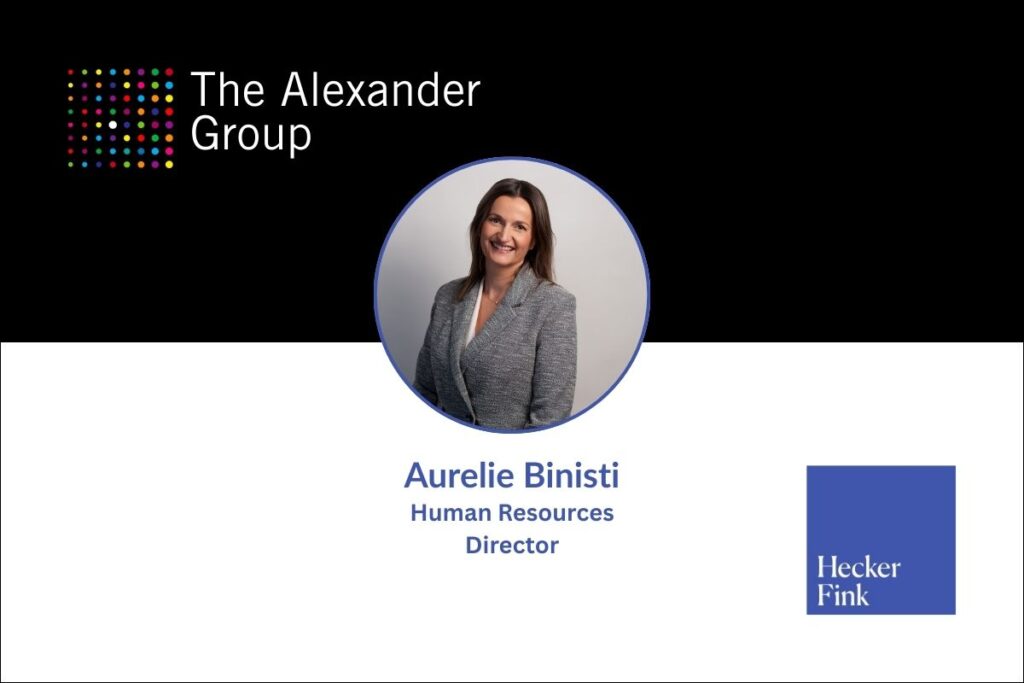
Hecker Fink LLP enhances its operational leadership with the appointment of Aurelie Binisti.
Client: Hecker Fink LLP | Role: Human Resources Director | Candidate: Aurelie Binisti
Search Consultant: Sarah Mitchell
Overview
Hecker Fink LLP, a premier litigation boutique known for its high-stakes legal work and commitment to public interest, partnered with The Alexander Group to identify a Human Resources Director. The firm sought a strategic leader to oversee and enhance its human resources functions, supporting its continued growth and dynamic work environment.
Key Leadership Need
As Hecker Fink LLP expanded its team of elite litigators and staff, the firm required a human resources executive capable of managing complex HR operations, fostering a collaborative culture, and aligning HR strategies with the firm’s mission of delivering exceptional legal services and advocacy.
The Alexander Group’s Approach
Director Sarah Mitchell led the search, focusing on candidates with extensive experience in human resources leadership across diverse industries. The search emphasized finding a professional with the adaptability and emotional intelligence to thrive in Hecker Fink’s fast-paced and mission-driven environment.
Developed a tailored search strategy aligned with Hecker Fink’s organizational goals and culture.
Identified candidates with a proven track record in strategic and operational HR management.
Assessed candidates for cultural fit, leadership capabilities, and the ability to contribute to the firm’s continued success.
Successful Placement and Impact
Aurelie Binisti, a seasoned human resources professional with over 15 years of experience in media and financial services, was appointed as Hecker Fink LLP’s Human Resources Director. Prior to joining the firm, she served as Executive Director of Human Resources at OMD for Omnicom. Aurelie holds a master’s degree in human resources from SUP RH in Paris, France.
Immediate benefits:
Strategic HR Leadership: Aurelie brings a wealth of experience in developing and implementing HR strategies that support organizational objectives.
Operational Excellence: Her background ensures efficient management of HR operations, contributing to the firm’s overall performance.
Cultural Alignment: Aurelie’s interpersonal skills and adaptability make her well-suited to foster the firm’s collaborative and high-achieving culture.
Insights from the Executive Search Consultant
“Aurelie combines the right mix of functional skills with high emotional intelligence and adaptability to lead and thrive within this growing, dynamic environment.”
— Sarah Mitchell, Director, The Alexander Group
About Hecker Fink LLP
Hecker Fink LLP is a formidable litigation boutique specializing in high-stakes legal matters, including white-collar criminal defense, complex appellate litigation, and public interest cases. The firm is dedicated to achieving the best possible results for clients through fierce advocacy, creative strategies, and forward-looking advice.
About The Alexander Group
Specializing in executive search for law firms and financial leadership roles, The Alexander Group delivers strategic, results-driven placements tailored to each client’s unique needs.Interested in learning more about our executive recruitment services? Contact The Alexander Group today.
Tony Capecci has joined Haynes and Boone, LLP as Director of Practice Innovation.
Mr. Capecci is an experienced legal technology leader with two decades of experience in legal technology and more than a decade of experience spearheading the procurement, development, and implementation of legal systems in fast-paced environments.
Prior to joining Haynes & Boone, Mr. Capecci was Associate Director, Litigation & Practice Delivery at Kirkland & Ellis. Mr. Capecci received a Bachelor of Arts in Interactive Multimedia from Columbia College Chicago.
“Tony has a deep understanding of the technology needs of a practicing lawyer, coupled with the leadership, intellectual curiosity, and passion for innovation needed to succeed in this role,” saidMitchell.
Haynes and Boone, LLP is a highly respected American Lawyer top 100 law firm, with more than 600 lawyers and 425 non-lawyer employees in 18 domestic and three international offices, and over 40 major practices.
The firm has grown from a two-person firm in 1970 to a global leader through its client-first focus, which informs its decisions and processes, and the collaborative nature of its people, which makes the work environment healthy and pleasant.
The firm’s culture focuses on teamwork, an environment of mutual respect, and a long-term view that supports investing in the future.