Not-for-profit leaders are accustomed to doing more with less. Still, waves of economic uncertainty, coupled with the rapidly evolving AI landscape, are forcing even the most seasoned leaders to reevaluate and redefine past methodologies and strategies.
Today’s leaders recognize that the decisions they make will have a lasting impact on their organizations’ mission, funding, and strategy. Maximizing the relationship between a Chief Executive Officer and their board, implementing AI literacy, and sharpening fundraising focus are essential for the sustainability and growth of an organization.
Benefits of a Strong Board
The partnership between a CEO and their board is one of shared commitments and a well-crafted strategy. A CEO should be able to lean on their board and, at times, be prepared to hear difficult truths. Board members bear a responsibility to engage with the organization, its executive team, and other key stakeholders.
Organizations that invest in building effective boards often see more stable funding, stronger staff retention and morale, greater influence in their sector, and more substantial donor confidence.
Modern board governance is evolving as the demand for more strategic, diverse, and accountable board members increases. In practice, this translates to broader board representation in terms of age, experience, and diversity. Clearly defining board roles and term limits lays the foundation for continued growth.
“Nonprofits transform their trajectory when boards adopt some of the discipline and accountability models of the corporate world. When CEOs and boards align on clear roles and a shared strategy, they drive greater impact and long-term growth,” said John Mann, Managing Director, The Alexander Group.
Engaged Boards Elevate Fundraising
The top line for fundraising and development activities is always at the forefront of not-for-profit organizations. Cultivating a more engaged board is an effective way for nonprofits to enhance their fundraising efforts, and that starts with empowerment and clear expectations.
Start by setting clear expectations, providing training, and fostering a culture of accountability. A well-informed, mission-driven board can unlock new funding opportunities, leverage its networks, and serve as influential ambassadors for the organization. When donors feel connected and the board is fully invested, fundraising efforts become more strategic, sustainable, and successful.
Embracing AI
From predictive fundraising to automated grant reporting, AI is rapidly changing nonprofit operations. According to the 2024 Nonprofit Standards Benchmarking Survey, 82 percent of organizations have implemented AI technology. AI is quickly becoming a valuable tool in the not-for-profit sector, enhancing an organization’s ability to anticipate donor needs and recommend targeted actions.
Strategic CEOs understand the urgency of thoughtfully investing in AI across everything from software to leadership positions, such as Chief Innovation Officer. Smaller organizations are forming committees that may include board members to explore how to use AI synergistically with various functions.
Employing AI to do everything from the tedious to the time-consuming leaves staff open to connect in a more meaningful way with the organization’s donor base. Forward-looking not-for-profits are using AI-assisted donor segmentation, chatbots for volunteer engagement, and automated analytics for board reports, building AI literacy among their team members.
Digital fundraising solution OneCause works specifically with not-for-profits and found organizations are most successful when leaning into AI from a solid foundation of personal connectedness. In 2024, 75% of organizations hosting in-person events met or exceeded their fundraising goals, and 76% of those using hybrid models also achieved their targets.
Mission-Minded, Future Focused
It’s a challenging time for the modern non-profit CEO/Director, but within this sea change lies opportunities to serve and grow the organization’s mission.
The mission is the motivator.
“Every nonprofit begins with someone on a mission. To grow the organization, the mission must resonate with others, and someone must articulate the mission in such a compelling way that others embrace it and are willing to support it, not just with their hearts and their volunteer time but also with financial donations,” saidAmanda K. Brady, Chief Client Officer/Managing Director. “Whether it is the Founder, a CEO, or a development leader, someone must craft and evangelize a message that brings others into the community and keeps them engaged. It is an existential imperative. In today’s times, leaders must seek, embrace, and utilize innovative tools that build on the organization’s mission.”
Tara Bunch, COO of the American Kidney Fund, describes herself as a “strategy nerd” whose career has spanned media, nonprofits, and strategic consulting.
As the Chief Operating Officer of the American Kidney Fund (AKF), Bunch oversees core operational areas—finance, administration, human resources, and IT—and acts as liaison to the Board of Trustees’ Audit and Finance Committees. In this AKF executive interview, Bunch shares how strategic leadership and cross-functional experience have shaped her role at the helm of American Kidney Fund leadership.
This nonprofit executive Q&A offers insights into how mission-driven operations can thrive under thoughtful, agile leadership.
About Tara Bunch
A Harvard M.B.A. graduate, Bunch began her career in strategic consulting for media and entertainment businesses at Accenture and wound her way through heady roles at Discovery Communications, Travel Channel Media, and National Geographic. She was the Director of Global Strategy and Business Development at National Geographic, where she transitioned from Chief of Staff in 2014 to Deputy Chief Operating Officer in 2016.
Her affinity for strategic planning was rewarded when she was named Chief Business Operations Officer at the National Geographic Society, where she served as an enterprise leader accountable for managing critical staff functions, including information technology, human resources, facilities, finance, planning, metrics, evaluation, and research.
The road ahead for the American Kidney Fund is laden with opportunities for Bunch, her team, and the Board of Directors to continue the organization’s life-changing work on behalf of the more than 35.5 million Americans living with kidney disease.
“What I appreciate about strategic planning at AKF is the broad engagement we have in the process. So often, strategic plans seem to come from a black box and are put on a shelf. At AKF, we spend about a year pulling the plan together, with input from across the organization and the Board of Directors,” Bunch said. “I am excited to see how our plan will change from our current one, recognizing both the progress and the challenges we have faced since finalizing it at the end of 2022.”
Tara Bunch’s Perspective: Strategy, Agility, and Operational Excellence in Nonprofit Leadership
Read more of the conversation between Director Sarah Mitchell, The Alexander Group, and American Kidney Fund COO Tara Bunch below.
How COO Tara Bunch Applies Strategic Thinking to Nonprofit Operations
Q: Your early career included management consulting and financial leadership roles. How have those experiences shaped your current work in nonprofit operations and informed your strategic approach as COO of the American Kidney Fund?
Bunch: This is likely a bias toward my financial analysis roots, but I still love the adage, “show me your financials and I will tell you what you care about.” Also, “no margin, no mission.” I think the most misunderstood part of nonprofit work is the notion that we aren’t as analytical, or we don’t pay as much attention to the bottom line. Strategic thinking and financial analysis—the same skill sets I honed in the earliest parts of my career— are still key to the work I do at the American Kidney Fund.
I think my early years in consulting developed my muscles of both getting up to speed quickly on the issues at hand and being able to shift from one topic to another. As Chief Operating Officer at AKF, I may have meetings about upcoming Board Committees first thing in the morning, then shift to our training strategy for staff, then have a conversation about our financial statements and how to think about the rest of the year. All of that before noon!
In terms of leadership, I have learned to be flexible and adapt my approach based on the unique circumstances I face, utilizing past experiences to make more effective decisions. In all the roles I have held, I still return to the basics of breaking down problems or opportunities into manageable pieces that we can successfully address.
I hope along the way, I am inspiring and motivating my team toward our shared goals and mission.
Tara Bunch on Shifting from For-Profit to Nonprofit
Q: We regularly hear from executives looking to make a move from for-profit to nonprofit leadership. How did you navigate your transition from for-profit to nonprofit organizations, and what advice would you share with others looking to make the leap?
Bunch: It wasn’t really a conscious decision, but it feels like the ultimate path I was on all along. I started my professional career in strategy consulting. Coming out of college, it seemed like an amazing opportunity to experience different kinds of organizations and industries while (hopefully) adding value and efficiency to their operations. I think I have always had that kind of mindset – both to help solve problems but also to look for ways to make things work better.
Many of my consulting clients were in the media space, so when I decided to attend graduate school, I wanted to transition into the educational media world upon graduation. Two reasons: one, I found the business side of media fascinating and a place where I could add value, and two, I realized during my consulting years that it was always a better experience when I truly believed in the product. I ended up taking an internship at Discovery Communications after graduating and stayed there for nearly seven years. It was a great opportunity to bring my skill sets – financial, analytical, strategic – to an exciting time in media when HD and streaming were just ideas coming to fruition. The organization also went public during my time there, which was a learning experience in and of itself.
My next move was to National Geographic, but I started on the for-profit side. After a few years, I was asked to help onboard the new CEO. It was supposed to be for just a few months, but I transitioned into his Chief of Staff. A year or so later, that position enabled me to be part of a transaction that solidified the future of the nonprofit side of National Geographic, and I remained on the nonprofit side for the remainder of my time there. So, while this was absolutely a shift from for-profit to nonprofit, I think the thread that ran through it was that the “product” each was putting out was something trying to be good for the world. We can argue whether or not TV is “good,” but in my mind, a documentary is better than most consumer products.
The biggest difference for me is the ability in nonprofits to think long-term, truly. Yes, we have daily, monthly, and annual financial pressures and realities, but the vision and mission of nonprofits reach well past the tenure of their employees. We can also be creative in who we partner with and how those partnerships can work. While we need outside funding to operate, we can also enter partnerships that don’t involve funding if the organizations can bring something unique to the table to advance our mission. It allows for a lot of freedom to try different things.
How Tara Bunch’s COO Role Shaped Her Leadership Approach
Q: As the COO of AKF, you lead a range of diverse functional areas. How did you learn to manage large teams across functions, and how has your management style changed over the last decade as you’ve grown?
Bunch: My management style has definitely changed over the years. At first, leaders tend to manage staff in their own area of expertise – for me, it was in Financial Planning & Analysis. I think from my years in strategy consulting, I always thought about the connections across functions – while finance, technology, and human resources absolutely require different skills and areas of focus, they ultimately need to work together to effectively allow an organization to function well. And while I may not know how to code technology, as an employee, I know what it feels like to try to learn a new platform, or what the annual performance review process feels like from an employee perspective – I can take that insight into leadership of those functions, while ensuring I have an amazing team with those deeper skill sets.
The most challenging transition of a function I ever had was managing facilities at National Geographic, a team of engineers, mechanics, and other staff, whose jobs I had no personal experience with. I knew I needed to trust the team to give me the information I needed, and my value was in the connections of their work to the rest of the organization. By bringing the detail(s) and the big picture together, we were able to create a really high-functioning team for the organization.
I think what has changed the most about my management style is the comfort I have in sharing when I don’t know something. It isn’t a weakness – it is an opportunity to learn something and recognize the skills and knowledge of those on the team. I don’t need to know all the answers or know how to do everything. My value is guiding my teams and helping them unlock their ideas; I can help them understand how things may fit into the overall organizational perspective, and how important each of them is to that bigger picture. My hope is that it creates a culture of trust and learning across the teams I manage, and in support of the organization as a whole.
Tara Bunch on American Kidney Fund Leadership and Impact
Q: You are four years into your tenure as COO at AKF, and previously you served as Chief Business Operations Officer at National Geographic. What was your experience in moving to a voluntary health organization? Are all nonprofits the same, or have you found marked differences in what spells success?
Bunch: I think nonprofit organizations are generally more similar than dissimilar; they are groups of people working to make something better in the world. The kinds of smart, driven, and creative people I had the pleasure of working with at National Geographic are the same kinds of smart, driven, and creative people I have the honor of working beside at the American Kidney Fund.
The largest difference for me in moving to AKF is the singularity of focus around people with kidney disease, what they need, and how we can help them live healthier lives. It is a smaller organization in terms of staff size than I have worked at previously, but that focus allows us to have an immense positive impact on people living with kidney disease, their caregivers, and the policies, research, and education that we develop to one day eradicate these illnesses. We are small but mighty.
I think success at any nonprofit comes from the belief in the mission and the creativity of those involved to come up with ways to make that mission a reality. Before I got to AKF, the COVID pandemic was in full force, and it had a devastating effect on kidney patients. The team at AKF quickly pivoted and created a grant program to help patients, providing emergency funding for assistance with life-critical needs, such as food, transportation, nutritional supplements, and medical expenses. It is that kind of thinking that I think makes a successful organization – how can we quickly mobilize in the face of whatever is new coming our way and make a difference for those we pledge to support?
Inside AKF’s Evolving Strategy and Impact
Q: What is on the horizon for AKF?
Bunch: So many things! A few I think are exciting are our focus on the clinical and medical side of kidney disease, and our forthcoming strategic plan.
In 2024, we hired a full-time nurse practitioner who serves as AKF’s Senior Director of Clinical Education, and a part-time Chief Medical Officer – both firsts for AKF. We have always had a Medical Advisory Committee and medical practitioners on our Board to help guide us, but investing in staff with these skill sets will really turbocharge our ability to advocate for kidney patients.
I am a self-proclaimed strategy nerd, so working on the next version of AKF’s strategic plan is exciting for me. What I appreciate about strategic planning at AKF is the broad engagement we have in the process. So often, strategic plans seem to come from a black box and are put on a shelf. At AKF, we spend about a year pulling the plan together, with input from across the organization and the Board of Directors. I am excited to see how our plan will change from our current one, recognizing both the progress and the challenges we have faced since finalizing it at the end of 2022.
*Even though our series is titled “Five Questions with Extraordinary Leaders,” we welcome additional insight from the featured leaders, and Ms. Bunch was no exception, so this installment includes a bonus question and answer.
Keeping Teams Engaged in Challenging Times
Q: How do you approach the challenges of recruiting and keeping your team engaged and motivated during economic uncertainty and political shifts?
Bunch: I feel like I have seen so many talent market shifts throughout my career. I think back to the tough market I entered into in 2002 after grad school, the downturn in 2008-ish, and of course, all of the challenges throughout COVID.
There are two main ways I feel like I have been successful in leading an engaged and motivated team – showing empathy and focusing on connection. We all know we often spend more time with our work colleagues (or working) than we do with people in our personal lives, so we should strive to make that time fulfilling. While jobs aren’t required to provide happiness, the best jobs do; they also provide challenge, connection, and provoke curiosity.
As a leader, I try to identify opportunities for growth for my team and be honest when either I don’t know something or something isn’t possible. Building that trust is key when the outside world is scary or uncertain. My team (hopefully) knows that they can trust me to give them guidance and also empathize when things are not in our control. Honesty is a big part of that too – I admit when I don’t know something or need help. That was harder for me to do early in my career, but I want to model to the people I work with that I don’t have all the answers, but I will help find them.
I also try very hard to build and maintain connections across my team and the organization. We are a hybrid organization, so we are mostly interacting virtually. But the time we do spend together, we make it intentional: team meetings and training, crossover meetings with other staff. I start every team meeting with a question – something like “what did you have for breakfast”, or “what is your favorite thing to write with” – so that the team can get to know each other in a different way. And I end every team meeting with kudos, which allows me and the team to shout out major and minor accomplishments. My goal is to create those connections that carry over into work – if you know you and another colleague REALLY like red pens, you may be more likely to reach out about a question you have.
The Alexander Group Global Executive Search
The Alexander Group has the privilege of partnering with leaders who bring both vision and operational excellence to the organizations they serve. Executives like Tara Bunch, COO of the American Kidney Fund, exemplify the kind of strategic, empathetic leadership needed to drive meaningful impact in today’s complex landscape.If your organization is seeking exceptional talent to navigate change and deliver results, we’d be honored to help you find your next extraordinary leader.
It’s not every year college graduates receive life lessons from a famous frog and the chairman of the Federal Reserve, but in 2025, commencement speeches by celebrities, athletes, and political leaders are as varied as those turning tassels this spring.
While college graduation season continues through mid-June, in the spirit of optimism for the future of the Class of 2025, we are highlighting some of the year’s standout quotes from speeches at Johns Hopkins University, Emerson College, Princeton University, and NYU.
Jerome Powell, Chairman of the Federal Reserve, Princeton University
“We all move at our own pace, and that’s ok. Fifty years later, I can tell you something I did not know then: The vast majority of what you need to know about work, about relationships, about yourself, about life, you have yet to learn. And that itself is a tremendous gift.
Over the remainder of your life, you must continue to educate yourself and to grow as a person, becoming more focused on what really matters, more widely knowledgeable, better read, more disciplined, and more strategic. But also wiser, kinder, more empathetic, more generous, more loving, more forgiving of others and of yourself. Each of us is a work in progress. The possibilities for self-improvement are limitless.”
Actress Jennifer Coolidge, Emerson College
“When you find the thing that you want to do, I really want to highly recommend, just friggin’ go for it. You really have to psych yourself up into believing absurd possibilities, and you have to believe that they are not absurd.”
Actress Molly Shannon, NYU
“Whatever road you choose to follow, you will hit bumps. These bumps will make you feel stuffed or like a failure, or make you regret choosing to go down that road in the first place–the key is how you react.”
Musician Andree3000, Berklee College of Music
“If you are an artist, your job is to stay true to what you feel and stay true to your instincts and stay true to what drives you.”
Actress Regina Hall, Fordham University
“What I don’t remember is my GPA, I don’t remember many of my tests or exams, what I do remember are the people who helped me type papers late at night, my professors, who took extra time with instructions and support, because college is not merely an academic institution. It’s a stepping stone to building independence and testing the limits of your moral compass. So we look to you to hold humanity to the highest standard, to remind us of our divine nature. You will exemplify the excellence that resides in us all.”
Former Major League Baseball shortstop for the New York Yankees and Baseball Hall-of-Famer Derek Jeter, University of Michigan
“You owe it to yourself to think long and hard about what you want to do with your life. To think about what you value most. It’s a choice. Your choice. There may be unwanted side effects with those dreams, too. Side effects like doubt, criticism, endless hours at work. But that’s the price you pay.”
Actor Lavar Burton, Howard University
“Remember that you are descended from some of the most resilient souls in the history of humanity. And whatever you do, do not allow fear to paralyze you into non-action.”
Today Show co-host Al Roker, Siena College
“Truth matters, and that’s never been more relevant than right now. We are in a moment when truth is under attack, when the loudest voice, too often, drowns out the most honest one, where misinformation spreads faster than facts, and that’s why your voices matter.”
Sal Khan, Educator, Founder and CEO of Khan Academy, Johns Hopkins University
“There’s no Forbes list of the 500 happiest people on Earth. If there were, I suspect most of them would be people we’ve never heard of, but they’ve had a few things in common. A strong community of friends and family, a sense of purpose, a way to express themselves creatively. They’d feel appreciated. They’d laugh often, they’d see the glass half full and not take themselves too seriously. Many would have basic financial security, but plenty would have far less material wealth than most of us. So, as you build yourself in the traditional sense, also invest in what gives you meaning.”
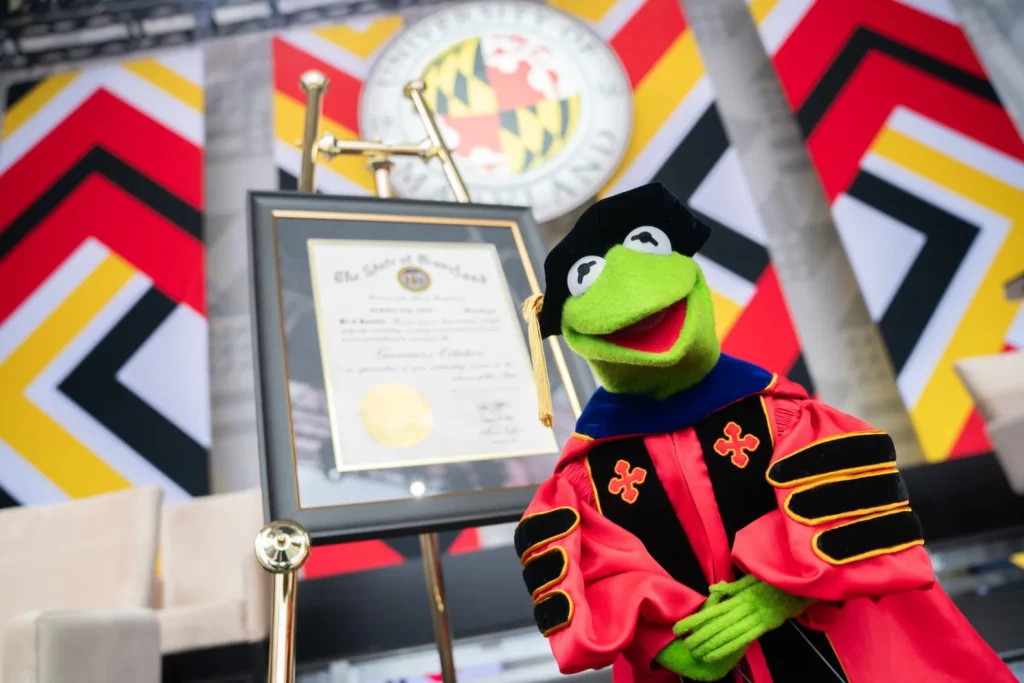
Philosopher and Musician, Kermit the Frog, University of Maryland
“Life is not a solo act; no, it’s not. It’s a big, messy, delightful ensemble piece, especially when you are with your people. Life is better when we leap together.”
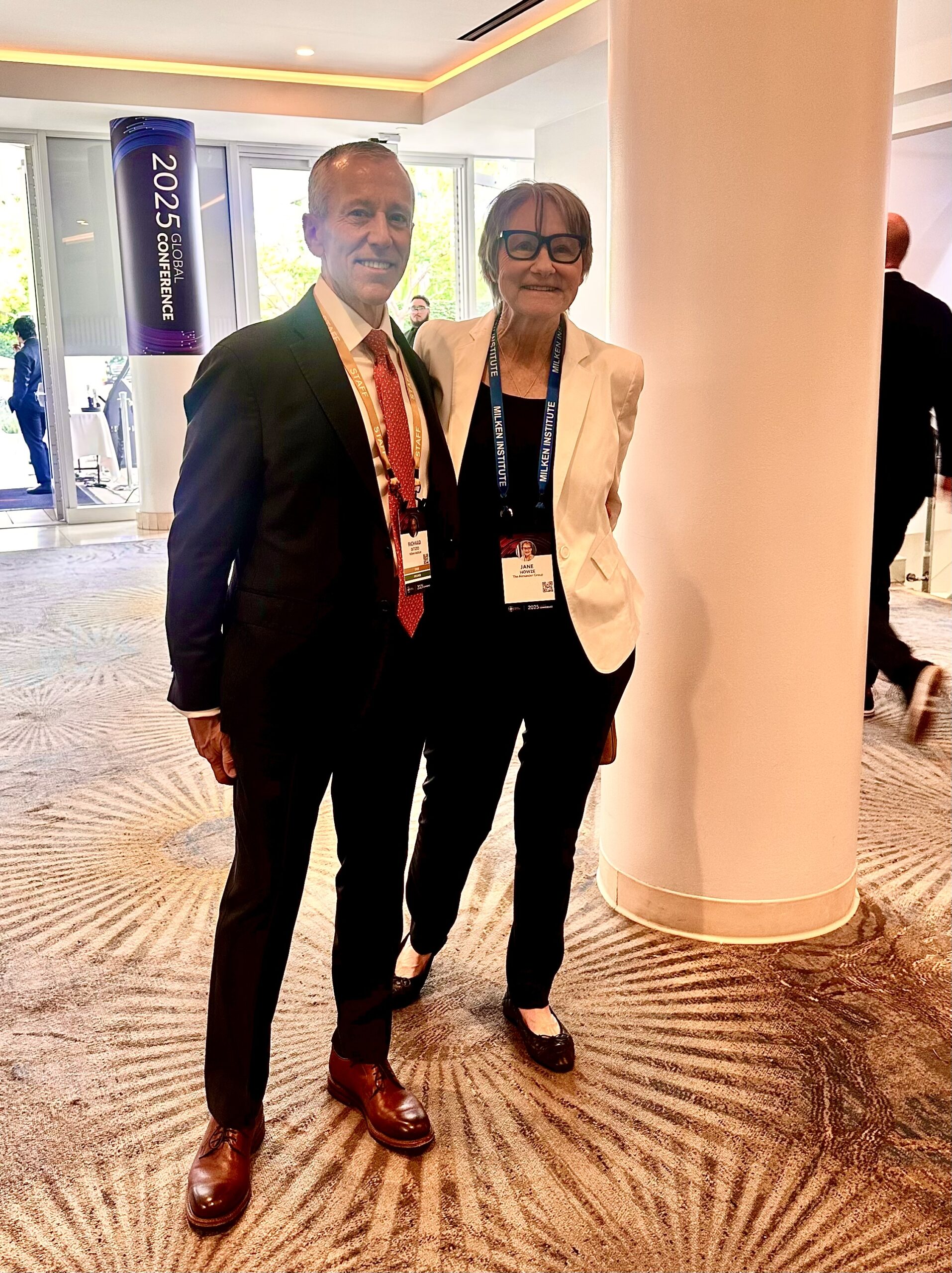
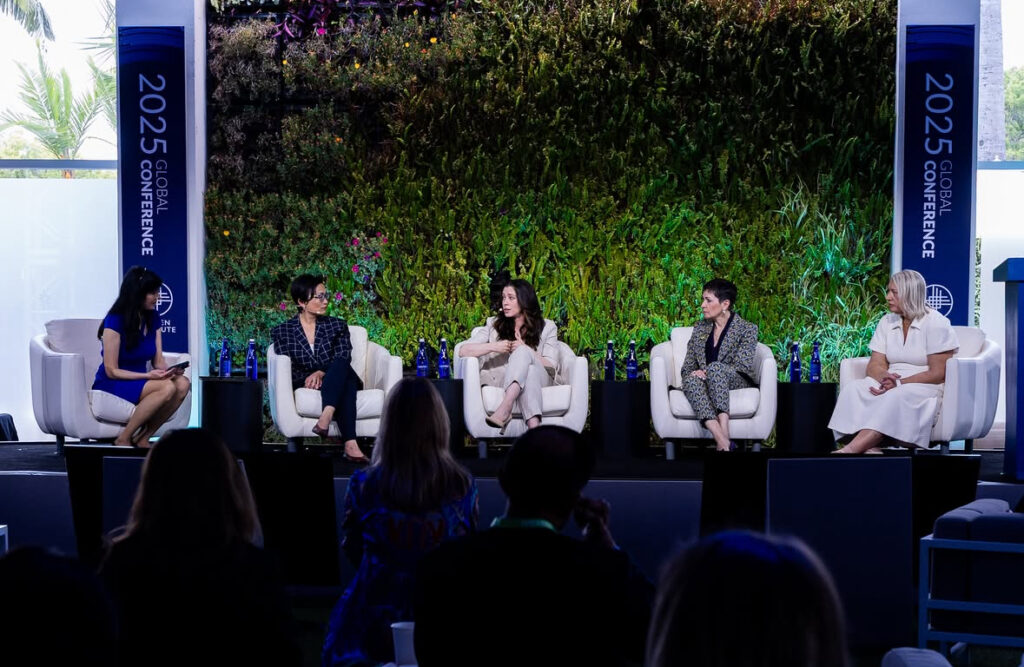
I recently had the pleasure of attending the 28th Milken InstituteGlobal Conferencein Los Angeles. Although it ended last week, many insights have stayed with me. Over 900 speakers—global political leaders, business executives, scientists, non-profit leaders, and cultural and entertainment icons—participated in over 200 panels.
The speakers and subject matter were so informative, hopeful, and impactful that I want to share some of what I learned, especially about health and those who are making a difference.
An Impactful Welcome
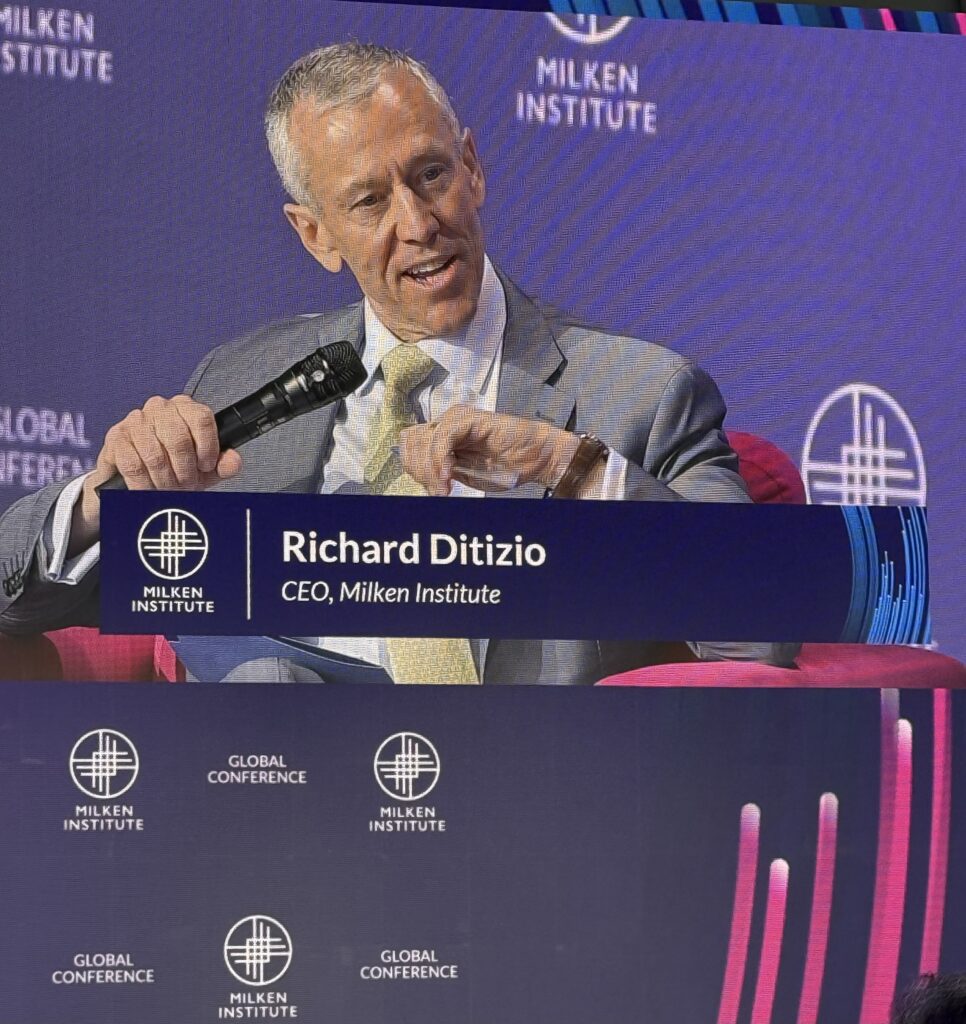
Those attending conferences seldom remember the introductory welcome. This was not the case at the Milken Conference. After the standard welcome by Milken CEO Richard Ditizio, he went right to the bipartisan issue that concerns us all: the hostility with which people address those with different ideas and how that hostility bleeds across all areas of our society, impacting our children and often leading to violence.
Ditizio called on all of us to be willing to listen and learn from “those who don’t share your beliefs, celebrate the same holidays as you and love different people.” The Milken Conference is apolitical and always cordial, but Ditizio’s impactful words set an aspirational tone and were widely shared on social media.
Health Matters
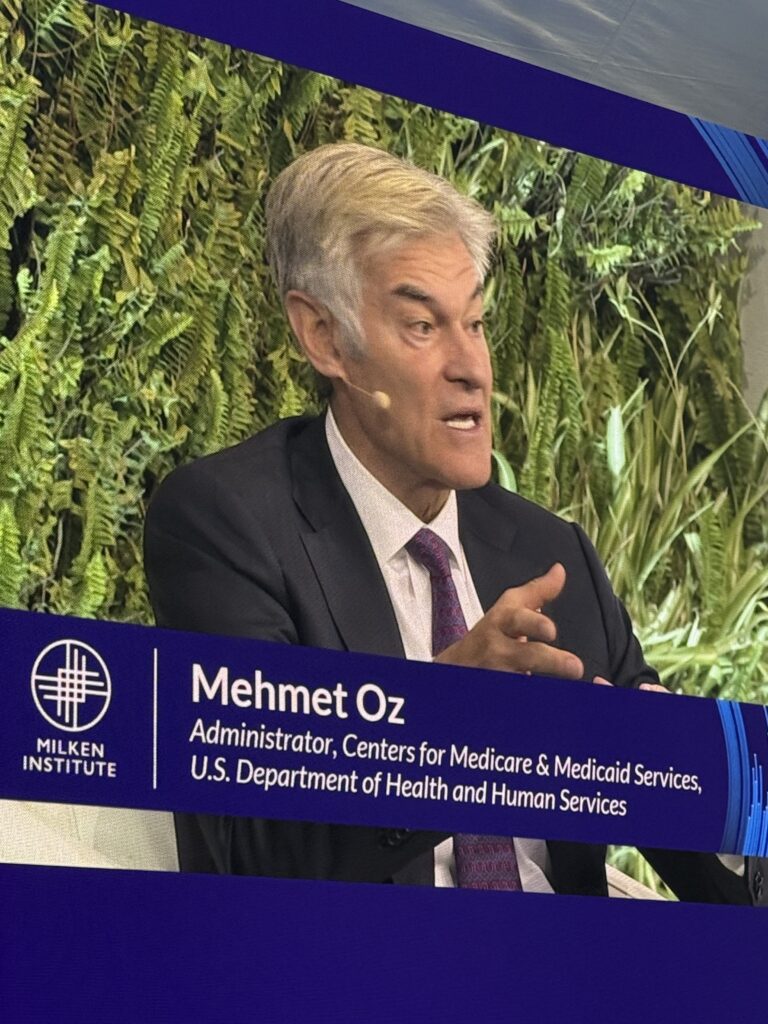
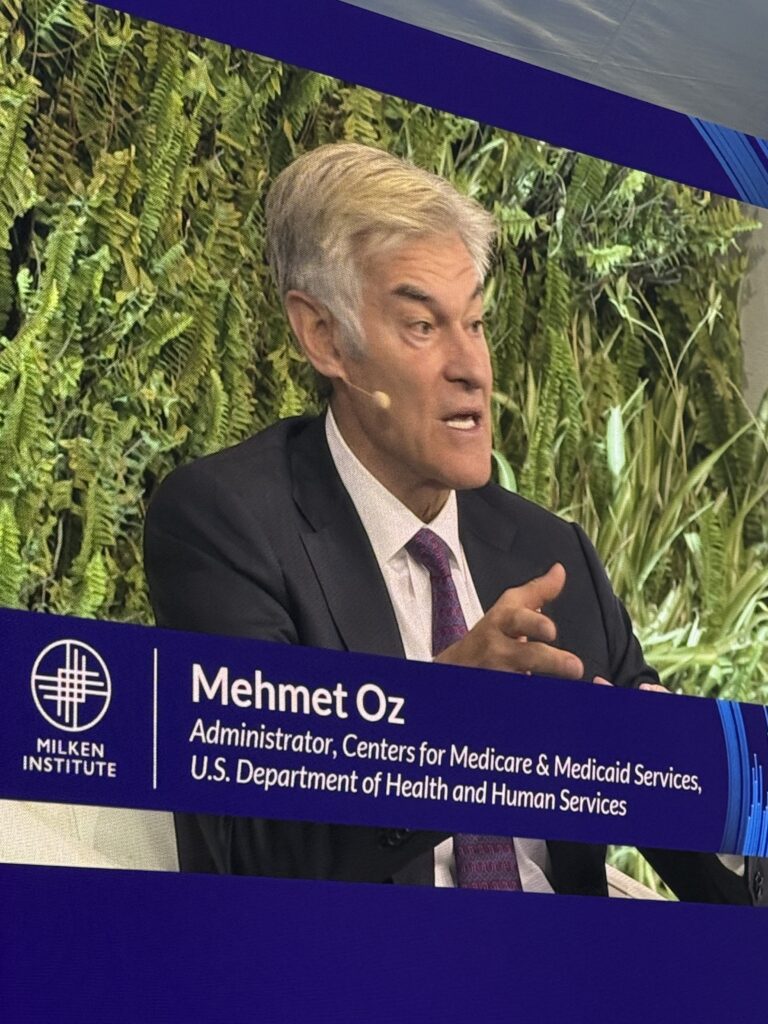
In an interview, Mehmet Oz, the TV personality known as “Dr. Oz” and now the Administrator of Medicare and Medicaid Services, spoke about his efforts to eliminate waste from our outdated reimbursement system.
He cited the fact that states have no way of knowing if a person moves from one state to another, which results in the federal government paying both states and costing taxpayers billions of dollars. Dr. Oz emphasized that every great nation takes care of its most vulnerable, and the most expensive thing we pay for is bad healthcare.
Women’s health was a subject of several sessions.
Former First Lady Jill Biden, chair of the Milken Institute’s newly established Women’s Health Network, spoke about pooling money from the private sector to finance historically underfunded women’s health research.
The sessions illuminated the telling statistics regarding women’s health. For example, Alzheimer’s affects women nearly twice as much as men, as do other diseases, to name a few: heart disease, autoimmune disease, osteoporosis, and stroke. Interestingly, many gynecologists receive little training regarding perimenopause and menopause.
Advances are being made in women’s health. Outside of the sessions, I met with an investor in Amboy Partners, a venture fund focused on women’s health, who spoke of a male birth control method—a cream—that is not that far off.
Longevity Session Offers Advice and Big News for Dog Owners
The session on longevity was standing room only and was one of my favorites—no doubt because of my age, although a number of Gen Xers were also in attendance. Each panelist was involved in some aspect of longevity: preventing Alzheimer’s, studying those who live to 100, which included an orthopedic surgeon/researcher and a researcher of longevity drugs.
Each of the panelists shared hacks for longevity:
In Sardinia, one key to living to 100 is having daughters.
Eat more of a plant-based diet and opt to eat at home
Know your numbers—blood pressure, blood sugar, cholesterol—and get tested regularly to forestall possible problems.
Bone health is a key to longevity, and it starts in childhood. Move, jump, and pound. Bones love to be bounced.
Exercise is the number one thing people can do to loosen up the toxic amyloid protein in the brain and maintain brain health, but exercise should be customized to the individual.
What Did We Learn?
93% of our lifespan is dependent on daily lifestyle choices. Evidence suggests that if we optimize all lifestyle factors, the average person could expect to live a healthy life to 90 or 95.
A conservative estimate is that half of dementia cases may be preventable.
As belly fat gets larger, the memory size in the brain gets smaller.
The biggest predictor of life expectancy is our zip code.
Men lose their anabolic steroids in a linear fashion. With menopause, women have a mid-life cataclysmic event.
Only 2% of venture capital dollars are for women’s health after age 40.
Women and men have different brains, and the most pivotal time for women is perimenopause transition.
25% of women have a gene that is triggered at menopause. Hormone therapy after menopause might take the woman with that gene off the road to dementia.
Studies have shown that if a patient spends 18 months at the Alzheimer’s Prevention Clinic following an aggressive prevention plan, Alzheimer’s could be delayed four to eight years.
The “How” Behind Doing the Right Thing
Getting people to change their behaviors (diets and exercise) is hard. What we need to do is change our environment. One hack to changing a population’s environment is to increase the walkability of a city or town. If you live in a city like Houston, the average person walks about 4,000 steps a day, but if you live in a walkable city like Boulder, Colorado, or New York, you are likely to rack up closer to 10,000 steps a day. For every daily 1,000-step increase, a person’s chance of dying reduces by 12 percent. A 40-year-old who adds an extra 5000 daily steps can extend their life expectancy by four to five years.
Getting to 100
Longevity is in the details. Women are five times more likely to reach 100 years old than men. However, only 20% of women who reach 100 will be in good shape, while 50% of men who reach 100 will be in good shape. Living to be 100 should be the goal, even though we are not there today. The current life expectancy for women who adhere to healthy lifestyles is 96, and for men it is 91. Life expectancy increases by two years every decade. Happiness increases as you age after traversing through middle age.
Challenges Ahead for Healthcare Advances
There are some potholes on the road to health and longevity. In the past five years, 98% of drugs approved by the U.S. Food and Drug Administration originated with National Institutes of Health grants. Experts at the Milken Global Conference said current funding cuts are expected to have long-lasting effects and possibly take years to reverse. Many up-and-coming scientists are leaving the U.S. in favor of countries more committed to research.
One key to meeting the challenges lies in repositioning the health system toward being healthy instead of sick.
Some Dog Gone Good News
As an avid animal lover (especially of cats and dogs) I was intrigued and excited to learn about Loyal, a clinical-stage veterinary medicine company developing drugs intended to extend the health span and lifespan of dogs. Expect this drug to be approved in the next three years.
Philanthropy In Action
Philanthropy is a key emphasis at the Global Conference, and attendees are always delighted by ways to give back and the people leading those efforts.
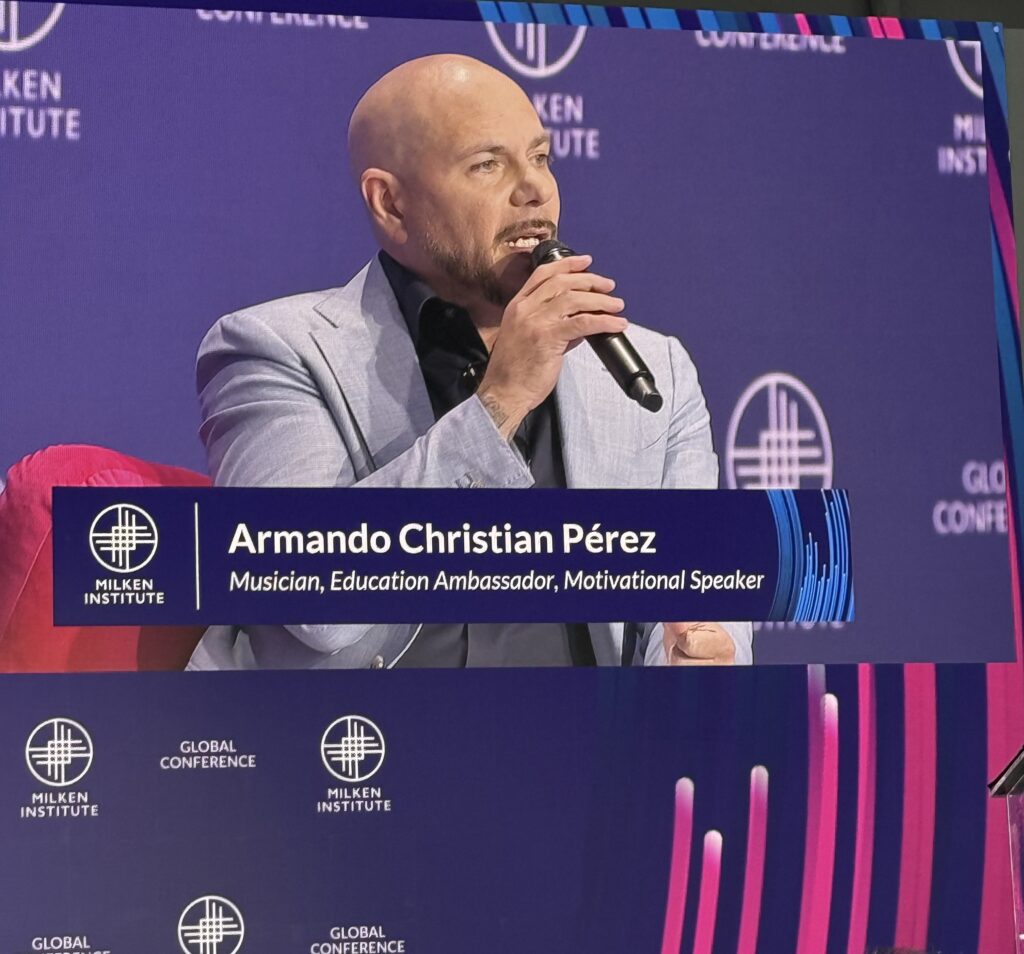
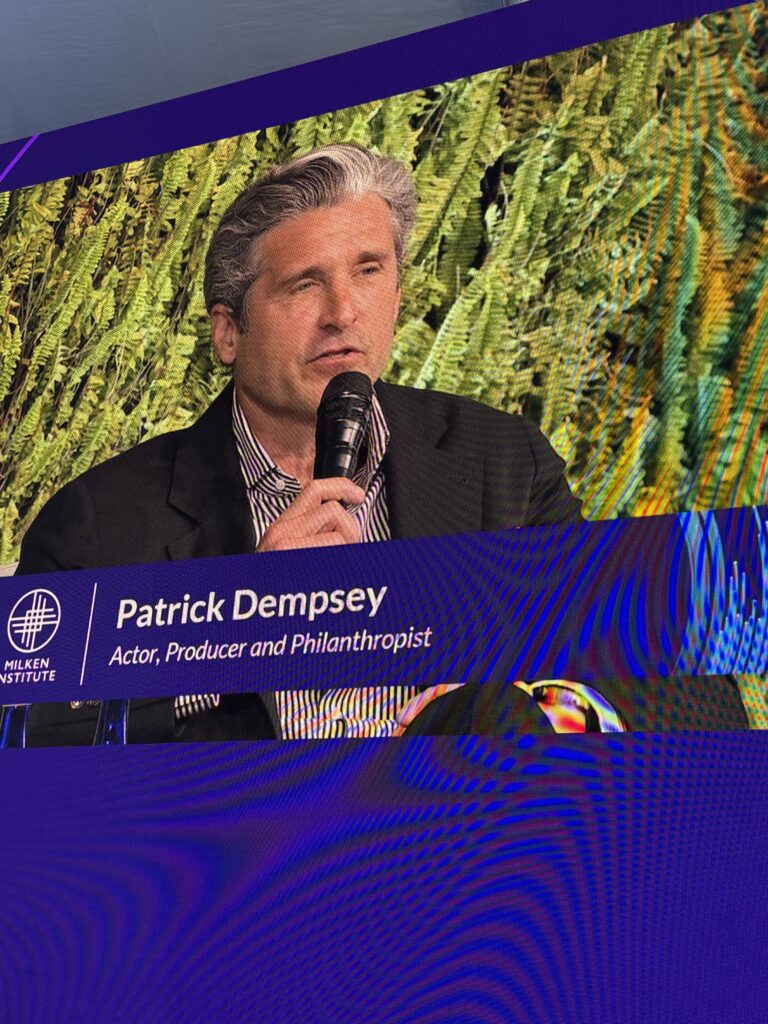
Three of this year’s featured philanthropists were Patrick Dempsey (formerly of Grey’s Anatomy), Armando Christian Perez (Pitbull), and José Andrés (founder of World Central Kitchen). Pitbull spoke about a tuition-free public charter school network recognized globally as a leading education organization responsible for serving over 10,000 students. He stated, “it all started when a teacher believed in me.”
Dempsey started the Dempsey Center in Portland, Maine, in response to his mother’s cancer journey. The center offers supplemental, holistic treatments to cancer patients, such as yoga, Reiki, acupuncture, and counseling. Although its brick-and-mortar facility is in Maine, its 35 programs reach 32 states and four countries.
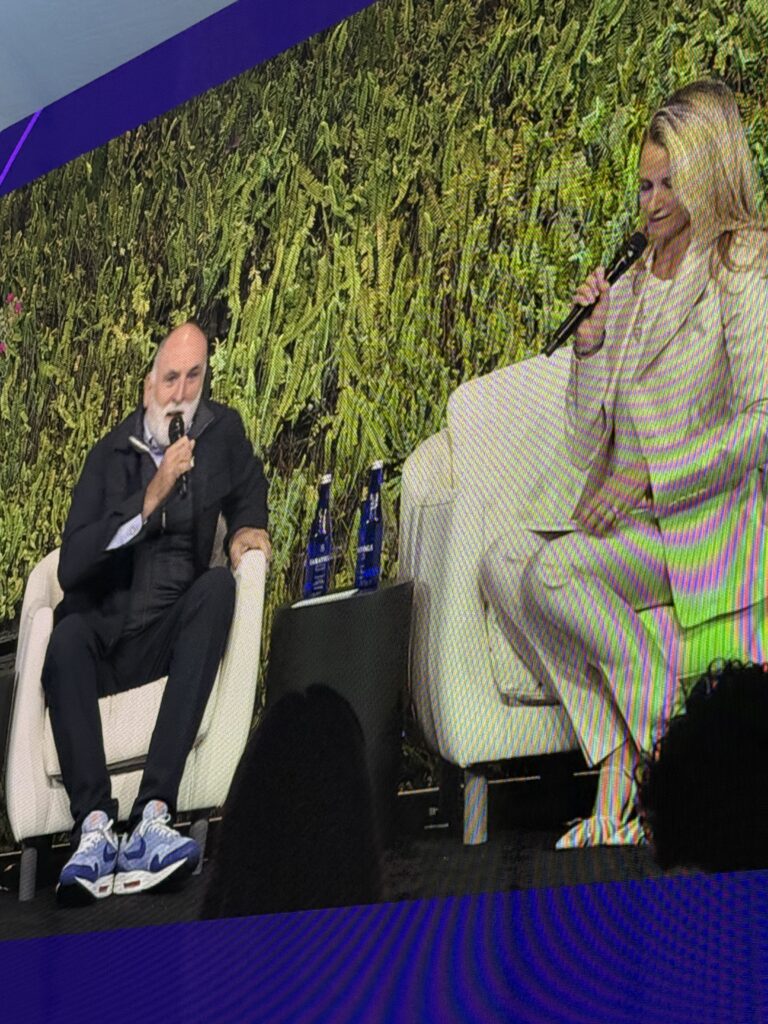
World Central Kitchen Founder Jose Andres, recently awarded the Presidential Medal of Freedom, was interviewed by California First partner Jennifer Siebel Newsom and spoke about how sharing food, especially in a crisis, can be a powerful tool for good.
Andres spoke about how storytelling, through his videos of feeding those in need after catastrophic events, communicates the level of devastation and the hope found after a warm meal and the promise of a new day. He praised the volunteers working in real time to set up food trucks and outdoor restaurants, most recently during the California wildfires.
“We should be treating people in emergencies like they are coming to my best restaurant,” Andres said. Newsom commented, “food can be a tool for communities to heal.” As I exited these sessions, I heard attendees discussing how they could share what they learned.
Final Thoughts: Milken Global Conference 2025
These are indeed uncertain times and there is much reason for angst, anxiety and even fear. The beauty of the Milken Global Conference is the confluence of ideas and perspectives and the desire to flourish—the theme of this year’s Global Conference.
The Milken Institute has posted many sessions on its website and social media channels.
I hope they will get the attention they deserve.
This Milken Institute Global Conference post originally ran May 9, 2018 as part of an annual blog series.
Last week, I attended the exclusive, invitation-only 21st annual Milken Global Conference at the Beverly Hilton Hotel—home of the Golden Globes. This year’s theme was “Navigating a World in Transition.” For three days, attendees heard 740 entertainment, Wall Street, philanthropic, economic, scientific and world political leaders address everything from longevity, philanthropy, gun violence, diversity, politics, investment in Africa … well, you get the idea.
Imagine a scene where guests from all over the world bask in the warm L.A. sunshine from outdoor lounges decorated with plush sofas, cushions monogrammed with the Milken Institute logo, and a jumbo TV screen live-streaming some of the panels, while enjoying plentiful food and drink and unlimited celebrity sightings. Security is tight, and a badge and scannable facial ID are required for admittance. CNBC, Fox News, Facebook, and Bloomberg broadcast their morning programs in the lobby. And nearly 2,000 people move quickly from one session to the next. Fortune 500 CEOs, heads of state and celebrities all mingle without entourages, giving the event a certain buzzy vibe. Although the conference stated the dress code was business casual, most men wore suits, and women wore their best boardroom attire.
Several people have asked me to share what I learned.
The most successful people in the world have a story.
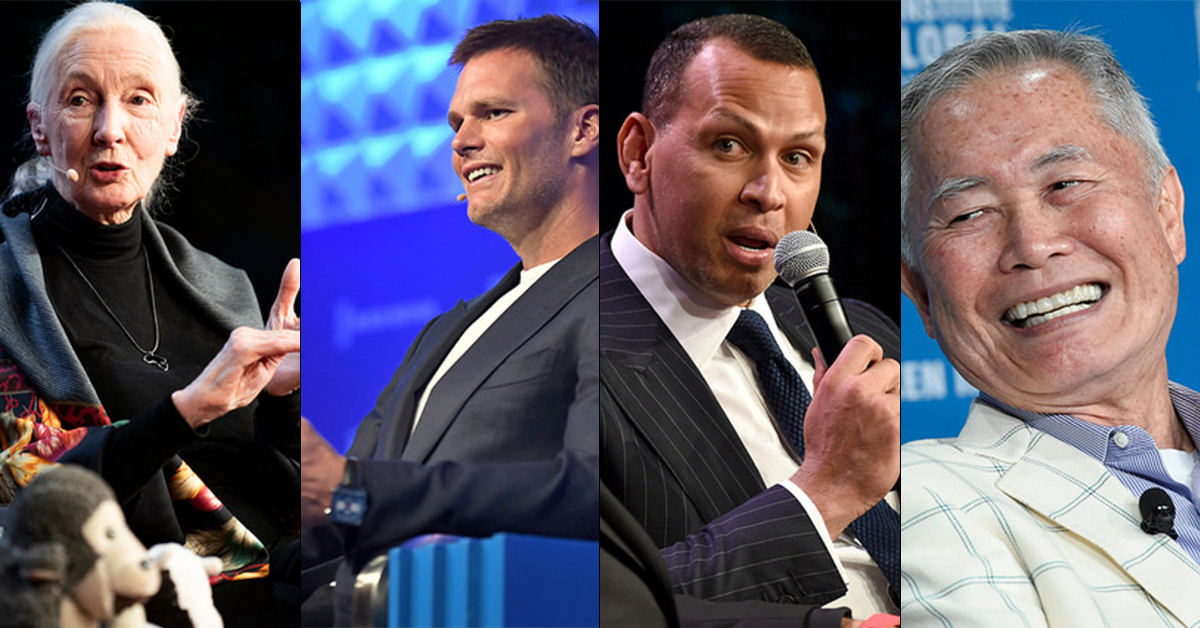
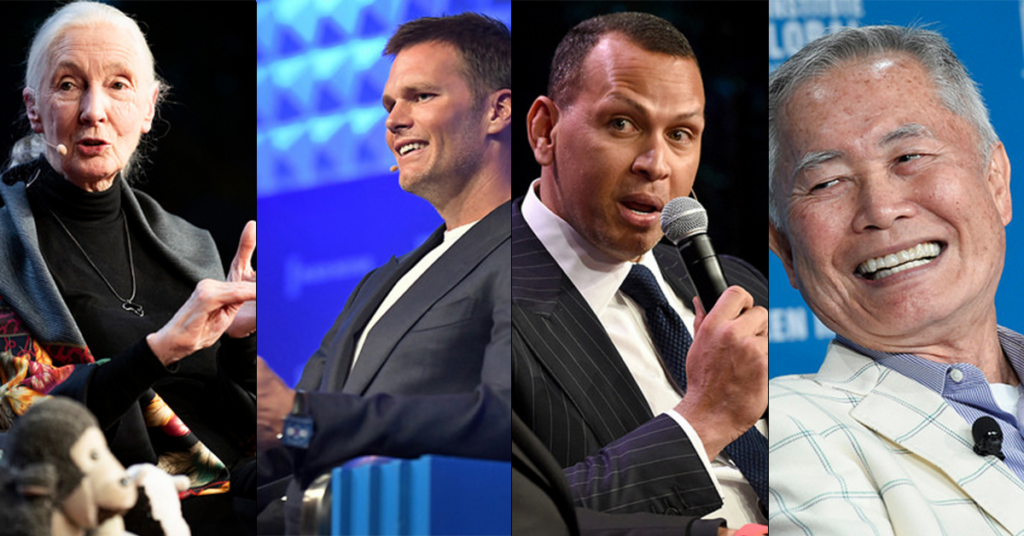
Because I’m in the people business, I’m always curious about what makes a great leader. What is their background? How did they get to where they are now? What were their challenges? How are they using their gifts? Here are four people who surprised, educated, and even inspired me about tough times, leadership, and impact. In a later blog, I will discuss other important discoveries and lessons.
“One has to help African people so they [can] help the animals” — Jane Goodall
Jane Goodall
Jane Goodall is a British primatologist and anthropologist who is the world’s foremost expert on chimpanzees. Goodall is best known for her more than 55-year study of social and family interactions of wild chimpanzees since she first went to Tanzania in 1960. She has worked extensively on conservation and animal welfare issues. At 84 years old, Goodall is charming and energetic, yet she projects a calm and Zen-like presence. Goodall gave much credit for her success to her mother, who “didn’t yell when I brought spiders to bed with me and who bought me books on animals.” Goodall said she realized from her work in Africa that one has to help African people so they could help the animals. “The most important thing we can give is hope. We can each make a difference every day and, in so doing, make the world a better place.”
Tom Brady
For you football fans, Brady plans to play for the Patriots next year and well into his forties. He respects coach Bill Belichick and acknowledges how much he has learned from him, although he admits Belichick is not easy to play for. And in the manner of a true politician, Brady danced around questions of why cornerback Malcolm Butler was benched—saying he didn’t realize he was benched until after the game and still didn’t know, which many of us found hard to believe.
Brady talked about how it “sucked” to lose the Super Bowl, and that after the game his three children were crying. He told them “Dad doesn’t win them all,” and taught them that part of life was learning to roll with disappointment. I found Brady to be most vulnerable and open when talking about his father, the most important influence in his life: “He taught me so much about working hard for his family—incredible determination, humility, and love—that’s what he was all about.”
Brady also gave some hints about his second career as a motivational coach, helping people in every career maximize their potential. “How can you, if you commit to the right things, be the best you can be?” he asked. And went on to say, “What I am learning as I get older is that it comes from within—joy, motivation, happiness—it comes from the inside.” He was quick to add that in the meantime he wants to “inspire people through his actions and performance.”
Alex Rodriguez
I wasn’t surprised to hear that legendary athlete Alex Rodriguez was speaking at the conference. After all, he is considered one of the greatest baseball players of all time, appears regularly on ESPN and Fox Sports, and has started A-Rod Corp, an integrated investment firm that manages internal and external capital. What did surprise me was the panel on which he participated (along with Kevin O’Leary of Shark Tank): “How to Be A Man in 2018”. The panel’s theme was how men are defining their roles in the march toward gender equality. I was surprised that a man whose success was earned through athletic prowess was so candid about what he considered greater measures of success, such as building great cultures and advocating equality and diversity. But one of the benefits of the Milken Global Conference is that you learn not to make snap judgments about people, and that every person can have a second act.
I was surprised that a man whose success was earned through athletic prowess was so candid about what he considered greater measures of success…
Rodriguez also talked about the influence his mother had on him—how she worked numerous jobs to enable him to pursue a baseball career—as well as the benefits of having strong women in his life including his daughters and “Jennifer” (a reference to current girlfriend Jennifer Lopez).
I was impressed that when talking about why some men take a long time to admit a mistake or vulnerability, he openly discussed his ban from baseball. He committed to apologize to everyone he had wronged and, even though it took him a long time, in doing so he learned the power of being forgiven and was able to use that time to turn inward.
George Takei
Attendees of the Milken Global Conference are encouraged to attend panels featuring ideas and people with whom they are not familiar. I had seen Star Trek many years ago, but it was not my thing, nor is the Howard Stern show where Takei is a regular guest. Takei appeared on a panel discussing the intersection of culture, art and politics.
Takei, a youthful-looking 81-year-old, opened by saying, “We live in a great country.” He then shared the emotional and captivating story of how he and his family were put under curfew, stripped of their bank accounts and then shipped off to a Japanese internment camp in Arkansas during World War II for no other reason than that they were of Japanese ancestry. “At five years old, I was labeled an enemy alien by my government … Yet, in one lifetime, because of the ideals of our democracy, I can sit here and discuss the intersection of culture and art and politics.”
“We as artists have a duty to use our sensitivity and creativity to reflect the time we live in.” — George Takei
Takei concluded by saying, “We as artists have a duty to use our sensitivity and creativity to reflect the time we live in.” The other panelists (actress Sophia Bush, playwright Sarah Gubbins, and screenwriter Damon Lindelof whose credits include “Lost” and “The Leftovers”) also shared how they chose or developed scripts that aligned with their core values, and how films and stories could change the world; but no one was impactful as Takei, who had suffered unspeakable cruelty yet so deeply loves his country.
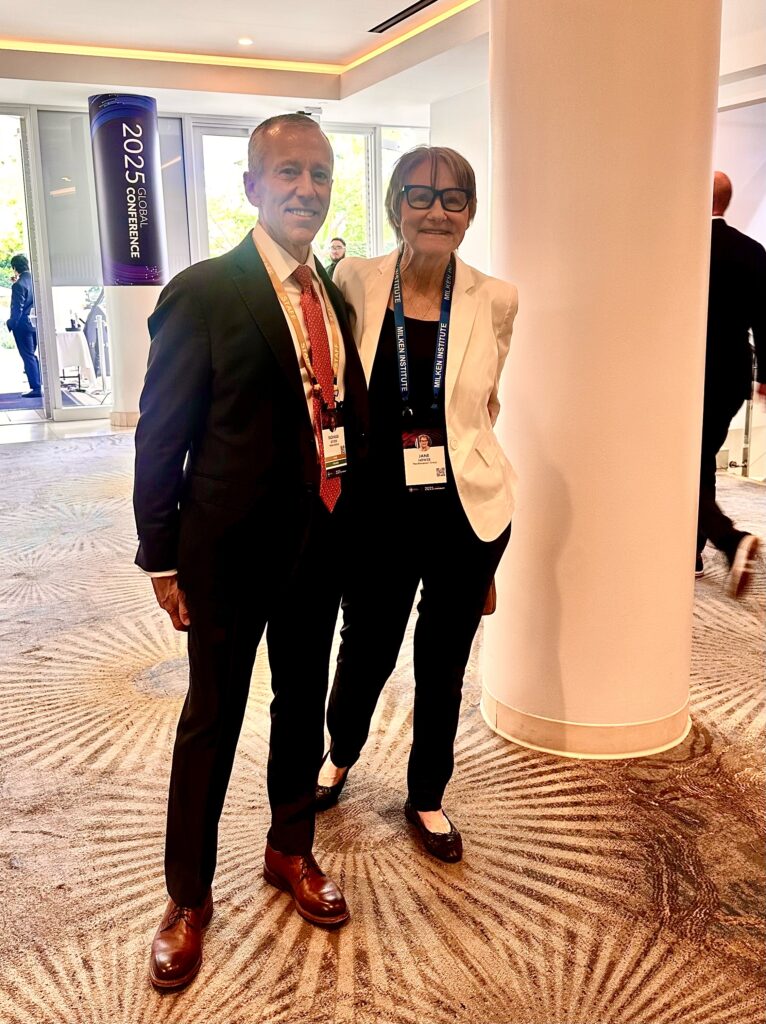
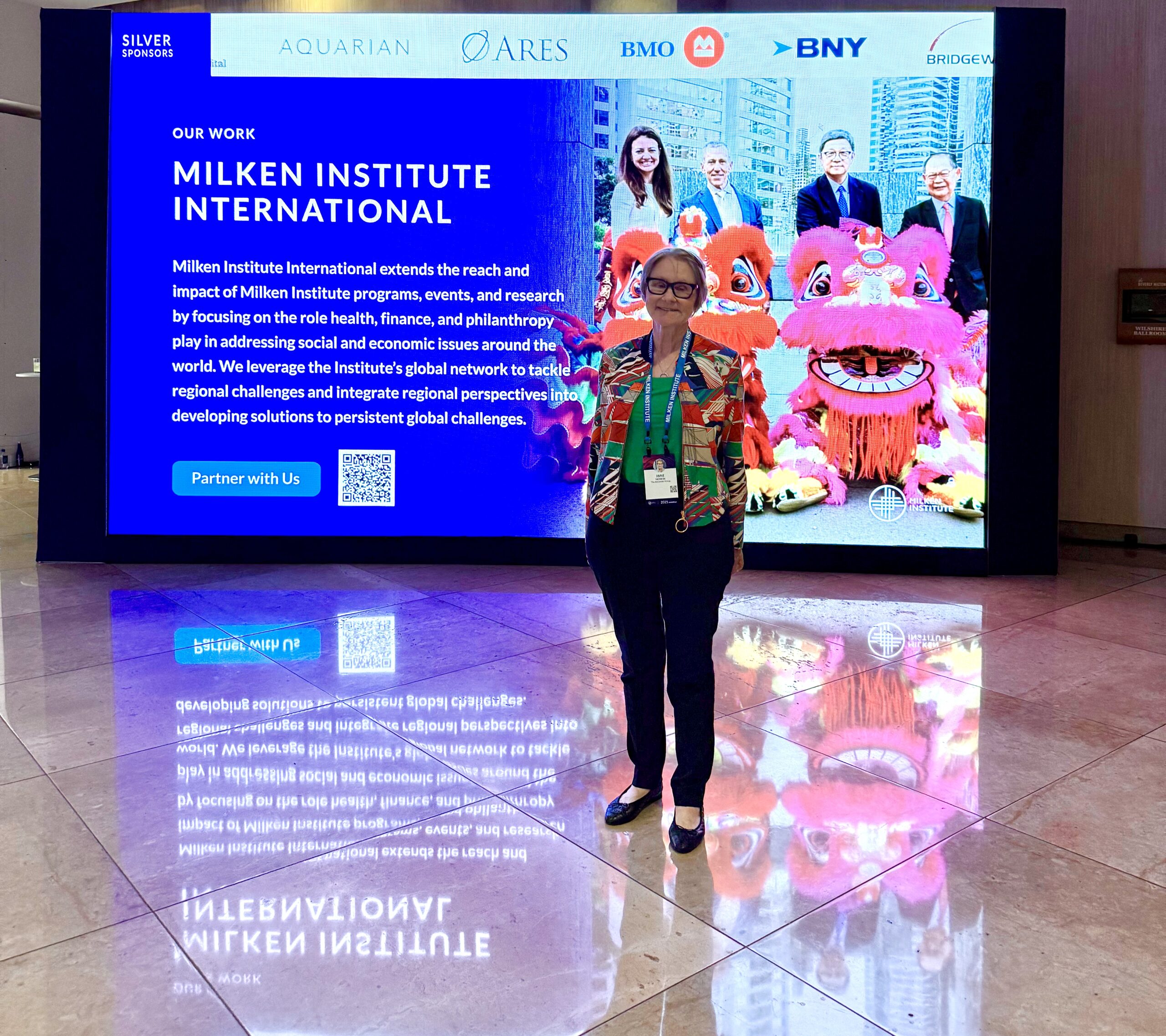
Managing Director Jane Howze is again attending the annual event in Los Angeles, sharing her takeaways and insights from daily sessions featuring thought leaders, politicians, scientists, professional athletes, entrepreneurs, business leaders, and celebrities.
The Milken Institute Global Conference brings together the world’s brightest minds to address the most urgent challenges and unlock the most promising opportunities of our time. The four-day event connects individuals with the capital and influence to drive change with experts and innovators transforming health, finance, business, technology, philanthropy, industry, and society.
“The call for civility really impacts everyone,” Jane said. “Rich Ditizio’s speech was powerful. It’s energizing and hopeful to see people of different geographies and politics come together to listen and learn.”
The 28th annual Global Conference by the numbers:
Four Days
200 Sessions
300+Registered Media
900 Speakers
4,000+ Participants
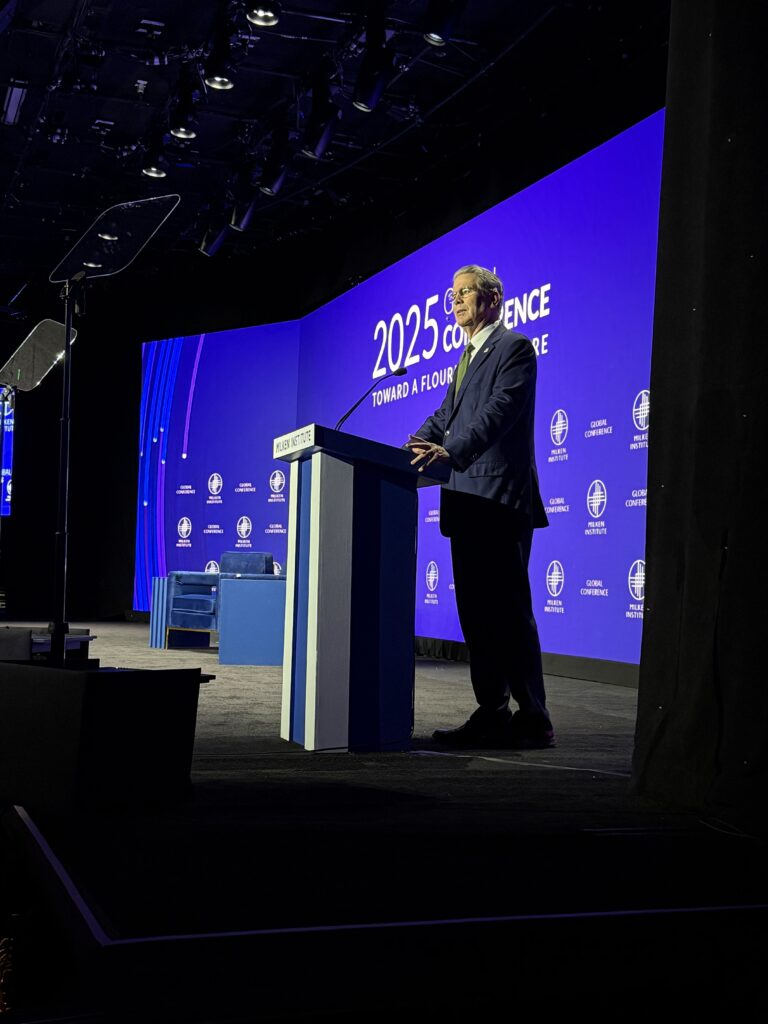
Milken Institute CEO Richard Ditizio set the tone for the conference during his welcome speech with encouraging words and a plea for civility, despite differences.
“The future will not be built by living within our own echo chambers. It will be built by bold, inclusive coalitions that reflect the world we’re trying to realize,” said Ditizio. “And we have many past successes to lead the way—we see time and again, when capital, innovation, and collaboration come together, remarkable things happen. I know the challenges we face are enormous—but I also know that our capacity to meet them is even greater.”
Read on for highlights from various panels Jane attended throughout the first day of the Milken Institute Global Conference, covering the economy, the healthcare system and women’s health issues.
A Conversation with US Secretary of the Treasury Scott Bessent
Treasury Secretary Scott Bessent spoke at the Milken Institute Global Conference on Monday. Bloomberg Media reporters noted a few key quotes from his speech below.
Bessent says the Trump administration’s goal is to make the US an even more appealing destination for international capital.
“Tariffs are engineered to encourage companies like yours to invest directly in the United States. Hire your workers here. Build your factories here. Make your products here.”
“I hope you can see the bigger picture now. The Trump economic agenda is more than the sum of its parts. Trade, tax cuts and deregulation may be three distinct policies. But each policy is mutually reinforcing. And acting in concert, they push toward the same goal — to solidify our position as the home of global capital.”
Bessent is sketching out his vision for the American dream. Asked what the next 250 years should look like, he says, “To me, it’s equal opportunity for great outcomes.”
From Experience to Excellence: Women Redefining Business and Financial Wellness
Led by Sheryl WuDunn, Co-Founder of FullSky Partners and co-owner of Kristof Wines, the session explored the impact women are having on the entrepreneurial segment, thanks to trailblazing female founders, high-profile celebrities, Fortune 500 executives, and private sector leaders. It delved into safeguarding women’s cognitive health and the importance of adopting lifelong strategies for optimizing healthy longevity.
Jane was struck by the power and information shared during this “amazing talk.”
“The old script of how women are supposed to age is broken. Women are tearing it up midlife is no longer a winding down but actually gearing up.
Women are living longer than men, earning more degrees, starting more businesses at twice the rate of men and the fastest growing group of entrepreneurs are women over 45. That’s not a footnote that’s a power shift.
Why?
Because the system wasn’t built for women with ambition and aging parents and mortgages and hot flashes. So instead of waiting for the system to catch up women are building their own. They’re reinventing careers, demanding flexibility and bringing decades of wisdom and grit to the table. They’re not just chasing success, they are defining it on their own terms, that includes health, wealth and purpose. But here’s the kicker. For all this, women still face 2/3 of Alzheimer’s cases, we spend 23% more of our lives in poor health than men and end up with 30% less in retirement.
A Conversation with Centers for Medicare & Medicaid Services Administrator Mehmet Oz
Q: What have your first set of priorities been at the Centers for Medicare & Medicaid Services?
We’re starting off with the broad reality. We actually have objectives and key results. Start with the people–this is something I did not appreciate from the outside. I’ve never been in government before. These are highly competent, skilled individuals, very mission-driven. They come to work at HHS because they want to make America a healthier place. And many don’t feel like they’ve had the freedom to do that. So just activating the natural talent that we have within the organization is an initial focus of ours.
A: The main way we’ll deal with health care issues in America is by dealing with the 70% of the costs that are driven by chronic illness, much of it, of course, because of lifestyle choices that we’re making, sometimes without complete awareness of the impact it will have on us.
We spend twice as much as any other developed country in the world, twice as much for our health care per capita, and yet our health quality continues to drop. We have the highest mortality rate for moms delivering babies. We have a tragically dropping a differential between Europe and life expectancy. We’re now five years behind. When I was in medical school, we were equal to Europe. So we’re not getting our money’s worth; we can’t just throw money at the problem. We have to use it wisely and judiciously to make sure that vulnerable are cared for, but also we do our fiduciary responsibility to the American taxpayer.
Follow The Alexander Group on LinkedIn and Instagram for updated information and pictures from the Milken Institute Global Conference.
Whether your organization is entering a phase of accelerated growth, preparing for a strategic exit, or solidifying leadership post-investment, identifying an exceptional sales leader is one of the most consequential decisions a company will make.
In my experience conducting searches for sales executives at privately held and investor-backed companies in the lower-middle market, I have witnessed firsthand the transformative impact of the right hire—and the significant cost of the wrong one.
When Founder-Led Sales Reaches Its Limits
In many emerging growth companies, the CEO, President, or founder often serves as the de facto head of sales. Early on, this dual role makes perfect sense. These leaders are frequently the company’s original and most effective salespeople, having built the business one relationship at a time. However, as the organization matures, this arrangement becomes unsustainable. Founders find themselves stretched thin, unable to focus on strategic initiatives as tactical demands consume their time. Without a shift in sales leadership, the company risks stalling just when it’s poised to scale.
The transition to a dedicated sales leader is a critical inflection point—and one that must be handled thoughtfully. A common misstep is promoting the top-performing salesperson into a leadership role. While individual contributors may excel at closing deals, sales leadership requires a distinct set of skills. High-performing sellers drive revenue; effective leaders build systems and teams that scale it. It is the difference between being a doer and becoming a multiplier.
What Sets Sales Leaders Apart in the Lower-Middle Market
Sales leadership in the lower-middle market bears little resemblance to that in large, publicly traded enterprises. Here, sales executives must be both visionary and hands-on. They often operate as both architect and executor, designing scalable systems while still engaging in frontline activities.
This hybrid, “player-coach” model is essential. The most effective leaders thrive in the field alongside their teams, guiding live deals, coaching in real time, and playing a pivotal role in onboarding and developing talent. They lead with humility and purpose, celebrating team success over individual accolades.
Builders First, Leaders Always
In many cases, the sales infrastructure in these companies is either underdeveloped or nonexistent. The outstanding sales leader enters ready to build—or refine—critical systems such as CRM platforms, pipeline definitions, performance metrics, and reliable forecasting mechanisms. They balance data-driven insights with qualitative input, building processes that evolve and scale with the business.
They also bring rigor to prospect prioritization and goal setting. Particularly in private equity-backed environments, these leaders understand how to deliver board-ready reporting, evaluate customer profitability, and focus the team on high-value opportunities. Their decision-making combines analytical precision with seasoned judgment, informed by prior experience in comparable settings.
A Strategic Connector, Not a Silo
Exceptional sales leaders understand that success is a cross-functional endeavor. They collaborate closely with marketing to align messaging and campaign strategy, even when marketing is outsourced. They maintain strong feedback loops with operations and product teams, ensuring promises made during the sales process align with delivery and that customer insights inform continuous improvement. In agile, fast-growing organizations, isolation is not an option.
Culture Begins with Leadership
In growth-stage companies, culture is not defined by mission statements, but by leadership’s behavior. The sales leader sets the tone through transparency, urgency, customer-centricity, and a relentless focus on outcomes. They create a high-performance environment where expectations are clear, accountability is built into the team’s rhythm, and wins are celebrated together.
The Power of Perspective
While internal promotions can be successful, many organizations benefit from fresh leadership, someone who has successfully scaled a sales function in a similar environment. These leaders bring a unique blend of entrepreneurial energy and operational discipline. They’ve seen what works, what doesn’t, and know how to execute with speed and intention.
The Right Sales Leader Doesn’t Just Fill a Role—They Redefine It
Companies in the midst of evolution, expansion, or preparing for a liquidity event should expect that the sales leader hired today will have an outsized impact on the company’s trajectory. These are leaders who architect systems, inspire performance, and scale with clarity and conviction.
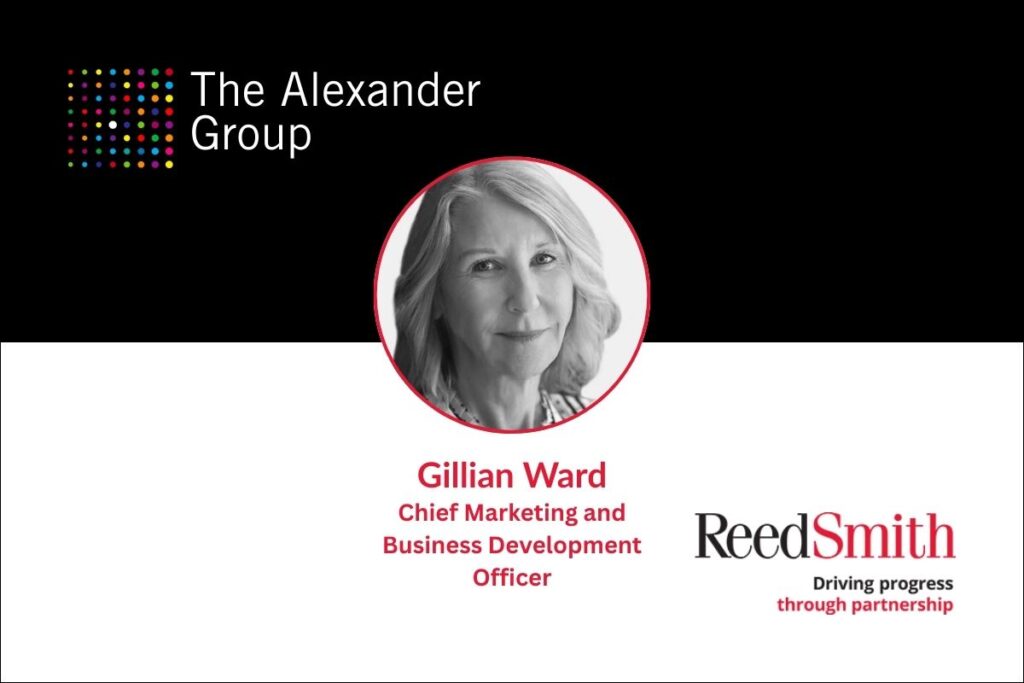
Reed Smith LLP enhances global client engagement with the appointment of Gillian Ward.
Client: Reed Smith LLP | Role: Chief Marketing and Business Development Officer | Candidate: Gillian Ward
Search Consultants: Amanda K. Brady, Sarah Mitchell, Pam DeLuca
Overview
Reed Smith LLP, a dynamic international law firm with over 1,700 attorneys across 30 offices worldwide, partnered with The Alexander Group to identify a strategic leader for the Chief Marketing and Business Development Officer role. The firm sought an executive capable of unifying its global marketing and business development strategies to support continued growth and integration.
Key Leadership Need
The firm required a seasoned professional to align marketing, client development, and operational initiatives across its global platform. The ideal candidate needed extensive experience building integrated strategies across jurisdictions, supporting firm-wide growth, and serving as a key executive partner to the firm’s leadership.
Developed a tailored search strategy aligned with Reed Smith’s vision for worldwide integration and client-centric growth
Identified senior leaders experienced in marketing transformation and operational execution across multiple geographies
Assessed candidates for executive presence, strategic capability, and alignment with firm leadership
Successful Placement and Impact
“Gillian is a key strategic hire for our firm as we focus on growing client relationships and expanding our presence in new and existing markets.
– Nick Bagiatis, Chief Operating Officer, Reed Smith LLP
Gillian Ward, formerly the Global Chief Marketing Officer at Bryan Cave Leighton Paisner LLP (US), was appointed Reed Smith’s Chief Marketing and Business Development Officer. She previously held senior leadership roles at Baker Botts LLP and brings extensive expertise in market development, client growth programs, and strategy formulation.
Immediate benefits:
Unified Global Marketing Strategy: Gillian will oversee the integration of marketing and business development functions across Reed Smith’s 30 international offices.
Strategic Growth Leadership: She brings a data-driven, client-focused approach to marketing that supports Reed Smith’s continued platform expansion.
Executive Collaboration: As a key partner to the firm’s leadership, Gillian will contribute directly to high-level strategy and decision-making.
Insights from the Executive Search Team
“Gillian brings broad experience helping global law firms design and integrate marketing and business development initiatives across practices and continents, ensuring a comprehensive and holistic approach to support growth. She will be a key member of Reed Smith’s executive team and the ideal partner to Chair Casey Ryan and COO Nick Bagiatis as they lead the firm through continued strategic growth of its global platform.”
— Amanda K. Brady, Managing Director and Chief Client Officer, The Alexander Group
About Reed Smith LLP
Reed Smith LLP is a global law firm known for its deep industry knowledge, collaborative culture, and innovative approach to legal service delivery. With offices in the United States, Europe, the Middle East, and Asia, the firm advises leading businesses on complex litigation, regulatory matters, and high-stakes transactions. Reed Smith is recognized for forging long-term client relationships and delivering forward-thinking legal solutions that support business growth.
About The Alexander Group
Specializing in executive search for law firms and financial leadership roles, The Alexander Group delivers strategic, results-driven placements tailored to each client’s needs.Interested in learning more about our executive recruitment services? Contact The Alexander Group today.
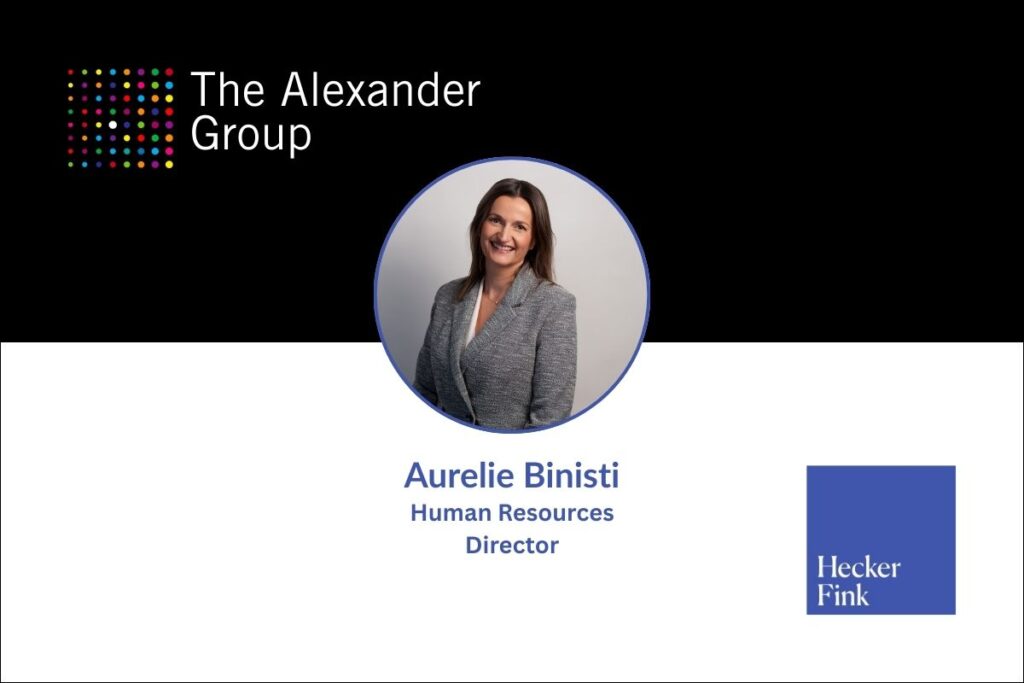
Hecker Fink LLP enhances its operational leadership with the appointment of Aurelie Binisti.
Client: Hecker Fink LLP | Role: Human Resources Director | Candidate: Aurelie Binisti
Search Consultant: Sarah Mitchell
Overview
Hecker Fink LLP, a premier litigation boutique known for its high-stakes legal work and commitment to public interest, partnered with The Alexander Group to identify a Human Resources Director. The firm sought a strategic leader to oversee and enhance its human resources functions, supporting its continued growth and dynamic work environment.
Key Leadership Need
As Hecker Fink LLP expanded its team of elite litigators and staff, the firm required a human resources executive capable of managing complex HR operations, fostering a collaborative culture, and aligning HR strategies with the firm’s mission of delivering exceptional legal services and advocacy.
The Alexander Group’s Approach
Director Sarah Mitchell led the search, focusing on candidates with extensive experience in human resources leadership across diverse industries. The search emphasized finding a professional with the adaptability and emotional intelligence to thrive in Hecker Fink’s fast-paced and mission-driven environment.
Developed a tailored search strategy aligned with Hecker Fink’s organizational goals and culture.
Identified candidates with a proven track record in strategic and operational HR management.
Assessed candidates for cultural fit, leadership capabilities, and the ability to contribute to the firm’s continued success.
Successful Placement and Impact
Aurelie Binisti, a seasoned human resources professional with over 15 years of experience in media and financial services, was appointed as Hecker Fink LLP’s Human Resources Director. Prior to joining the firm, she served as Executive Director of Human Resources at OMD for Omnicom. Aurelie holds a master’s degree in human resources from SUP RH in Paris, France.
Immediate benefits:
Strategic HR Leadership: Aurelie brings a wealth of experience in developing and implementing HR strategies that support organizational objectives.
Operational Excellence: Her background ensures efficient management of HR operations, contributing to the firm’s overall performance.
Cultural Alignment: Aurelie’s interpersonal skills and adaptability make her well-suited to foster the firm’s collaborative and high-achieving culture.
Insights from the Executive Search Consultant
“Aurelie combines the right mix of functional skills with high emotional intelligence and adaptability to lead and thrive within this growing, dynamic environment.”
— Sarah Mitchell, Director, The Alexander Group
About Hecker Fink LLP
Hecker Fink LLP is a formidable litigation boutique specializing in high-stakes legal matters, including white-collar criminal defense, complex appellate litigation, and public interest cases. The firm is dedicated to achieving the best possible results for clients through fierce advocacy, creative strategies, and forward-looking advice.
About The Alexander Group
Specializing in executive search for law firms and financial leadership roles, The Alexander Group delivers strategic, results-driven placements tailored to each client’s unique needs.Interested in learning more about our executive recruitment services? Contact The Alexander Group today.
Tony Capecci has joined Haynes and Boone, LLP as Director of Practice Innovation.
Mr. Capecci is an experienced legal technology leader with two decades of experience in legal technology and more than a decade of experience spearheading the procurement, development, and implementation of legal systems in fast-paced environments.
Prior to joining Haynes & Boone, Mr. Capecci was Associate Director, Litigation & Practice Delivery at Kirkland & Ellis. Mr. Capecci received a Bachelor of Arts in Interactive Multimedia from Columbia College Chicago.
“Tony has a deep understanding of the technology needs of a practicing lawyer, coupled with the leadership, intellectual curiosity, and passion for innovation needed to succeed in this role,” saidMitchell.
Haynes and Boone, LLP is a highly respected American Lawyer top 100 law firm, with more than 600 lawyers and 425 non-lawyer employees in 18 domestic and three international offices, and over 40 major practices.
The firm has grown from a two-person firm in 1970 to a global leader through its client-first focus, which informs its decisions and processes, and the collaborative nature of its people, which makes the work environment healthy and pleasant.
The firm’s culture focuses on teamwork, an environment of mutual respect, and a long-term view that supports investing in the future.